Online Reporter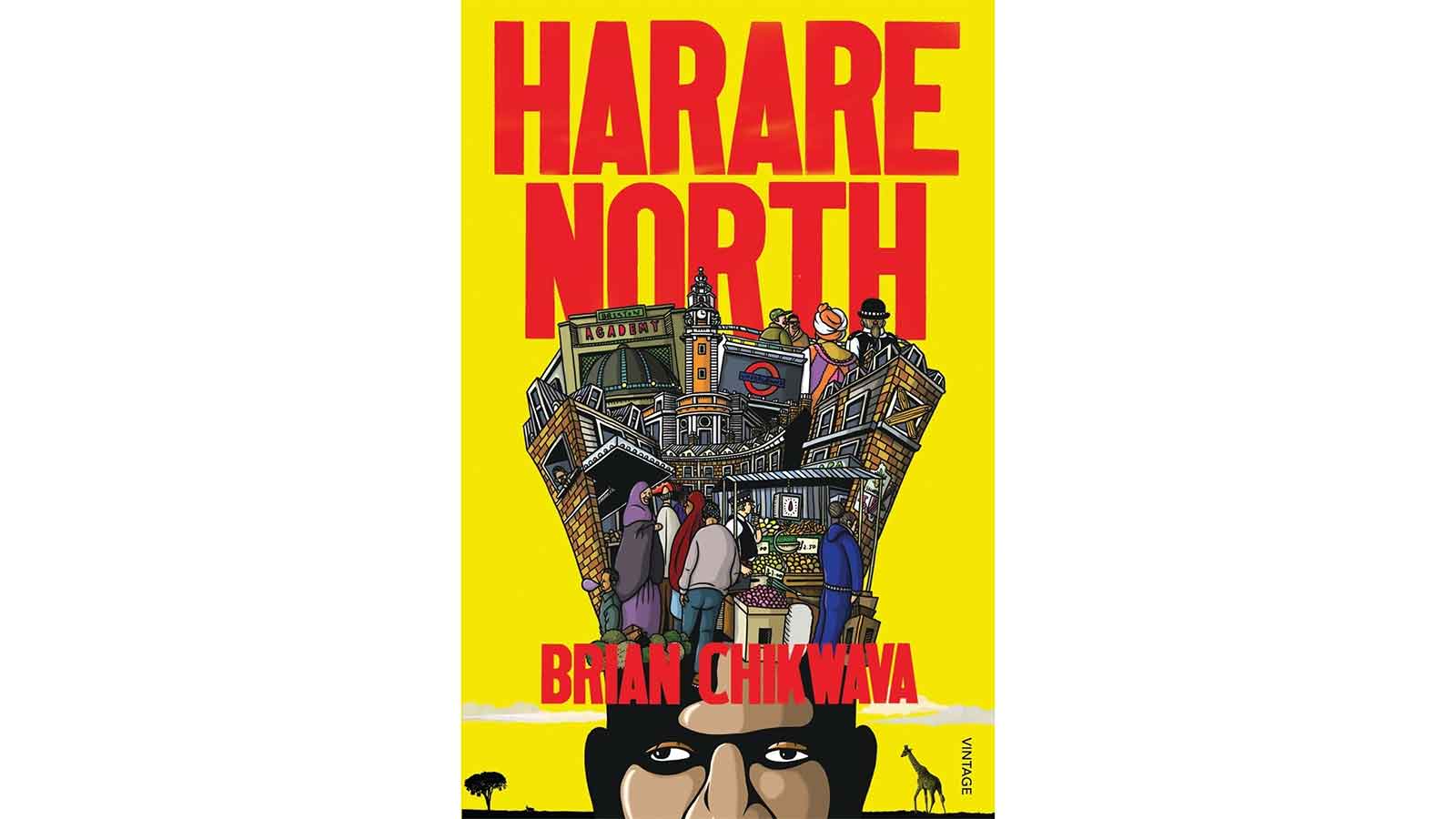
Elliot Ziwira-At the Bookstore
THROUGH adept characterisation, gritty realism and a subversive manipulation of language, Brian Chikwava’s “Harare North” explores, among other concerns, the unsettling idea that society often manufactures its own monsters, who, in due course, haunt it to infinity.
Victims at first, these individuals, who are shaped and misshapen by social prescriptions, gradually mutate into ogres. These monsters are assembled through cultural anxiety, historical paralysis and communal neurosis. They are not just born.
Central to this tragic metamorphosis is Shingirirai, whom the narrator mockingly refers to as “the original native”.
Unlike the narrator, who is undocumented, belligerent and opportunistic, Shingi has his papers in order. Yet legality and order do little to rescue him from the psychic traps of his upbringing.
He remains tethered to a social past that undermines his capacity to navigate the present. His behaviour reflects what Boeree (2002) and Freud (1923) identify as clinical neurosis.
However, Chikwava pushes this condition further, situating it squarely within Horney’s (1950) theory of neurotic development.
Horney posits neurosis as a compulsive response to an environment the individual fails to comprehend or reconcile with. Shingi’s quietness, passivity and eagerness to please stand in stark contrast to the narrator’s aggressive candour and violent pragmatism.
While the narrator thrives on confrontation and brute survival, Shingi recoils into gentleness that society misreads as weakness or effeminacy. Never innate, this disposition is cultivated.
Shingi never knew his father. His mother died when he was still a toddler, leaving him in the care of his maternal aunt, Mai Shingi, a woman without children of her own.
Though not cruel, she raises him in a home devoid of a stabilising paternal presence, while she herself grapples with her own unresolved anxieties. Horney’s observation that adults, burdened by their own neuroses, often fail to recognise a child as an individual, rings true here.
Shingi is inducted early into a society already at war with itself.
He grows up branded “totemless”, a bastard by cultural decree, as though his origin were a moral failure. Compounding this stigma is Mai Shingi’s barrenness — a condition loaded with dread in many African societies.
Totemlessness and barrenness converge as twin symbols of paralysis, degeneration and the feared extinction of lineage. From infancy, Shingi is positioned as a living reminder of communal anxiety.
Ironically, society’s obsessive drive to preserve itself against paralysis breeds greater intolerance.
Mai Shingi responds to her barrenness by adopting a hardened, masculine persona. She is described as “Shingi’s bearded mother”, a woman who would rather reach for a razor than perform domestic rituals expected of her. Violence becomes her coping mechanism, a rebellion against the cultural sanctions imposed upon her body.
This neurosis ripples outward. Her emasculated husband, a commuter omnibus conductor, displaces his humiliation onto passengers, particularly the poor and vulnerable.
The narrator’s sardonic observation that fare-dodgers and begging mothers are “in for big shock” reveals how private neurosis metastasises into public cruelty. The community, in effect, punishes itself, while Shingi absorbs the deepest wounds without ever having sinned.
From this crucible, Shingi internalises a distorted worldview.
To him, women dominate men, barrenness grants power, and fatherlessness strips one of a voice. School reinforces these lessons as he is bullied and brutalised by peers like Thoko.
Horney warns that such unresolved childhood conflicts do not dissipate with age.
They ferment, hardening into adult dysfunction. Shingi’s vulnerability calcifies into an anxious dependence on approval and an overwhelming fear of rejection.
In Harare North (the Diaspora), his past stalks him relentlessly. His fear of women intensifies, his desire to please becomes compulsive, and his reliance on external validation becomes absolute. Surrounded by exploitative figures like the narrator, Dave and Jenny, he is nudged toward self-destruction masquerading as liberation. Seeking relief, he turns to sex, drugs and alcohol, not as rebellion but as escape.
His initiation into sex, orchestrated by the narrator through a Polish prostitute he mistakenly believes to be British, becomes a symbolic rupture. It shatters his hopes of winning Tsitsi’s affection and of redeeming himself through fatherhood— the imagined cure for his totemless curse.
The white body, fetishised as salvific, instead seals his psychic doom. Hard drugs, particularly skunk introduced by Dave and Jenny, finish the work. His BBC job collapses under the weight of addiction, his savings evaporate, and stupor replaces purpose.
Eventually, Shingi is stabbed in what the narrator chillingly calls the “mental streets of death”, fighting over expired food from bins. His demise mirrors that of the narrator. They are both casualties of entrenched neurosis.
Shingi’s death extinguishes not only a family line but also the fragile hope of regeneration for those back home who clung to him as a lifeline.
The empire, once again, appears victorious, while paralysis persists, because solutions are eternally outsourced to the West as the backyard smoulders.
Another interesting character is Sekai. She offers one more compelling study of societal neurosis.
Her marriage to Paul, forged and sustained in the diaspora, has lost what the narrator imagines as its “African” essence.
After 10 childless years, barrenness becomes both literal and symbolic. In African cosmology, childlessness signals more than biological failure. It gestures toward stasis and decay. Under relentless social pressure, intimacy erodes.
Predictably, blame settles on Sekai. Paul’s serial infidelity, tacitly sanctioned as a quest for an heir, deepens their estrangement. The narrator crudely insists Paul should “put Sekai through pain of birth”, revealing a worldview that equates womanhood with reproductive suffering.
Sekai’s eventual affair with the Russian Yakov is less an act of betrayal than a grasp for solace in a vacuum of affection.
Their household becomes emblematic of diasporic barrenness as long silences, oversized televisions and supermarket meals replace warmth and cultural continuity. Work consumes them, not only to sustain themselves but also to support extended families back home. Unsurprisingly, emotional shriveling follows.
When the narrator blackmails Sekai over her affair, she finally releases years of suppressed rage in a blistering tirade that momentarily destabilises his swagger. Yet her rebellion offers only fleeting relief.
Ironically, Yakov, her boyfriend, like Paul, inhabits the same patriarchal order. Sleeping with another man cannot cure a wound inflicted by structural misogyny.
Sekai’s suffering transcends the personal. It becomes a confrontation with a system that excuses male promiscuity while vilifying female agency. Men may wander without consequence, but a woman who retaliates is publicly crucified.
Yakov may abandon her and Paul may continue to stray. The narrator, meanwhile, remains unmoved by loyalty or kinship — interested only in extortion.
Sekai’s courage to silence him and dare disclosure does not absolve her of complicity in her own monstrosity, but it gestures toward resistance. Still, without resolving the underlying neurosis, the tyranny of barrenness and patriarchal judgment, her redemption remains elusive.
Brian Chikwava’s “Harare North” (2009) exposes the bleak truth that societies which refuse to interrogate their fears manufacture monsters in the image of those fears. Victims become agents of further harm, and neurosis reproduces itself across families, communities and nations.
The monster-victims persist, haunting collective consciousness — not that they are aberrations, but because they are the logical outcome of social folly.
For an immersive reading experience, visit the Typocrafters (DigiHub) retail shop at Herald House, corner George Silundika Avenue and Sam Nujoma Street in Harare.