Online Reporter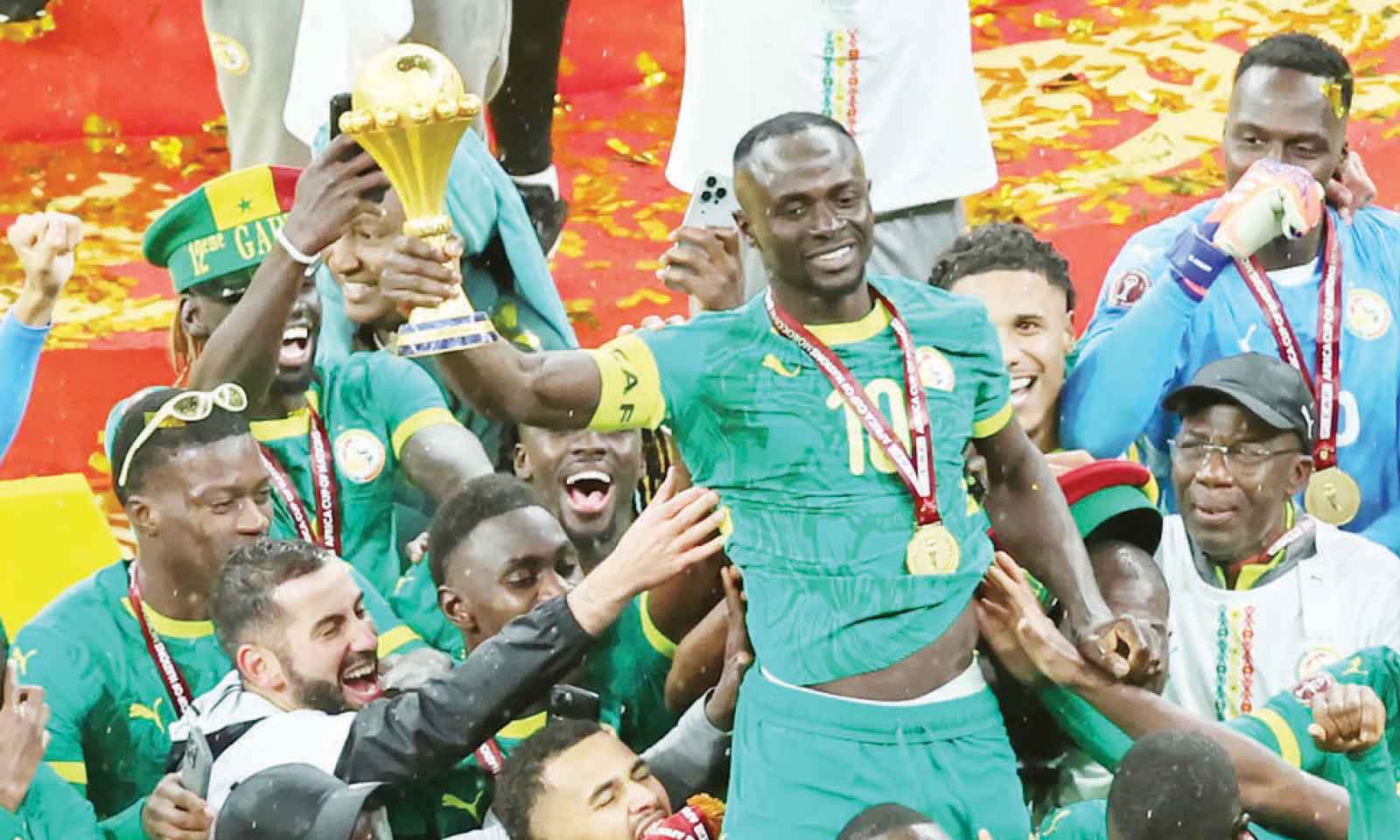
Samuel Mwale
BY any measure, the decision by CAF to overturn Senegal’s victory over Morocco, and award the title administratively to the defeated team, marks one of the most consequential rulings in African football history.
Whether ultimately upheld or overturned on appeal at the Court of Arbitration for Sport (CAS), this episode has already ignited a deeper question.
What, in African football, is the final whistle worth?
At the heart of the controversy lies a tension as old as sport itself—rules versus justice.
CAF’s regulations, aligned broadly with FIFA statutes, empower Confederations to sanction teams which lead to the abandonment of matches.
If Senegal’s players left the field for an extended period, a technical case exists for disciplinary action, including forfeiture.
But a final is not just any match.
It is the culmination of a tournament, a public spectacle, and a binding commercial event.
To replace a result earned on the pitch, in the biggest game and the final of the biggest football tournament on the continent, with one decided in a boardroom, is to step into far more delicate territory.
Process, without legitimacy, is perilous.
Even if CAF’s reading of the rules is technically correct, legitimacy depends on whether stakeholders – fans, players, sponsors, and broadcasters – believe that justice has been served.
If Senegal’s protest stemmed from a perceived breakdown in refereeing integrity, then the governing body faces an uncomfortable question: should a team be punished for refusing to continue under conditions it deems fundamentally unfair?
A rigid application of rules risks appearing indifferent to the very fairness those rules are meant to protect.
The implications extend beyond a single trophy. Football relies on a foundational principle: results are settled on the field of play.
Exceptions exist—match-fixing, ineligible players, fraud—but they are rare and tightly circumscribed.
Once the door opens to post-match reversals based on conduct intertwined with contentious officiating, the game enters uncertain terrain.
Every controversial decision becomes a potential legal dispute.
The locus of competition shifts from grass to governance.
That shift carries profound risks.
First, the authority of referees is weakened.
If teams believe that egregious decisions can be rectified after the fact through administrative channels, the incentive to comply on the field diminishes.
Protests escalate. Matches become harder to control. The referee’s whistle, once final, becomes provisional.
Second, moral hazard creeps in.
If outcomes can be influenced off the pitch, then pressure points multiply—on officials, on administrators, on disciplinary bodies.
Even the perception of such vulnerabilities is corrosive.
Football’s integrity does not depend solely on the absence of wrongdoing; it depends on the absence of credible suspicion.
Third, commercial certainty erodes.
Modern football is a complex ecosystem of broadcast contracts, sponsorships, and betting markets.
These industries operate on the assumption that the result at full-time stands.
Retroactive alterations trigger contractual disputes, financial losses, and reputational damage.
In the long term, they risk depressing the value of African competitions in global markets.
For CAF, the reputational stakes are acute.
African football has made significant strides in professionalization and global visibility.
Yet it continues to battle perceptions—fair or not—of administrative inconsistency and political interference.
A decision of this magnitude, particularly if seen as uneven or externally influenced, risks reinforcing those perceptions at precisely the moment when the continent seeks greater credibility on the world stage.
The governance question is, therefore, unavoidable.
CAF must demonstrate not only that it can enforce rules, but that it can do so independently, transparently, and consistently.
Allegations, whether substantiated or speculative, of pressure linked to hosting rights or geopolitical influence are especially damaging. In modern sport, governance is as much about perception as procedure. Silence or opacity invites mistrust.
This is where the appeal to CAS becomes pivotal.
The Lausanne-based tribunal has, over time, positioned itself as the final arbiter of sporting disputes, balancing strict regulatory interpretation with broader principles of fairness and proportionality.
CAS may uphold CAF’s decision, modify it, or order a replay.
Each outcome carries implications, but the process itself offers something equally valuable: an independent review that can restore confidence in due process.
Yet even a well-reasoned CAS ruling will not fully resolve the underlying issue unless it prompts reform.
CAF must use this moment to clarify and strengthen its frameworks around Match abandonment and protest protocols, use of technology and review mechanisms in officiating, disciplinary consistency across competitions, and Institutional safeguards against undue influence.
Above all, it must reaffirm a simple but essential principle.
Football matches should be decided by footballers, under fair conditions, and with finality.
If that principle is compromised, the consequences will not be confined to one tournament or one confederation.
They will ripple across the global game, challenging assumptions that underpin competitions from grassroots leagues to the World Cup.
The credibility of results, taken for granted by billions, would become conditional.
CAF now stands at a crossroads.
It can approach this episode as a narrow disciplinary matter, resolved through procedural correctness.
Or it can recognise it for what it is: a defining test of governance, integrity, and the very meaning of competition in African football.
The world is watching, not just to see who holds the trophy, but to understand whether, in African football, the final whistle still means what it should.
Samuel Mwale writes in his personal capacity. He can be contacted on email [email protected]. Mobile/ WhatsApp: +263773435974