tawandamusarurwa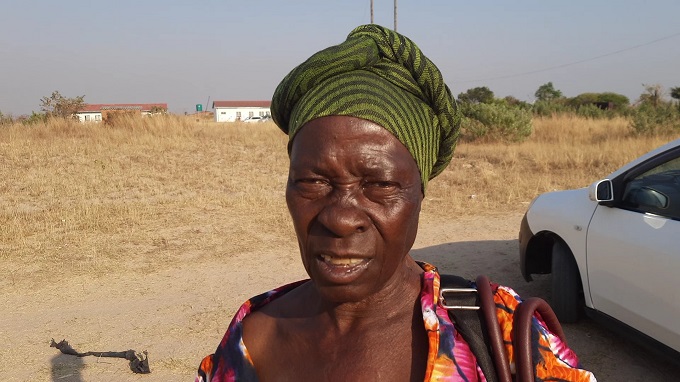
. . . the elderly, first timers speak
Richard Muponde and Debra Matabvu
WHEN 71-year-old Eustina Thomas walked out of the tent at the Nyanhi polling station in Zvimba West on Wednesday, she had a spring in her step.
In every election since 1980, Mbuya Thomas, as she is commonly known, has voted, and each time she casts her ballot, she feels content.
“I remember being ecstatic the first time I voted in 1980. I was among the first to vote in independent Zimbabwe. It gave me a sense of pride and belonging,” she told this publication.
At Sunningdale 1 polling station in Harare, 87-year-old Gogo Lizzie Sibanda said she was excited to cast her vote. She has never missed an election since 1980 and last Wednesday was another fulfilment of her democratic right.

“My late husband fought for the country’s liberation. This is a constant reminder for me to guard the country’s independence through my vote. I came here very early. I don’t remember what time it was. I first searched for my name on the voters’ roll on that wall and easily found it. I am happy ZEC (Zimbabwe Electoral Commission) officials said elderly people, pregnant women and the disabled do not queue,” she said.
She added that being old does not mean her right to vote has been taken away.
“God permitting, I will return and vote in the next election,” she said.
On August 23, first-time voter Takudzwa Mazikanda, from Nyanhi village, felt a sense of achievement after casting his ballot.
“I have participated and contributed to my future and generations to come and that is important for young people like myself,” the 21-year-old said, beaming with pride.
“I took advantage of the national civil documents blitz in April last year and got an ID (identity document).
“Thereafter, I registered to vote and have been consistently following updates from ZEC on this year’s elections. After casting my ballot, I felt a sense of accomplishment and I think I now understand people who vote in every election.”
Mazikanda is among the 800 000 new voters who registered to cast ballots in the 2023 harmonised elections.
The Constitution of Zimbabwe states that citizens who have reached the age of 18 years may vote in elections. This means this year’s youngest voters were born in 2005. First-time voters in Marondera Central said they had fulfilled their long-awaited dream of taking part in the decision making process for the country’s future.
Aaron Nabwezi (19), of Dombotombo, said: “I knew who I was going to vote for. After voting, I realised that I had contributed to the well-being of our country and its democracy. I will never stop voting in future elections because it has been an eye-opener.”
Miss Beauty Chiposo (25), of Destine suburb in Marondera, also revealed that she was a first-time voter. She failed to vote in the 2018 plebiscite, when she was over 18.
Political analyst Mr Godwine Mureriwa said he believes there were more first-time voters this year, compared to the 2013 and 2018 polls.
“During the 2013 and 2018 elections, youths were generally disinterested in politics, regardless of the demographic fact that this age group constituted the majority of potential voters. That apathy has currently diminished amid accelerated registration, mainly mobilised through social media.
“Political participation has also become visible and vibrant in tertiary institutions. Subsequently, the collective number of registered voters in Zimbabwe shot from around 5 million in 2018 to nearly 7 million in 2023. This implies that the vote of young people will be decisive now and in future. Political parties and Government will certainly consider seriously the interests of young people. Inevitably, they will assert themselves more as the national vanguard, and leaders of today and tomorrow.”
Another political analyst, Mr Tongai Dana, said youthful voters are an important factor in the electoral process.
“From a political standpoint, successfully mobilising first-time voters has long-term rewards for political parties. Research has shown that young people who take part in elections for the first time are more likely to continue voting in future elections. Also, those who do not take part in elections for the first time are likely not to vote again in the future. So, these first-time voters are crucial to the success of political parties,” he said.
In a recent paper, the United Nations said young people’s active and meaningful participation in elections promotes development of nations.
“Realising the young people’s right to participate and be included in democratic processes and practices is also vital to ensure the achievement of internationally agreed development goals and to refresh the development agenda.”
For thousands of first-time voters, it was the civil documents blitz which ran from April to September 2022 that gave them a chance to participate in the August 23 polls.
The civil documents programme coincided with the ZEC voters’ registration blitz, which saw first-time voters of various age groups, especially the youth, “killing two birds with one stone”.
For years, the Registrar-General (RG)’s offices across the country faced resource constraints and poor working conditions, among other challenges, making it difficult for people to obtain IDs, resulting in some failing to vote.
The Zimbabwe Human Rights Commission, in June 2020, published a document titled “Report on National Inquiry on Access to Documentation in Zimbabwe” and recommended that the country should develop a national policy on access to documentation and decentralisation of the RG’s office services.
As such, from April 2022 to July 31, 2023, Government conducted two major civil documents registration mobile blitzes that saw over 2 million people receiving the crucial documents.
In a recent interview, RG Henry Machiri said the measures introduced by Government are also meant to benefit citizens for other purposes besides elections.
“Requirements were relaxed to ensure those who need these documents will get them,” he said.
“So, the exercise covered the whole country and we are hoping no one will be left behind. The exercise seeks not only to help citizens during the elections but also for social and economic purposes such as going to school, employment reasons, etc.”



 Online Reporter