admin
admin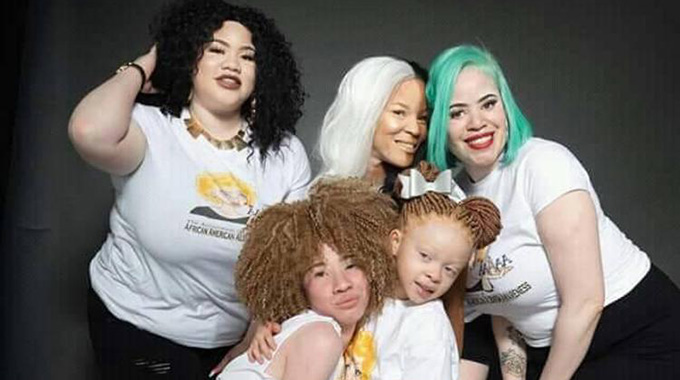
Rufaro Rufaz Chinyanga Features Correspondent
As I look into the mirror the reflection that beams back to me is that of a white man, skin snow white, hair yellow in colour yet the features don’t quite fit the Caucasian skin.
I look just like my father, that big flat African nose from my mother will never be pointy and the baggy chicks from my uncle’s side seem to be a family mark on all of us.
Thus I am white yet black
My name is Rufaro, the last remaining white boy from Bindura rural in Zimbabwe.
I am a young man with albinism.
Albinism is a genetically hereditary condition characterised by lack of melanin or colour in the hair, skin and eyes.
This makes persons with albinism vulnerable to the sun and the development of impaired eye vision.
However, the condition is manageable through wearing hats and protective clothing and the application of sun block lotions to protect against skin marks and wrinkles and skin cancer as well as the use of spectacles for visual aid.
It is sad to note the host of myths, discrimination and segregatory remarks and attacks on persons with albinism in Africa since time immemorial.
Many have lost their lives just for looking like me, for example, in East Africa due to ritual attacks.
In broad daylight persons with albinism are attacked and mutilated for their body parts. It is from such background that the United Nations in 2013, declared June 13 International Albinism Awareness Day.
This day is meant to celebrate and promote the rights and dignity of persons with albinism and give awareness on what albinism is, how it is a manageable condition worthy of celebrating.
In most countries in sub-Sahara Africa, albinism is viewed socially as a curse and a mysterious occurrence. This has led to persons with albinism in Africa and in Zimbabwe having challenges of being raised by a single parent or guardian as most fathers deny having a child with albinism.
Furthermore, finding love and marriage partners is a major challenge for persons with albinism.
Some have gone to extremes to state that persons with albinism bring good fortunes if you possess their body part.
This has resulted in persons with albinism in Malawi and Tanzania being mutilated or murdered as a full body is priced at $75 000 and an arm and leg goes for $15 000 on the black market of witchcraft and wizardry.
In addition, some claim that persons with albinism cure HIV and AIDS. Girls and women with this condition, especially in Zimbabwe, have become victims of this disease as they are either raped or lured into a relationship with ill intentions.
Thus a call to demystify and campaign against such despicable crimes and myths has been the mission of the White Yet Black Movement, an online and motivational grouping of persons with albinism and those who sympathise with the cause. The movement was created by my friends (who have the same condition) and myself on Facebook.
The movement has been in a radical drive to lobby and advocate for the rights of persons with albinism to be respected and promoted. It also advocates for persons with albinism themselves to be confident and stand up for themselves, to take up their rightful position in socio-economic and political space in Zimbabwe and beyond.
The movement is in partnership with organisations that represent persons with albinism in Zimbabwe and around Africa, so its membership is large.
The only challenges it is facing is access to media equipment such as computers and cameras for documentation of success stories of persons with albinism.
It would be important to raise awareness by creating content for television and online platforms such as YouTube, thus donations towards this need would be greatly appreciated.
Over the past year, the movement in partnership with Zimbabwe Albino Association and Miss Albinism Zimbabwe, has been in a campaign to rectify the disability laws of Zimbabwe.
This will result in incorporation of persons with albinism as has been stated in both the United Nations Convention on the Rights of Persons with Disabilities and the African Protocol on the rights of persons with disabilities.
Another aim is to market and promote models with albinism who take part in the Miss Albinism Zimbabwe pageant that has been running for the past two years.
We also have a line up of programmes in future, and need sponsors and partners for them to have the intended effect, hence our call to well-wishers to help us.
This year’s theme for albinism awareness day was “Made to Shine”.
Given the numerous persons with albinism that have contributed immensely to socio-economic and political development the world over, persons with this condition are made by God to shine not only due to their skins, but the gifts they have.
This year’s theme calls upon anyone who has a relative, friend or partner with albinism to encourage them to rise above their challenges and shine.
The world needs their gifts and Africa requires their minds for development.
The fact that God has created people with albinism means they are jewels and they should take their rightful position and shine in the Motherland of Africa.
People with albinism should shine just like Salif Keita, the world renowned afro pop legend, Yellowman from Jamaica, the reggae dancehall godfather, the late Professor John Makumbe, an academic par-excellence, among many others who have albinism but are living beyond their challenges.
#MadeToShine.
#WhiteYetBlackMovement.



 Online Reporter