

 admin
admin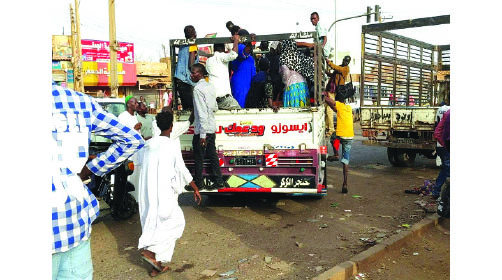
GENEVA. – The World Health Organization (WHO) expects “many more” deaths in Sudan due to outbreaks of disease and a lack of essential services amid fighting, its director general said on Wednesday.
Battles between Sudan’s army and the Rapid Support Forces (RSF) paramilitary since mid-April has killed at least 459 people and injured more than 4 000, according to the WHO.
“On top of the number of deaths and injuries caused by the conflict itself, the WHO expects there will be many more deaths due to outbreaks, lack of access to food and water and disruptions to essential health services, including immunization,” WHO director general Tedros Adhanom Ghebreyesus said.
“WHO estimates that one quarter of the lives lost so far could have been saved with access to basic haemorrhage control. But paramedics, nurses and doctors are unable to access injured civilians, and civilians are unable to access services.”
The UN health body was carrying out a risk assessment to determine whether the seizure of a laboratory in Khartoum housing pathogens represented a risk to public health.
“When lab workers are forced to leave a laboratory and untrained people enter that laboratory, there are always risks, but the risks are primarily to those individuals first and foremost to accidentally expose themselves to the pathogens,” said Mike Ryan, head of WHO’s health emergencies programme.
However, the absence of clean water and vaccines, as well as other sanitation issues, represented the main risk to Sudanese, he added.
Meanwhile, the United States and African nations were racing to secure an extension of a ceasefire in Sudan on Thursday, with the Sudanese army giving an initial nod to an African proposal calling for talks even as fighting continued.
Hundreds of people have been killed in nearly two weeks of conflict between the army and a rival paramilitary force – the Rapid Support Forces (RSF) – which are locked in a power struggle that threatens to destabilise the wider region.
An RSF statement accused the army of attacking its forces on Thursday and spreading “false rumours”, making no reference to the proposal which the army said came from the Intergovernmental Authority on Development (IGAD), an African regional bloc.
Gunfire could be heard yesterday in the Khartoum area, a resident said.
The existing three-day ceasefire brought about a lull in fighting, without completely halting it, but was due to expire at midnight and many foreign nationals remained trapped in the country despite an exodus over the past few days.
The army said on Wednesday that its leader, General Abdel Fattah al-Burhan, had given initial approval to the plan to extend the truce for another 72 hours and to send an army envoy to the South Sudan capital, Juba, for talks.
The military said the presidents of South Sudan, Kenya and Djibouti worked on a proposal that includes extending the truce and talks between the two forces.
“Burhan thanked the IGAD and expressed an initial approval to that,” the army statement said.
US Secretary of State Antony Blinken and African Union commission chairperson Moussa Faki Mahamat discussed working together to create a sustainable end to the fighting, the State Department said in a statement on Wednesday.
The crisis has sent growing numbers of refugees across Sudan’s borders. The UN refugee agency has estimated 270 000 people could flee into South Sudan and Chad alone.
With air strikes and artillery unleashed during the fighting, the conflict has destroyed hospitals and limited food distribution in the vast nation where a third of the 46 million people were already reliant on humanitarian aid.
Deadly clashes broke out in Geneina in West Darfur on Tuesday and Wednesday, resulting in looting and civilian deaths and raising concerns about an escalation of ethnic tensions, the update said.
France said yesterday it had evacuated more people from Sudan, including not only French nationals but also Britons, Americans, Canadians, Ethiopians, Dutch, Italians and Swedes – part of a wider exodus of expatriates. – Reuters



 Online Reporter