Online Reporter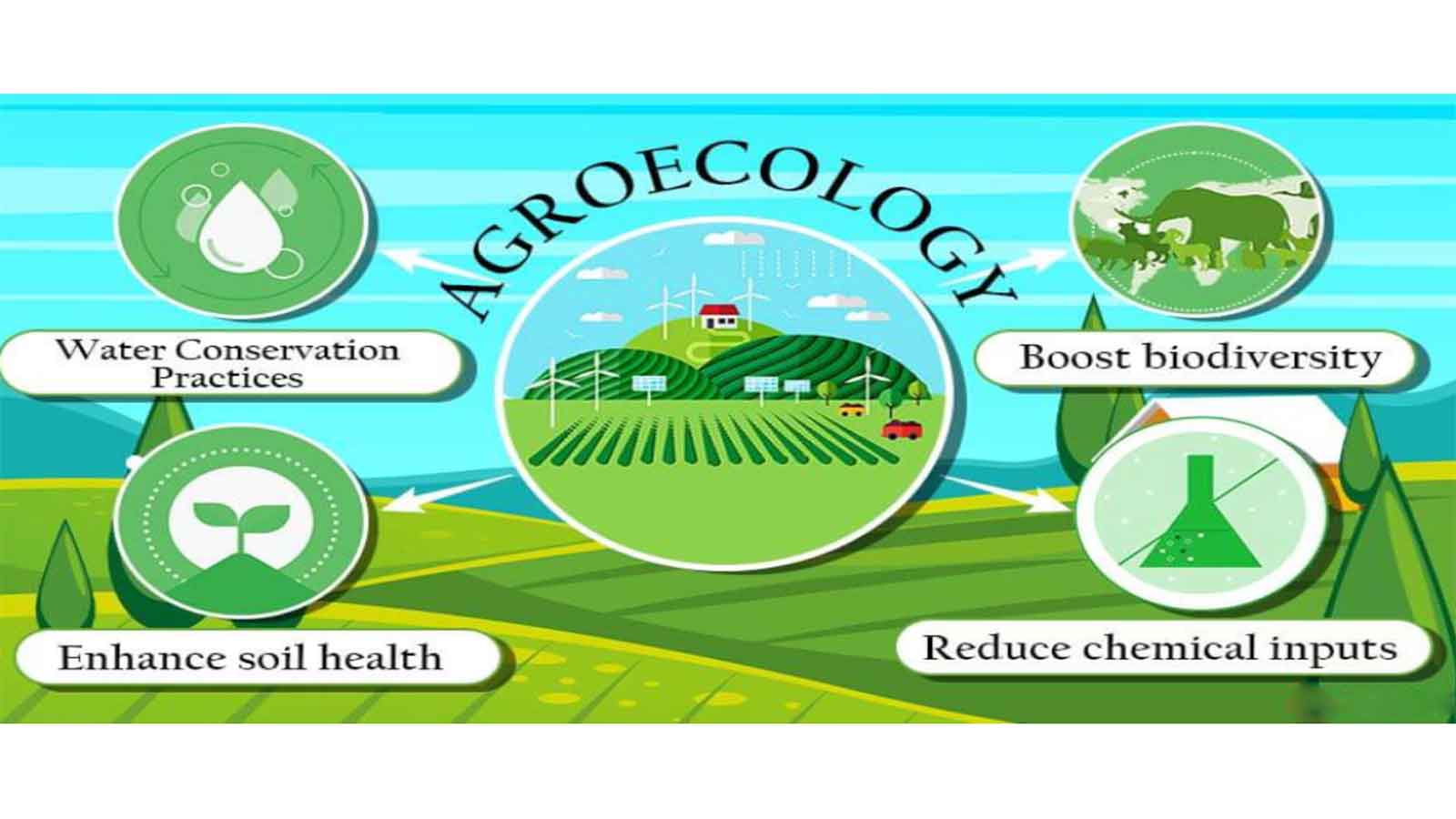
Word from the Market-Tina Nleya
RECENTLY, the Agricultural Marketing Authority (AMA), together with PELUM Zimbabwe and Knowledge Transfer Zimbabwe (eMKambo), participated in a training of trainers’ workshop on integrating agroecology into territorial markets.
The workshop was hosted by the Alliance for Food Sovereignty in Africa (AFSA), bringing together market practitioners, researchers, policymakers and civil society actors from across the continent to interrogate a pressing question: What kind of markets will sustain Africa in a time of climate change, tightening trade standards and rising consumer awareness around food quality?
The answer emerging from the discussions was clear: Agroecology is no longer a peripheral or ideological conversation. It is becoming a market strategy.
In Entebbe, Uganda, the rhythm of food markets tells a deeper story than prices and volumes. It tells the story of how Africa is quietly reshaping its food systems — not only to feed its people, but to protect its markets, sustain its farmers and future-proof its trade in an increasingly volatile global environment.
For years, agroecology has largely been discussed in the context of production systems: soil regeneration, biodiversity preservation, indigenous crops and climate resilience. While these remain central pillars, the Entebbe training deliberately shifted the lens towards markets.
The conversation moved beyond “how we grow” to “how we trade”.
Territorial markets — local, regional and cross-border markets embedded within communities — remain the backbone of Africa’s food systems. These are the public markets, informal markets, aggregation centres and structured trading spaces where the majority of food changes hands daily. They are multifunctional platforms that aggregate produce, distribute food, negotiate prices and sustain livelihoods.
They create space for smallholder farmers, women traders and youth entrepreneurs who may otherwise be excluded from formal corporate value chains. Yet these markets are not insulated from global pressures.
Climate shocks are reducing production predictability. Prolonged droughts, floods and erratic rainfall patterns are affecting supply volumes.
At the same time, global trade standards are tightening around pesticide residues, traceability and food safety compliance.
Consumer demand is evolving towards healthier, more natural and sustainably produced food. Agroecology offers an opportunity to align production practices with emerging market requirements — strengthening resilience while safeguarding trade competitiveness.
A practical illustration of structured market governance was observed during a visit to Kitooro Market in Entebbe — a well-established market built by the government of Uganda and managed by the local council. The market is clean, organised and clearly zoned, with labelled sections for vegetables, fruits, grains and other commodities.
The layout enhances ease of navigation for buyers and supports monitoring of produce categories. Such organisation reflects more than aesthetic appeal; it demonstrates governance and intentional design.
Clearly designated sections make it easier to profile commodities, monitor quality, enforce hygiene standards and improve traceability.
In a global market environment increasingly concerned with compliance and food safety, structured territorial markets become an asset rather than a liability.
For Zimbabwe, the lesson is instructive: Strengthening market infrastructure is as important as strengthening production systems. Globally, markets are undergoing structural shifts. Some countries are moving to restrict imports containing chemical residues beyond prescribed thresholds.
Others are tightening certification systems. Consumers in premium markets are demanding cleaner, traceable supply chains. Supermarket shelves increasingly carry labels such as “organic”, “naturally grown”, “sustainably sourced” and “climate-friendly”.
If Zimbabwean producers can demonstrate reduced chemical dependency, biodiversity preservation and climate-smart practices, they strengthen their position in both regional and international markets.
Tina Nleya is AMA’s marketing and public relations manager. She can be contacted on email: [email protected]. Word From The Market is a column produced by AMA to promote market-driven production.
Agroecology, therefore, becomes both a defensive and offensive trade instrument — protecting access to existing markets while opening new niche opportunities.
The workshop in Entebbe emphasised that agroecology must not remain confined to subsistence narratives.
It must be integrated into food baskets, processing nodes and structured market systems.
Many indigenous crops remain confined to raw, seasonal consumption. Few are processed into value-added products, beverages or branded commodities.
Without value addition, producers remain exposed to seasonal gluts and price suppression.
Territorial markets provide aggregation points for innovation.
When small grains are processed into flour blends, beverages or baked products, their market life extends.
When indigenous fruits are processed into juices or dried products, their price potential improves.
Agroecological production must, therefore, be linked with entrepreneurship and market development.
Climate resilience also begins at the market level.
Diversified markets that support multiple commodities create economic buffers.
When farmers grow diverse crops adapted to ecological zones, they reduce risk exposure.
When markets provide outlets for this diversity, resilience is reinforced.
Integrating agroecology into market systems strengthens resilience at three levels.
First, production resilience is enhanced through diversified, climate-adapted cropping systems.
Second, market resilience is strengthened through shorter supply chains and multiple trading outlets.
Third, trade resilience is secured through compliance with evolving safety and sustainability standards.
Another important dimension discussed during the training was information flow.
Modern markets increasingly rely on data: data on production volumes, residue levels, price trends and consumer preferences.
As digital platforms expand across the continent, opportunities arise to strengthen territorial markets through improved transparency and traceability.
For institutions like AMA, which are developing market intelligence systems, integrating agroecological indicators into data frameworks becomes strategic.
Tracking production practices, profiling commodities by ecological zones and supporting traceability mechanisms will become increasingly important in maintaining competitiveness.
By engaging in continental dialogues, Zimbabwe ensures it remains abreast of evolving standards, policy directions and consumer trends. In a fast-changing trade environment, remaining static is not an option.
Agroecology is not merely about eliminating synthetic inputs. It is about repositioning agricultural systems to respond to market evolution.
It is about producing food that aligns with ecological conditions, consumer demand and trade standards simultaneously.
For Zimbabwe, the pathway forward involves investing in territorial market infrastructure, strengthening value addition for indigenous crops, embedding agroecological intelligence into market systems and ensuring producers are prepared for shifting compliance requirements.
In the evolving architecture of global trade, resilience will define competitiveness.
Markets rooted in their territories, aligned with their ecosystems, and responsive to consumer expectations will endure.