Online Reporter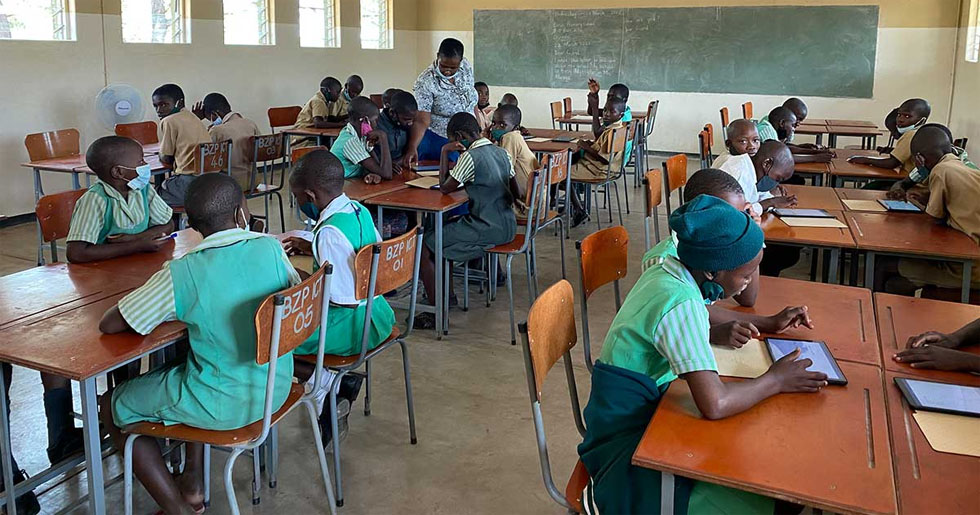
Gabriel Manyeruke
THE 2025 Zimbabwe School Examinations Council Grade Seven results, showing a slight decline from last year, have sparked national debate.
Yet beneath the statistics lies a truth we often overlook: The performance of our education system is only as strong as its most disadvantaged learner.
In a country where information is now a click away for many, the persistent underperformance of rural schools exposes a widening educational divide that technology alone has not bridged.
The resource desert
While the curriculum has evolved to meet 21st-century demands, many rural schools remain trapped in a bygone era.
Learners are expected to research, analyse and apply knowledge yet they do so without adequate textbooks, stationery or internet-enabled devices.
Some schools still rely on outdated materials that no longer align with the heritage-based curriculum. The result is predictable: compromised teaching, compromised learning and compromised outcomes.
Even where computers exist, electricity does not. Unreliable power supply has rendered digital learning a luxury rather than a norm.
Solar systems offer a lifeline, but their cost places them far beyond the reach of most rural schools.
Without consistent power, the promise of digital literacy remains unfulfilled and rural learners continue to lag behind their urban peers who enjoy uninterrupted access to online resources.
Teachers on the move
Infrastructure tells its own story.
Dilapidated classrooms, crumbling staff houses and poor amenities have fuelled a steady exodus of teachers from remote districts.
Although the Government continues to deploy educators to these areas, retention remains a formidable challenge.
Every departing teacher disrupts continuity, weakens school culture and widens the learning gap.
For many rural children, schooling begins with a journey often more than five kilometres long.
They walk sometimes barefoot, endure winter frost and brave flooded rivers during the rainy season.
By the time they arrive, fatigue has already stolen the sharpness of their minds.
In some communities, the absence of proper classrooms forces learners to study under makeshift structures vulnerable to wind, rain and heat.
Rural children also carry burdens beyond their schoolbags.
Before dawn, many are already in the fields, fetching water or gathering firewood.
After school, the cycle continues.
Homework becomes a battle against poor lighting and exhaustion.
These are not mere inconveniences; they are structural disadvantages that urban learners rarely face.
Hunger in the classroom
Years of drought have deepened food insecurity, leaving many families unable to provide consistent meals.
School-feeding programmes, where available, have kept learners in class.
Where absent, hunger drives children into the bush in search of wild fruits.
A hungry child cannot concentrate, let alone excel.
While we debate pass rates, we seldom discuss those who never make it to the examination room.
Many rural learners fail to register for O-Level due to fees, uniforms or levies.
Their absence is not recorded in the statistics, yet it is one of the most painful indicators of inequality.
However, social protection programmes, like the Basic Education Assistance Module run by the Government, are designed to provide financial assistance to orphans and other vulnerable children to access basic education tuition and primary levies to keep these children in school.
Private schools: A solution or a symbol?
The rise of private schools has expanded educational options, but mostly for those who can afford them.
For low-income rural families, these institutions remain distant symbols of opportunity rather than accessible solutions.
Government efforts are visible, but the scale of need demands broader participation.
Alumni, community leaders and successful sons and daughters of rural soil must return not only in memory, but in action. A classroom block, a solar panel, a set of textbooks or a teacher’s cottage can transform a school’s trajectory.
If we truly believe in equal opportunity, then we must ask ourselves: How long shall a child’s future continue to depend on their geographical location rather than their potential?
Gabriel Manyeruke is an author and educator at Wise Owl High School in Marondera.