Chronicle Editor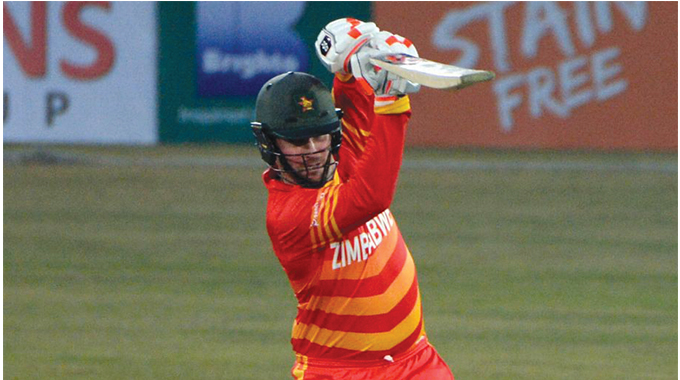
ZIMBABWE captain Brendan Taylor was out in an unusual manner during the second ODI against Bangladesh, his hit-wicket dismissal appearing to fall into a grey area in the laws of the game.
The decision went up to the third umpire, and Taylor walked off looking miffed when the red light came on.
The incident took place in the 25th over of the Zimbabwe innings in Harare.
Taylor attempted an upper-cut against the left-arm quick Shoriful Islam, and failed to connect with the ball. Once the ball went past his bat, Taylor straightened up from his semi-crouched position and swung his bat backwards, dislodging the off bail in the process.
One of the Bangladesh fielders noticed, and appealed. On-field umpire Marais Erasmus referred it to the TV umpire Langton Rusere, who adjudged Taylor out for 46.
According to Law 35.1.1.1, batters can be out hit wicket if they put down the wicket with their bat or any part of their person “in the course of any action taken by him/her in preparing to receive or in receiving a delivery”.
According to Law 35.2, the batter is not out hit wicket if the wicket is disturbed “after the striker has completed any action in receiving the delivery,” unless the striker is setting off for a run or lawfully making a second stroke in order to protect their wicket.
The ambiguity in this instance would refer to the umpire’s interpretation of whether or not Taylor’s actions after the ball had passed his bat were a continuation of the action taken to receive the delivery, that is, whether the umpire judged them to be part of his follow-through, or whether they constituted a separate action akin to the shadow practice that batters do after playing a shot.
Further ambiguity is created by the dead-ball law, which states that the ball is dead when “it is finally settled in the hands of the wicket-keeper or of the bowler”.
The ball may have been in the keeper’s gloves before Taylor broke the wicket, but the key word is “finally”, with the law going on to add:
“Whether the ball is finally settled or not is a matter for the umpire alone to decide.”
“The ball shall be considered to be dead when it is clear to the bowler’s end umpire that the fielding side and both batsmen at the wicket have ceased to regard it as in play.”
It would seem, then, that the umpires’ interpretation, in the end, hinged on two things: whether Taylor disturbed the stumps in his follow-through or after he had completed his shot, and whether or not the ball was, by that point, dead.
Taylor had already come close to a hit-wicket dismissal earlier in the day.
In the ninth over of Zimbabwe’s innings, he had slipped after defending a delivery from Taskin Ahmed, and while falling over his left boot had come off, and narrowly missed hitting the stumps. — ESPNcricinfo



 Online Reporter