Online Reporter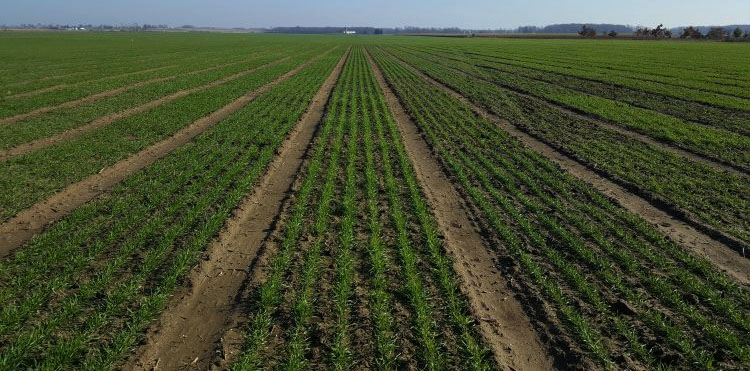
Lovemore Kadzura
Post Reporter
WINTER wheat planting is gathering momentum across Manicaland, with farmers optimistic of beating today (Friday’s) planting deadline of a season marked by improved access to inputs, favourable moisture conditions and Government support programmes that should deliver a stronger harvest.
Planting is coming to an end in key wheat-producing districts of Makoni, Mutare, Mutasa and Chipinge, where farmers have been intensifying land preparation, planting and irrigation ahead of the closure of the window.
Manicaland has set the planting target of 15 000 hectares this season, and farmers have until today (Friday), to beat the planting cut-off date.
Both smallholder and commercial farmers have responded positively to calls by the Government to increase wheat production.
This week, the Government, through the Grain Marketing Board, released US$4 million to wheat farmers to clear the outstanding 2025 debt.
Manicaland Provincial Agriculture and Rural Development Advisory Services acting director, Mrs Bessy Masvanhise, was not at liberty to disclose the provincial planting statistics, arguing that such information will be released by her superiors soon.
Manicaland is emerging from a markedly improved agricultural season after last year’s drought, with normal to above-normal rains across most wheat-growing districts.
Dams and rivers have filled up, and the Zimbabwe National Water Authority has assured farmers of sufficient irrigation water.
Adequate electricity has also been guaranteed, leaving growers with no extenuating worries beyond focusing on sound agronomic practices – well-timed irrigation cycles, correct fertiliser application and effective pest management to secure expected yields and sustained productivity levels.
Farmers interviewed this week said confidence has been boosted by stable water levels in dams and irrigation schemes following a good rainy season, as well as the availability of seed and fertiliser under Government-backed support schemes.
Middle Sabi Farmers Association chairman, Mr Skumbuzo Todhlana said farmers in the area have been contracted by CBZ Bank, AFC Bank and the Agriculture and Rural Development Agency (ARDA), while most were under the Government scheme.
“Planting is progressing well here. Farmers have contracts with CBZ, AFC and ARDA, and the majority are on the Presidential Input Scheme, contracted for up to two hectares. There is ample water in Save River to sustain the season. We have finally resolved electricity challenges with ZESA, which has installed prepaid metres. ZESA is gradually deducting what farmers owe and allowing them to buy electricity to run irrigation pumps. Farmers are only supplied with seed and fertilizer, and left to source funds for electricity, water and labour, and this must be addressed as it erodes profitability. This is compounded by the late payment for delivered wheat, which demoralises farmers. A farmer must be paid within a reasonable period to remain viable,” said Mr Todhlana.
Zimbabwe National Farmers union agronomy officer, Mr Antony Manyika said most commercial farmers have already planted, and some wheat has since germinated.
“Planting early allows them to grow irrigated tobacco on the same land afterwards. There is abundant water in dams and electricity is available. Some small-scale farmers relying on the Government inputs are still to receive them,” said Mr Manyika.
Winter wheat is regarded as critical to Zimbabwe’s drive for national food security and reducing imports.
Authorities have repeatedly urged farmers to maximise hectarage under wheat to help sustain the country’s strategic grain reserves. Sufficient wheat production offers the country significant economic and food security advantages.
It reduces dependence on costly imports, conserving scarce foreign currency for other essential needs, while reliable domestic supply stabilises bread and flour prices, shielding households from global market volatility and inflation. It strengthens national food security by ensuring strategic grain reserves are maintained, protecting the population against drought and supply shocks.
Additionally, a thriving wheat sector supports agro-industry growth, attracts investment, and enhances rural livelihoods, while bolstering economic resilience, lowering import bills, and underpinning the country’s drive towards agricultural self-reliance and food sovereignty.