Andrew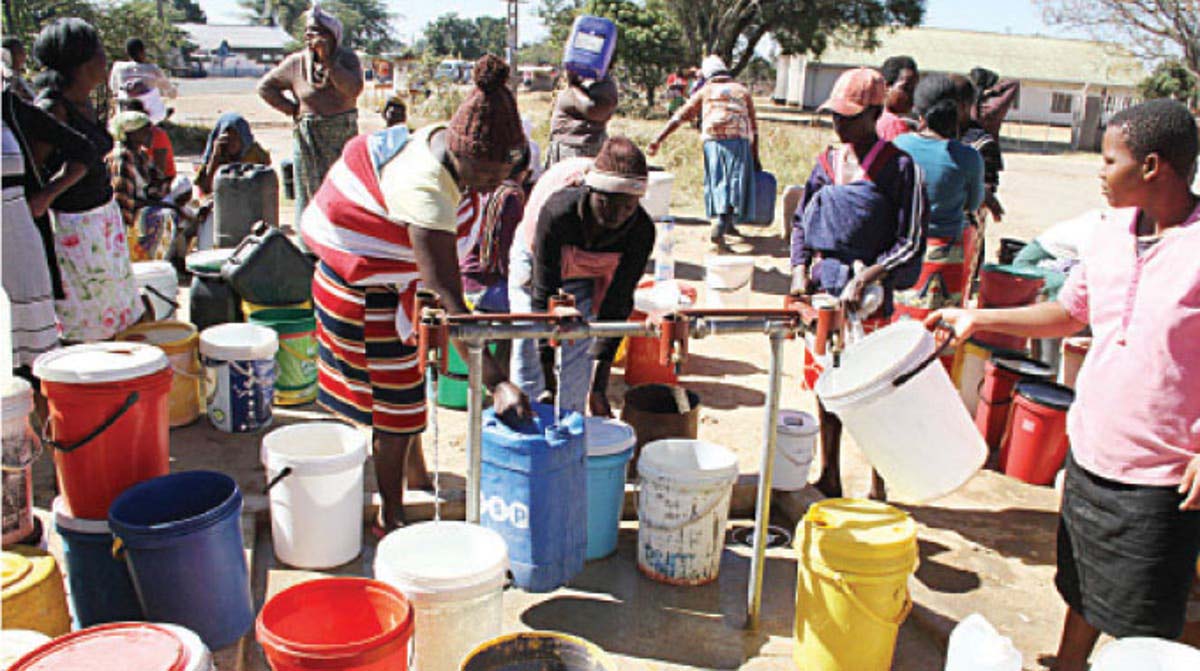
Phillipa Mukome-Chinhoi
WOMEN usually have the onus of fetching water from nearby boreholes and unprotected wells.
The importance of water cannot be overemphasised, as it is needed for drinking, cooking and other domestic chores.
In most families, the burden of looking for water often falls on women, who have to sacrifice their time everyday as the sources are most often than not characterised by long, winding queues.
But besides monotony, there is serious abuse suffered at the hands of self-proclaimed water marshals, especially in Harare and Chitungwiza.
In some cases, they are either charged for water or forced into sexual relationships to easily access the resource.
Mai Lulu from Zengeza 1 agonises over the situation she finds herself in.
“Most women have no time to rest. I wake up as early as 3am so as to improve my chances of getting water at a local borehole. Between 6am and 7am, I get back home to prepare for my school children and husband to go to work,” she said.
“After they leave, I go back to the borehole to fetch more water and maybe return home around midday to start cleaning, washing and doing other chores. As women, we are greatly affected by shortages of water because our production time is wasted at boreholes and wells.”
Her colleague, Mai Kawara from St Mary’s, is equally troubled.
“I am often tired at work since I always make sure there is water in the house before l leave for work. I carry at least four 20-litre buckets per day. By the time I get home from work, the boreholes will either be locked or it will be too late to go there alone. As a woman, I fear being raped or robbed,” she said.
However, water shortages affect everyone, men included.
“I take turns with my wife. When I am around, I fetch water alone or, in some instances, we go together. This should not be a single person’s responsibility. Besides, accompanying your wife helps protect her from any possible abuse by rogue elements in society,” argued Munesu Mureva.
Chitungwiza acting town clerk Dr Tonderai Kasu said women needed to be protected from challenges associated with water shortages.
“Women bear the brunt of taking care of the sick at home because of water-borne diseases. The risk of water-borne disease outbreaks is high because most of the wells are not protected . . .
“Government should come up with policies and strategies and climate change adaptations that will limit the negative effects of climate change and take advantage of opportunities provided by the changing climate,” he said.
Sectors such as agriculture, health and manufacturing are similarly affected. Director for climate change management in the Ministry of Environment, Climate Change, Tourism and Hospitality Industry, Mr Washington Zhakata, believes water shortages continue to impact mostly on African countries.
“Effective climate change adaptation recognises that women, men and children experience impact differently depending on where they live, how they sustain their livelihoods and the roles they play in their families and communities,” said Mr Zhakata during the recently held Capacity Building workshop on the Dissemination of Climate Change Information.
He said climate change effects have to be properly managed through collective action.
“There is need to set a path towards a low carbon, climate-resilient future.”
Policies and strategies have been developed since the adoption of the Paris Agreement — or Paris Climate Accords – in 2015 to mitigate the effects of climate change.
Among them are the National Climate Policy, National Climate Change Learning Strategy, Low Emission Development Strategy, NDC Two-Way Communication Strategy, National Adaptation Plan Roadmap, the 2017 System Development Plan, the Renewable Energy Policy, Biofuels Policy, Revised National Gender Policy and Implementation Plan, National Water Resources Master Plan, among others.
But, while some of the water challenges we face are due to the effects of climate change, local authorities have also been blamed for the crisis.
The Harare Residents Trust claims that 60 percent of Harare’s treated water is being lost through leakages and illegal connections.



 Online Reporter