Online Reporter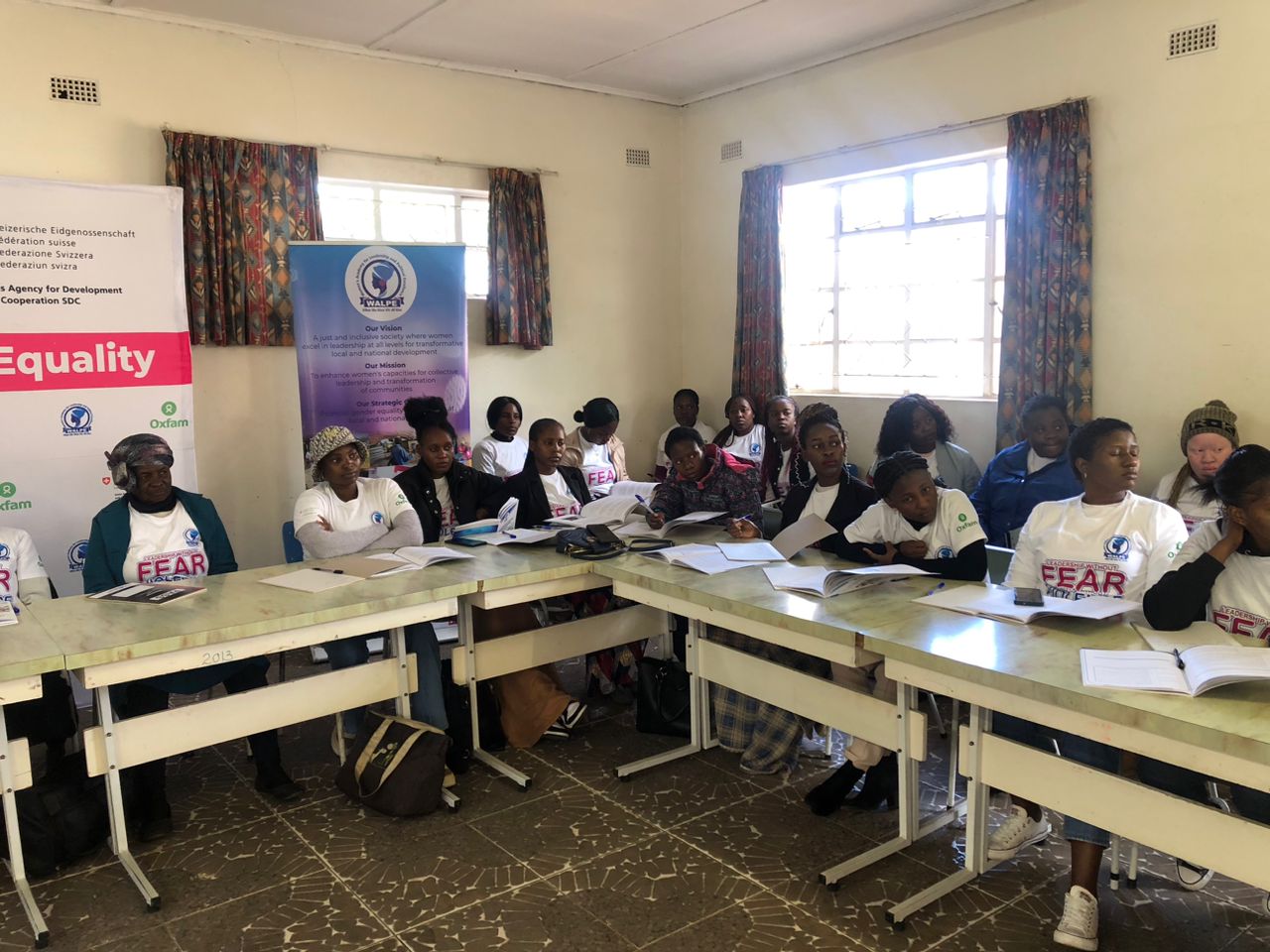
Trish [email protected]
WOMEN have long expressed concerns about the male-dominated landscape of leadership citing a persistent lack of equal opportunities compared to their male counterparts. This imbalance is not only evident in the numbers but also in the systemic barriers and biases that prevent women from reaching their full potential.
This emerged during a leadership training for women including the youths from Bulawayo where they received training on effective leadership skills from the Women’s Academy for Leadership and Political Excellence (WALPE) working in collaboration with the Bulawayo Progressive Residents Association (BPRA).
WALPE is a women’s political empowerment and leadership academy set up to advance knowledge and deepen the capacity of women who want to successfully run for public elected positions.
It seeks to provide women with technical and practical skills that empower them to run for public office. The academy is driven by the need to challenge the status quo through creating platforms and opportunities for women to get into decision making and leadership positions.
Women and the youth were educated on what leadership roles require including concepts like ubuntu/unhu, climate change effects, grooming and public speaking among others.

WALPE’S Deputy Director Ms Jessie Chihora highlighted that the training seeks to equip women with necessary skills since they make up a significant part of the country’s population.
One of the youths who were present Ms Zinhle Ndlovu (24) said the problem that the girl child faces is lack of support from family as they often think the boy child is more capable.
“Society still has the notion that girls cannot take up leadership roles. As the girl child sometimes we face challenges like sexual harassment when we try to run for leadership roles, we end up in a serious dilemma,” she said.
She said the training is going to assist them in navigating those challenges.
Another participant Ms Daphne Tengende (29) said women find themselves in a space with limited resources supporting women in leadership roles.
She said society often questions what value women bring, making it challenging without necessary resources.
She said the key to addressing this problem is the need for budgets specifically allocated for women in leadership positions at community, district, provincial and national levels.
“Another challenge is the societal perception that leadership is a male domain. Women seeking leadership positions such as in politics are often labeled aggressive or unfeminine. To address this, we need a mindset shift educating society that women’s leadership is about having a voice that needs to be heard, not about competing with men,” said Ms Tengende.
Ms Tengende highlighted the importance of women’s representation in leadership positions and the need for advocacy and awareness to empower them.
“A number of women and youth have potential and skills but lack awareness and guidance to pursue leadership roles. They often wait for someone to encourage them,” she added.
She further emphasised the significance of leadership training in empowering women, fostering networks and laying the groundwork of future leaders.