Online Reporter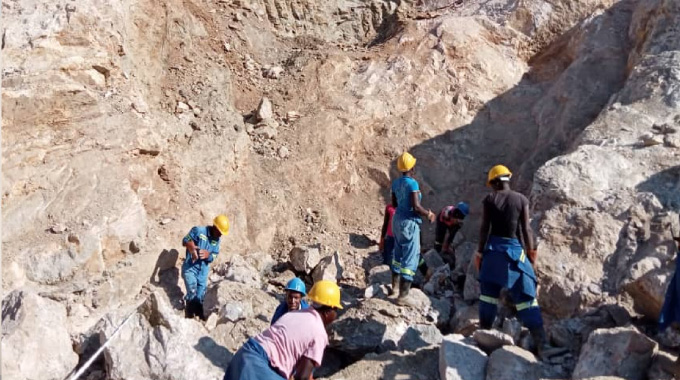
Nqobile Bhebhe [email protected]
ARTISANAL and small-scale mining has long been the heartbeat of Gwanda’s economy, sustaining thousands of households across Matabeleland South and anchoring livelihoods in many gold-rich communities.
Across gold belts stretching from West Nicholson to Filabusi, and the settlements around Blanket Mine and Matobo District, women are steadily redefining their role in the sector.
No longer confined to traditional support tasks such as ore crushing, panning or cooking for miners, many women are now pushing for ownership of mining claims, leadership roles in syndicates and greater transparency in gold sales.

For many families in the district, income generated from small-scale shafts and riverbed operations underpins household survival. Earnings from gold mining often finance food security, school fees, livestock purchases and small businesses in townships such as Jahunda and Spitzkop.
During productive seasons, miners reinvest their proceeds into cattle, maize fields and solar-powered boreholes.
Others build rental cottages in town or establish small enterprises such as hardware shops, bottle stores and transport services ferrying ore and groceries between mining sites and nearby communities.
Women remain central to this vibrant ecosystem. They trade mining supplies and run food-vending businesses that keep operations functioning at mine sites.
Economic analysts say artisanal mining ecosystems thrive on such informal but structured supply chains.
Women vendors, they note, enhance efficiency, reduce operational disruptions and inject liquidity into local markets, making them indispensable players rather than peripheral participants.
When gold output declines, households often pivot back to agriculture, cross-border trading through Beitbridge or informal commerce to sustain livelihoods.
However, despite their significant contribution to the sector, women continue to face barriers in accessing mining claims, equipment and leadership roles within mining syndicates.
Control over gold sales and proceeds also remains uneven in many instances, reflecting broader gender dynamics within rural communities.
Community-based savings clubs have increasingly emerged as an important pillar of resilience in these mining communities. Village Savings and Loan Associations (VSLAs) and other community savings groups allow women and men to pool resources, access small loans and invest in alternative ventures.
This reduces dependence on informal lenders and helps families withstand fluctuations in gold output and prices.
Zimbabwe Indigenous Miners Association (Zima) national chairperson Ms Silingiwe Masuku said the mining sector has undergone significant transformation over the years, opening opportunities for women to participate beyond traditional roles.
“The sector has evolved significantly. Today, women are studying mining engineering, geology and mineral processing. We now see women managing mining operations, driving heavy equipment and participating directly in mining activities.
“It is therefore important that women move beyond the traditional support roles and become shareholders, claim holders and decision-makers. Ownership is where real economic empowerment lies. When women control assets within the mining sector, they participate directly in wealth creation, build generational wealth and improve household livelihoods.
“Through Zima’s emerging mining cluster model, women are being encouraged to participate in structured mining groups where they can access claims, technical expertise and investment partnerships. Empowering women in mining is therefore not just about fairness; it strengthens governance, improves sustainability and expands the sector’s economic impact,” she said.
Ms Thandekile Ndlovu, a miner based in Gwanda, said women must participate fully across the entire mining value chain.
“For years, women were expected to crush ore or cook for miners while men controlled the claims and the gold sales,” she said. “We are now saying we want to be part of everything, from owning claims to negotiating sales. If we do not sit at the table where gold is sold, we remain vulnerable.”
She said greater control over mining proceeds has a direct impact on household stability.
“When a woman has a say over how gold money is used, school fees are paid on time, groceries are bought and livestock is invested in. It changes the whole family,” Ms Ndlovu said.
Ms Nomusa Moyo said structural barriers continue to limit women’s ability to participate fully in the sector.
“Most of us do not have registered claims in our own names. Without a claim, you depend on someone else for access. Even getting equipment such as compressors or generators requires capital and connections. We want equal opportunity to register claims and to lead syndicates, not just to be helpers.”
She added that formal leadership positions are crucial for transparency and accountability within mining operations.
“When women are part of the executive in a mining co-operative, decisions become more transparent. We push for safety, proper accounting and fair sharing of proceeds,” Ms Moyo said.
Savings clubs have also played a key role in strengthening financial literacy and economic security among women miners.
Ms Sibusisiwe Dube, who belongs to a savings club in Spitzkop, Gwanda, said the initiative has transformed her participation in the mining sector.
“Through our savings group, I managed to buy basic mining equipment and also start a small poultry project. When gold output drops, I do not panic because I have another income source,” she said.
She added that financial literacy has empowered women to challenge opaque gold trading practices.
“In the past, some miners were forced to sell gold cheaply because they needed urgent cash. Now we can borrow from our group instead of rushing to sell at a loss,” she said.
Women miners say the financial knowledge gained through savings clubs has strengthened their confidence to demand accountability in gold sales.
“Understanding money management gives us power,” Ms Dube said. “We can question how much gold was sold and at what price. We can insist on proper records.”
Claim ownership, access to equipment, leadership roles and control over proceeds are therefore not just issues of equality, but critical pillars for household survival and community resilience.
Beyond mining itself, women vendors also play a vital role in sustaining operations at artisanal sites.
Whenever a gold rush breaks out across Gwanda’s mineral belts, women selling cooked meals, groceries, water, protective clothing and mining accessories quickly establish makeshift businesses around the sites.
Their presence ensures that miners remain productive with minimal disruption to operations.
“We may not go underground, but without us operations would slow down,” said Ms Nontokozo Mlalazi, a vendor who has operated at several gold rush sites in the district. Miners need food, candles, gloves and even basic tools every day. The money we earn here feeds our families and pays school fees.”
Economist Ms Alice Chikonzi said women vendors form an essential support system within artisanal mining ecosystems.
“Artisanal mining is not an isolated activity. It thrives on an informal but structured supply chain. Women vendors enhance operational efficiency by ensuring constant availability of essential goods and services. Their participation strengthens household incomes and improves community resilience, especially in areas with limited formal employment.”
Income generated by the women often supports entire families, contributing to food security, healthcare access and children’s education, she added.
Ms Masuku said several interventions could significantly improve women’s participation in mining ownership and leadership.
“Firstly, there is a need for targeted financial support mechanisms for women in mining. Government-backed mining funds, equipment leasing schemes and low-interest financing programmes can help women acquire claims and access the machinery needed to operate efficiently.
“Secondly, technical training and capacity building are essential. Programmes that equip women with geological knowledge, mining management skills and regulatory understanding will empower them to run sustainable mining operations,” she said.
“Government and industry institutions should support structured mining co-operatives and clusters where women hold equity and leadership positions. This allows women to pool resources, share equipment and operate on a larger scale while reducing operational risks.
“Zima is already moving in this direction by encouraging cluster mining models that bring together miners, investors and technical experts under structured arrangements. This model makes it easier for women and emerging miners to participate in the sector.”
She added that improving access to geological data, licensing support and mentorship programmes will help more women transition from informal participation into formal mining ownership.
“Zimbabwe’s mining sector holds enormous potential for national development. Ensuring that women participate fully, not only as workers but also as owners and investors, will strengthen the gold value chain and promote inclusive economic growth,” Ms Masuku said.
For many communities in Matabeleland South’s gold-rich belts, the mineral wealth beneath the soil represents far more than precious metal — it is a lifeline that bridges hardship and hope for thousands of households.