Chronicle Editor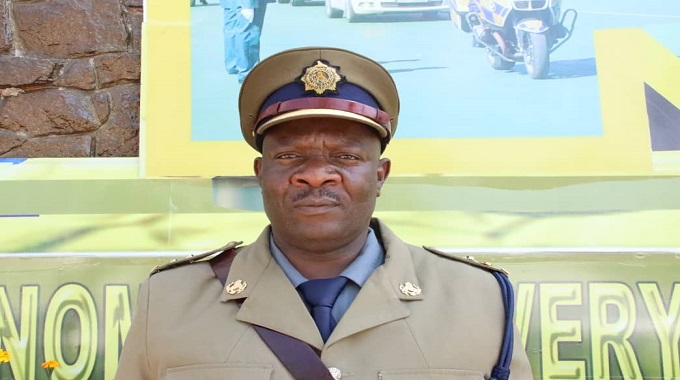
Mkhululi Ncube, [email protected]
PARLIAMENT has been urged to speed up the passage of a sexual harassment law before the legislative Assembly is dissolved ahead of general elections that will be held between July and August this year.
Sexual harassment which affects mainly women, is rife at workplaces and at both private and public institutions.
Some company bosses are said to be not keen to adopt policies which address the problem as they fear being exposed and brought to book.
In June last year, the Public Service Commission (PSC) launched the Public Service Sexual Harassment Policy to help address sexual harassment within the civil service.
This followed a study done with support from the United National Development Programme (UNDP) which showed that sexual harassment is prevalent but the problem is not being adequately addressed.
The country is yet to enact a law that addresses the problem although a new Labour Bill that also covers sexual harassment is before Parliament.
Last Wednesday, Emthonjeni Women’s Forum hosted stakeholders who included the police, local authority officials, workers’ unions representatives and officials from Government ministries among others to deliberate on the need for companies to adopt sexual harassment policies.
Emthonjeni Women’s Forum Director Mrs Sikhathele Matambo said while there is an amendment to the Labour Act before Parliament to deal with sexual harassment, there is fear that the legislative Assembly may be dissolved before the bill sails through which will mean the whole process starting all over again.
Mrs Matambo and other stakeholders called for the speedy enactment of the law to deal with the problem.
She said most workplaces do not have sexual harassment policies due to the fact that the labour law does not adequately address the problem.
“We target workers’ unions and different leaders within the private and public sector to raise awareness on the need to have sexual harassment policies within their workspaces. This meeting has been necessitated by the fact that most workspaces do not have such policies, probably because nationally the Labour Act does not comprehend sexual harassment. We want the workers’ unions to push for such policies within their companies so that women and students on attachment are protected from all forms of sexual harassment within the workspace,” she said.
“We want the Labour Act to be comprehensive instead of just defining what sexual harassment is. It should have provisions and mechanisms for non-retaliation for whistle blowing and those who speak out against harassment in line with the International Labour Organisation 190 convention,” said Mrs Matambo.
Food Federation of Zimbabwe president Mr Moses Matupire said a national law addressing sexual harassment will protect victims.
“There is a need for statutory instruments from the National Employment Councils (NEC) level so that employers who in most cases are the perpetrators are involved and bound to act on this. There is a need for a policy at national level which criminalises this so that perpetrators are brought before the law. This problem is prevalent at many companies and due to deficiencies of the law, victims are not protected and some are being fired. Some cases are being swept under the carpets while others use connections to make sure they are not exposed,” said Mr Matupire.
Zimbabwe Catering and Hotels Workers Union organiser, Mr Nyikadzino Madzonga said Government is duty-bound to put the law into place since it is a signatory to the ILO convention on sexual Harassment.
He said there is rampant sexual harassment of female students on attachment in the sector by some in positions of power.
“Sexual harassment is very rampant in the catering industry with the girl child the most affected. The girls who come for attachment in the sector are taken advantage of by the powers-that-be because they know the girls have to finish their education. Due to that many girls end up giving in because they have nowhere to report. In some cases even if they report the perpetrator goes scot-free because there is no law that binds him. In the bill there should be a section that treats this as a criminal offence, ” said Mr Madzonga.
Bulawayo provincial police spokesperson Inspector Abednico Ncube who was part of the deliberations said police have challenges investigating such cases due to deficiencies in terms of the law.
He said while sexual harassment is a serious matter, cases end up being reduced to minor offences. Sexual harassment is a very broad subject and for police operations we will be looking at cases like rape, indecent assault including fondling of breasts and the like where one can be arrested and taken to court. Sexual harassment is broad and includes issues like verbal and facial abuses and various other forms of treatment which may be uncomfortable to another person. When people report such cases to the police they can be reduced to mere conduct likely to provoke breach of peace,” said Insp Ncube.
He said it is easy to attend to rape and indecent assault cases because they have been criminalised by the law.–@themkhust



 Online Reporter