admin
admin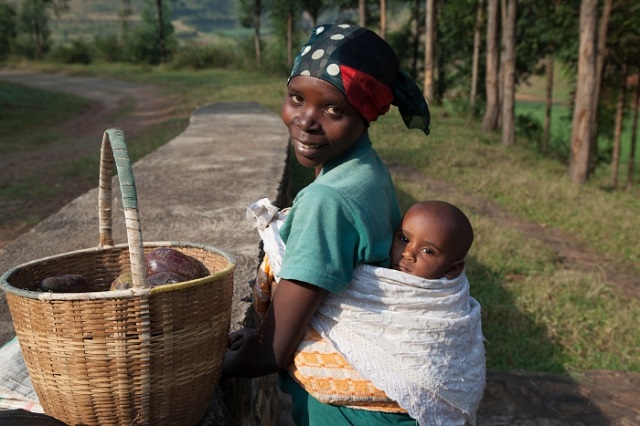
It was still dark, not yet 4am. But outside Letenka��iel was moving already, rekindling the fire from the overnight embers.
Inside the mud-walled hut, her husband Gebremariam coughed. Then as the first birds were heard, he swung his legs over the side of a bed made from rough rope strung across a wooden frame. He stood in the doorway and stretched.
His wife was already at her morning chores.
As the cold dawn light suffused the sky she sprinkled water from a squat earthenware jar across the mud floor and began to sweep the dampened earth with a brush of long grasses bound tightly together. The day had begun.
Women work two-thirds of Africaa��s working hours, and produce 70 per cent of its food, yet earn only 10 per cent of its income, and own less than 1 per cent of its property. They work three hours a day longer than the average British woman does on professional and domestic work combined.
Letenka��iel, from the village of Meshal in southern Eritrea, poked about in the straw where the hens had spent the night in the hope that there might be eggs to take to market to exchange for salt and oil. But there were none.
The baby began to cry. Letenka��iel fastened the child to her back with a long, dirty cloth to keep him comforted until she had the time to breastfeed. The child coughed.
She fed the tiny fire, in what looked like an old biscuit-tin, with slow-burning wood on which to roast the few kernels of wheat which would be breakfast for her family of six. They would get a handful each. She would a�?not bothera�? to eat.
African womena��s health is particularly poor. Only 37 per cent survive to the age of 65, compared with almost 90 per cent in the UK.
A poor woman in Malawi is 200 times more likely to die as a result of pregnancy and childbirth than a woman in the UK. Some 250 000 women die each year from complications compared to just 1 500 in Europe.
The first big task of the day was to fetch water. First, she set her children about their chores. Gebremariam and the eldest boy, Daniel, were to shift stones from their field in readiness for ploughing. Kudos, the second son, would take the ox on the long trek for water.
Her daughters, Mabraheet and Azmera, would spend hours fetching firewood from the far mountainside. After two hours of farm work, Daniel would set off on the houra��s walk to school. He was the only one they could afford to send.
In Africa, one in three children does not go to school. Two thirds of the 40 million non-attenders are girls and the illiteracy among women in places such as Mozambique is double that of men.
Yet, as Asia has shown, when girls are educated, they marry later, have fewer children and their incomes rise.
Economic productivity grows, infant mortality is halved, deaths in childbirth fall, birth rates slow, child malnutrition is halved, general nutrition and health improve and the spread of HIV is reduced. Every extra year of education boosts a girla��s eventual wages by at least 10 percent.
For Letenka��iel, it was a 25-minute walk down the hill to the pump but it would take 40 minutes to walk back up with five gallons of water wedged into the small of her back and tied on with a rope of old rag.
Once there were three wells, the eight-metre one has dried up. The nine-metre well has a little brackish water at the bottom which even the donkeys refused to drink. The flow from the pump of the 25-metre well had slowed to a painful trickle. There was just barely enough for everyone to drink.
More than 75 per cent of the population of Ethiopia lack access to safe drinking water. More than 300 million people across Africa drink dirty water daily. Access to clean water would save women and girls walking an average six kilometres a day to fetch water, freeing more time for the family, for school and for productive work. Yet the rich worlda��s aid to the water sector has fallen by 25 per cent since 1996. a�� online.



 Online Reporter