THE Government of Zimbabwe remains firmly committed to building a resilient, inclusive and people-centred health system that guarantees equitable access to quality services for all citizens, Health and Child Care Deputy Minister Sleiman Timios Kwidini has said.
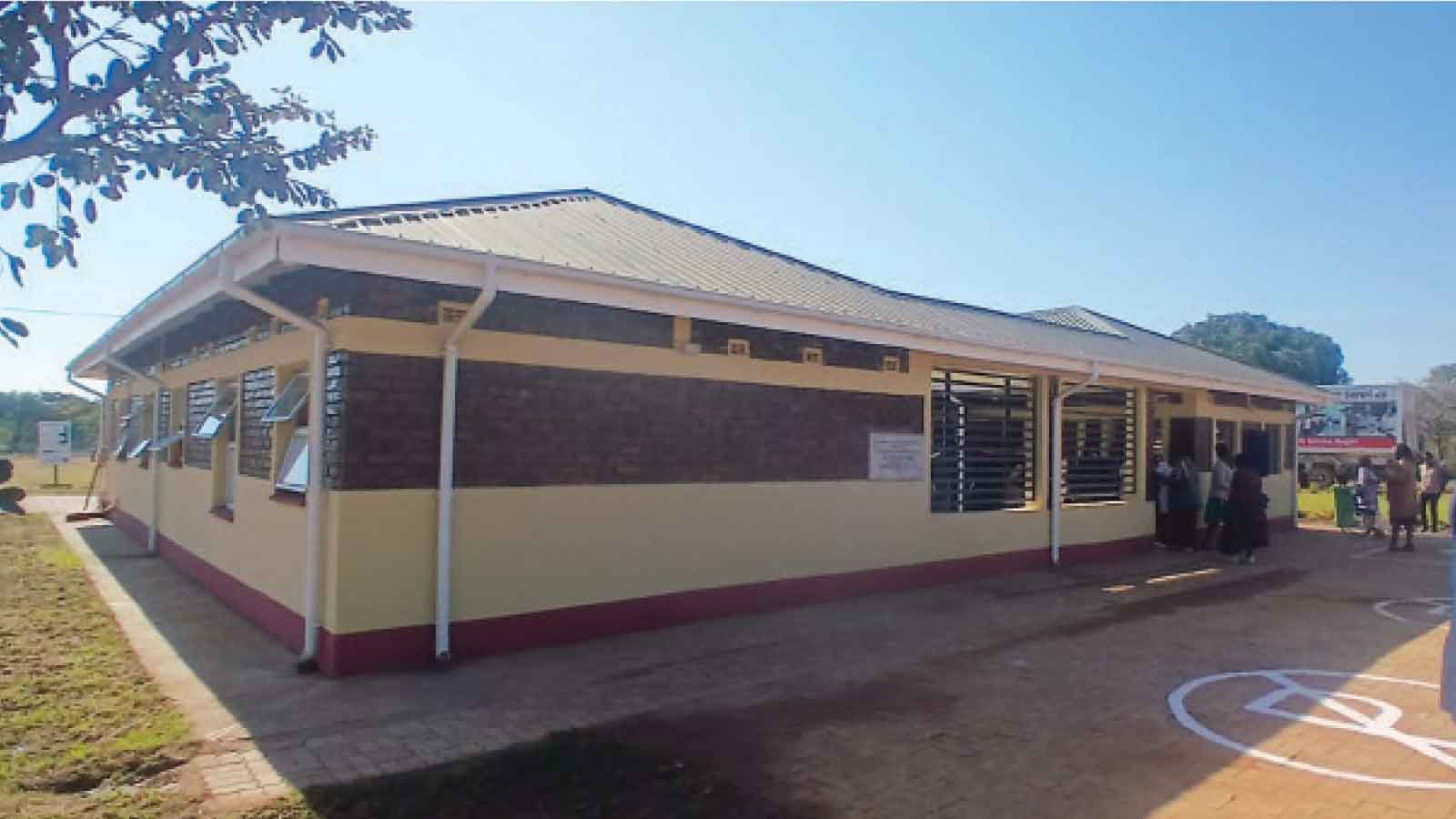
The Deputy Minister made the remarks during the commissioning of Mandoga Clinic in Ward 2 of Marondera District, Mashonaland East, recently.
Mandoga Clinic, a project initiated by the Mandoga community to address challenges in accessing health services, received additional resources from The Church of Jesus Christ of Latter-day Saints to complete construction after the project had stalled due to resource constraints.
By partnering with the Marondera Rural District Council (RDC) in the establishment of the modern clinic, equipped with state-of-the-art facilities and equipment, the church has demonstrated its commitment to complementing Government efforts to bring critical services closer to the people.
In his remarks, Deputy Minister Kwidini said the clinic is more than a physical structure.
“It is a symbol of partnership, progress and shared national purpose. It represents the translation of policy into action and commitment into service delivery. Above all, it stands as a reminder that development must be felt at community level, where it matters most.
“For many years, the people of Mandoga endured the burden of travelling close to 20 kilometres to access the nearest health facility. In many cases, that was not simply an inconvenience but a serious barrier to survival. Pregnant mothers faced delays in accessing antenatal care and safe delivery services. Children missed critical immunisations. Families struggled to access timely treatment for common conditions. In emergencies, these long distances too often turned treatable conditions into life-threatening cases.
“This situation was unacceptable. Today, the Government is decisively correcting that imbalance by bringing essential health services directly into the community.”
He said that, among other services, Mandoga Clinic will offer HIV testing, antiretroviral therapy (ART) initiation, viral load monitoring and adherence support, all provided at community level.
“Accordingly, the facility will deliver a comprehensive package of primary healthcare services. Tuberculosis screening, diagnosis and treatment will be available without referral, ensuring early detection and prompt management.
“We are also strengthening malaria case management as part of our national drive towards elimination. Non-communicable diseases such as hypertension, diabetes, asthma and mental health conditions are no longer confined to urban areas; our health system has evolved to respond to this reality. Nurses at this facility have been trained to screen, manage and appropriately refer such cases.”
Deputy Minister Kwidini thanked The Church of Jesus Christ of Latter-day Saints for its generous support towards the construction of Mandoga Clinic, adding that the gesture demonstrates the essential role of faith-based organisations in national development.
In his remarks, the Minister of State for Provincial Affairs and Devolution for Mashonaland East, Advocate Itayi Ndudzo, who was represented by the Secretary for Provincial Affairs and Devolution for Mashonaland East, Mr Tavabarira Kutamahufa, said the clinic would ease the burden borne by the people of Mandoga in accessing healthcare services.
“Today marks a significant milestone for the people of Mandoga. This clinic will serve a population of more than 8 600 residents who have, for many years, travelled nearly 20 kilometres to access healthcare services in Marondera Town and Melfort.
“This facility will greatly improve access to quality healthcare, especially for mothers, children, the elderly and other vulnerable members of our community. This achievement demonstrates what can be accomplished through collaboration. I commend Marondera Rural District Council for its invaluable contribution through the provision of construction support, road maintenance, supervision of works and other resources. I also applaud the people of Ward 2 for their dedication, voluntary labour and unwavering commitment towards making this dream a reality,” he said.
Advocate Ndudzo also applauded the church for its support.
“We are equally grateful to The Church of Jesus Christ of Latter-day Saints for its generous partnership in completing the clinic, constructing staff houses, a mothers’ waiting shelter and a guard room, providing medical equipment and furnishings, and ensuring reliable water and electricity through solar-powered facilities.
“Such partnerships complement Government efforts to deliver quality social services to our people.
“As we gather to officially commission this important facility, let us remain committed to safeguarding and maintaining it so that it continues to serve both current and future generations,” Advocate Ndudzo said.
Speaking on behalf of the church, Mr Marshal Bomber, stake president of The Church of Jesus Christ of Latter-day Saints, said their efforts are motivated by the desire to transform livelihoods. He commended members of the church for contributing towards the establishment of clinics and schools across the world.
“The funding for humanitarian efforts is provided through donations from church members. We are grateful for the selfless and faithful offerings of 17,5 million church members and friends from around the world who made this project possible.
“Our efforts are motivated by a sincere desire to bless lives and strengthen communities, not to seek recognition or publicity. In accordance with our long-standing principles, we remain politically neutral, focusing instead on promoting faith, unity and compassion throughout the world.”
For the community of Mandoga, the clinic is not just bricks and mortar, nor merely another infrastructure development project, but a fountain of hope where lives will be saved and new lives welcomed into the world.
“We have been waiting for this day for a long time, when we can finally access health services closer to our homes. This development is critical as it will be an institution where lives will be saved. Imagine a pregnant woman walking close to 20 kilometres to the nearest health facility to receive treatment. This has led to many women giving birth at home, endangering their lives and those of their children.
“We are also talking about the elderly, who have had to endure these long distances. I applaud the Second Republic under President Mnangagwa for ensuring that health services are brought closer to the people and for creating an environment conducive to partnerships thriving in the health sector,” said Miss Pamhidzayi Dangare, a Mandoga resident.