Emmanuel Kafe
EVERY hour, nearly three Zimbabweans become victims of sexual and gender-based violence.
By the time you finish reading this story, another person somewhere in the country could have walked into a police station, hospital, or Victim Friendly Unit carrying the trauma of rape, sexual assault or domestic abuse.
Behind every case recorded by authorities is a life disrupted, a family searching for answers and a victim hoping that the justice system will not fail them. The latest figures from the National Prosecuting Authority (NPA) tell this painful story in numbers.
During the first three months of 2026, prosecutors received 7 061 sexual and gender-based violence (SGBV) cases from across Zimbabwe.
That works out to an average of 78 new cases every day, or almost three new victims every hour. Those figures are sobering.
Yet hidden beneath them is another story that has received far less public attention.
While Zimbabwe continues to battle high levels of gender-based violence, the country’s prosecution system is quietly becoming one of the strongest links in the fight against the crime.
The latest statistics suggest that survivors today stand a far better chance of seeing their cases taken to court and offenders held accountable than they did a few years ago.
An analysis of the first quarter data points to an institution that is steadily transforming the way sexual offences are prosecuted.
Of the 7 061 cases received between January and March, prosecutors secured 3 776 convictions during the same period, while only 730 accused persons were acquitted.
Another 1 961 matters remained pending before the courts at the end of the quarter, while only 248 cases were declined for prosecution.
This positive trend is not an anomaly, but a continuation of a broader institutional momentum. A separate analysis of the NPA’s full-year performance for 2025 reveals the scale of the challenge they face annually.
Last year, the authority received a staggering 16 688 SGBV cases nationwide.
From this immense caseload, prosecutors secured 11 929 convictions, demonstrating a robust and sustained prosecution effort.
While 1 485 accused were acquitted, the data show that the majority of cases processed result in a guilty verdict, reinforcing the narrative of an effective prosecution service.
Of the total, 2 288 cases were still pending at the year’s end, a testament to the high volume of work that continues to flow through the system.
For prosecutors, these are more than performance figures. Every conviction represents a survivor whose voice was heard in court.
Every completed prosecution reflects months of investigation, medical examinations, witness preparation, and courtroom proceedings, with police officers, health professionals, social workers, and prosecutors working together to ensure justice is delivered.
Gender-based violence lawyer Advocate Anesu Shumbanhema said, unlike offences such as theft or robbery, sexual and gender-based violence cases are among the most difficult to prosecute.
“Many occur behind closed doors without independent witnesses. Some victims are children who must recount traumatic experiences to strangers. Others delay reporting because of fear, intimidation or stigma, making evidence collection even more challenging,” she said.
Against this backdrop, the National Prosecuting Authority’s performance reflects years of deliberate institutional reform rather than chance. Since its establishment as an independent prosecuting authority, the NPA has steadily strengthened specialised Sexual Offences and Gender-Based Violence Units across the country, invested in continuous training for prosecutors, and improved coordination with the Zimbabwe Republic Police, the judiciary, social welfare departments and health institutions.
The result is a prosecution system better equipped to handle some of the country’s most sensitive criminal cases.
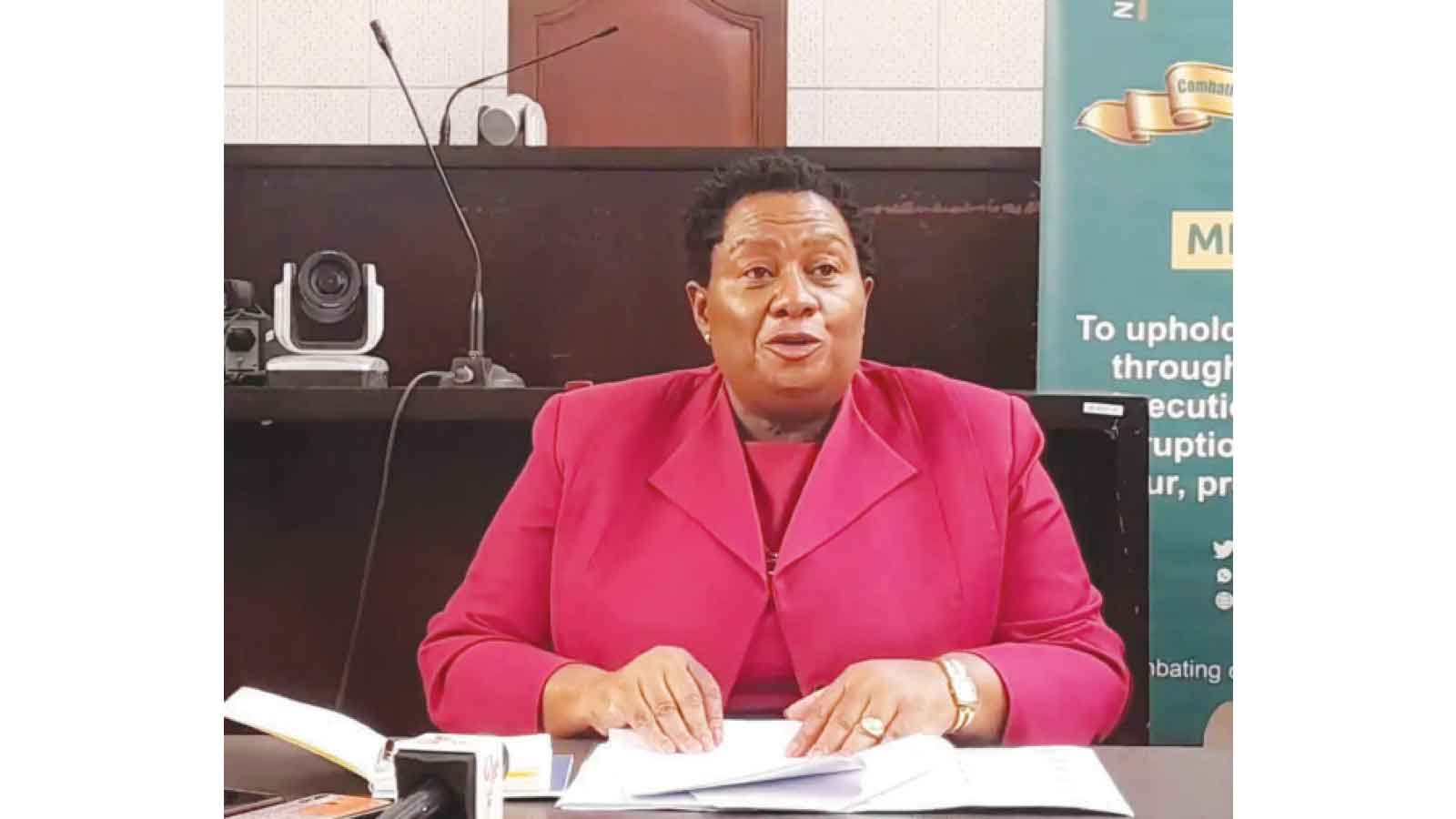
Speaking recently during a training workshop for prosecutors, Prosecutor-General Justice Loice Matanda-Moyo championed a victim-centred approach to prosecution, insisting that prosecutors are not employed to secure convictions but to ensure justice is served through professional, fair and well-prepared cases.
Under her leadership, prosecutors have undergone continuous training in handling vulnerable witnesses, child justice, sexual offences and trial advocacy — reforms aimed at improving both the quality of prosecutions and the experience of victims navigating the criminal justice system.
“We do not seek convictions; we seek just outcomes,” she said, adding that poorly prepared cases weaken public confidence in the justice system and deny victims the justice they deserve.
This commitment to a victim-centred approach is evident in the 2025 data, which shows their firm focus on domestic violence — a key area of SGBV.
Of the total cases received in 2025, 9 112 were classified as Domestic Violence Act (DVA) cases.
Prosecutors secured 6 352 convictions in these matters, demonstrating a high level of effectiveness in bringing perpetrators of intimate partner violence to justice.
One of the clearest indicators of the NPA’s improved efficiency lies in the relatively small number of cases declined for prosecution.
For the first quarter of 2026, out of more than seven thousand matters received, only 248 were considered unsuitable for prosecution after legal assessment.
This trend is reflected in the 2025 data, where the total number of declined cases was also a fraction of the overall caseload at 369, suggesting stronger investigations and better case preparation before dockets reach prosecutors.
Equally telling is the geographical spread of the cases. Harare accounted for the highest number of reports, receiving 1 386 cases during the first quarter of 2026.
Mashonaland East followed with 980 cases, while Manicaland recorded 854 and Masvingo 739. The 2025 data reinforces this geographical footprint, with provinces like Bulawayo and Harare North consistently reporting high volumes, demonstrating that gender-based violence is neither an urban nor rural problem, but a national challenge affecting communities across Zimbabwe.
Government has, over the years, complemented the work of the NPA through broader initiatives designed to strengthen the country’s response to gender-based violence.
These include the National Strategy to Prevent and Address Gender-Based Violence, the expansion of Victim Friendly Courts, the establishment of One-Stop Centres where survivors can access medical, legal, and psychosocial support under one roof, and strengthened collaboration between law enforcement agencies and community organisations.