admin
admin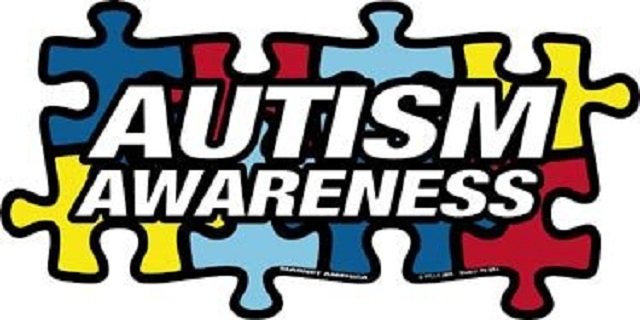

Lee-Anne Hall
FOR the past three weeks countries all over the world have been promoting autism awareness. Children who are diagnosed with Autism Spectrum Disorder (ASD) need early intervention as soon as possible.
It is estimated that worldwide one in 160 children has an ASD. This estimate represents an average figure, and reported prevalence varies substantially across studies. Some well-controlled studies have, however, reported figures that are substantially higher. The prevalence of ASD in many low- and middle-income countries is so far unknown.
What is ASD?
Autism Spectrum Disorder (ASD) and autism are both general terms for a group of complex disorders of brain development. ASD is a developmental disability and people with ASD may communicate, interact, behave, and learn in ways that are different from most people.
The learning, thinking, and problem-solving abilities of people with ASD can range from gifted to severely impaired.
Some people with ASD need high support (a lot of help and intensive intervention) while others need low support (less help and less intensive intervention). Autism Spectrum Disorder (ASD) are characterised, in varying degrees, by
– Difficulties in social interaction
– Verbal and non-verbal communication
– Repetitive behaviours and
– Differences in sensory perception
What causes ASD?
ASD is thought to have a genetic component which results in atypical neurological developmental and functioning. A lot of research is being done to try and find the cause of autism, but as yet there are no definite answers.
– There is agreement however, that autism is no-one’s fault. It is not a parents’ fault that their child has been born with autism.
– It is NOT a psychological or emotional disorder
– It is NOT the result of bad parenting and children with ASD do NOT choose to misbehave. Misbehaviours are often reactions to the environment and are expressions of the difficulties people with ASD experience.
How do we assess or manage autism?
Intervention during early childhood is important to promote the optimal development and well-being of people with ASD. Monitoring of child development as part of routine maternal and child health care is recommended.
It is important that, once identified, children with ASD and their families are offered relevant information, services, referrals, and practical support according to their individual needs. A cure for ASD is not available. Evidence-based psychosocial interventions, however, such as behavioural treatment, can reduce difficulties in communication and social behaviour, with a positive impact on the person’s wellbeing and quality of life.
The health-care needs of people with ASD are complex and require a range of integrated services, including health promotion, care, rehabilitation services, and collaboration with other sectors such as the education, employment and social sectors.
Interventions targeting individuals with ASD and other developmental disorders need to be accompanied by broader actions for making physical, social, and attitudinal environments more accessible, inclusive and supportive.
Social and economic impacts
ASD may significantly limit the capacity of an individual to conduct daily activities and participate in society. ASD often negatively influence the person’s educational and social attainments as well as employment opportunities.
While some individuals with ASD are able to live independent and productive lives, others have severe disabilities and require life-long care and support.
ASD often impose significant emotional and economic burden on people with ASD and their families. Caring for children with the severe spectrum of the condition may be demanding, especially where access to services and support are inadequate.
Facts about ASD
— Developmental disabilities such as ASD are brain-based, neurological conditions that have more to do with biology than with psychology.
— Not one person with ASD is affected in the same way.
— ASD is usually diagnosed by the time a child is three years old.
—ASD is found in every country, every ethnic group, and every socio-economic class.
— Autism is diagnosed four times as often in boys than in girls
— Children who are diagnosed with ASD need early intervention as soon as possible.
Here is a checklist to help with diagnosis for ASD: Red Flags. Little awareness of others, imaginative play may be poor eg cannot play with a wooden block as if it is a car, the development of speech and language may be atypical, absent or delayed, minimal reaction to verbal input and sometimes acts as though deaf, changes in routine or the environment, may cause distress, pursues activities repetitively and cannot be influenced by suggestions of change, inappropriate attachment to objects, displays of extreme distress and or tantrums for no eye contact, difficulty in interacting with others and little or no eye contact, no real fear of dangers, prefers to play alone, self-injurious behaviour, e.g head banging, scratching or biting, unusual habits such as rocking, hand flapping, spinning of objects etc, sense of touch, taste, sight, hearing and/or smell may be heightened or lowered, uneven gross/fine motor skills, abnormal sleeping patterns.
For more information about autism please email me at [email protected]
Lee-Anne Hall
BSc Physiotherapy


 derick.khumalo