Chronicle Editor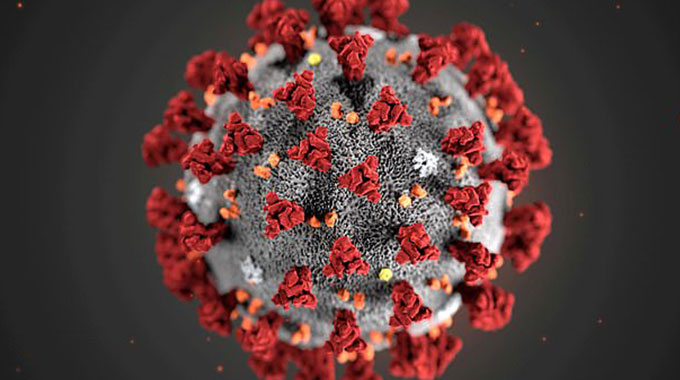
Opinion, Pathisa Nyathi
“ONE of the casualties of Covid-19 is culture.” This I picked up over a television channel some few days ago. After penning several articles on Covid-19 in relation to African culture, I would not have agreed more with the statement.
It is not just African culture which is on the receiving end of the coronavirus. Other cultures too have not been spared.
The statement was monitored soon after receiving some message from my niece Bapiwa Chilambampani in Francistown, Botswana. For quite some time now her father has been hospitalised. No sooner had he been discharged from hospital than his wife, my sister, was admitted to the same hospital.
She contracted pneumonia and the left side of her heart was not pumping normally. I suspected her husband’s illness had stressed her.
As if that was not enough, their children are not allowed to visit her. I began imagining the pain they were going through. Their father is not well, and is under observation at home. By all accounts, their experiences are nerve-wrecking. It was then that the opening words quoted above were monitored and cued me to pen an article regarding illness, healing, African culture and Covid-19.
The usual practice before colonisation was for the sick to be nursed at home by their relatives. There are no institutions that care for the sick. Home is a familiar and warm environment within which sick persons find comfort, solace and care. Within homes, especially their own, they drive comfort relief, succour, consolation and loving care. Their relatives communicate with them and in the process conversations and discussions become therapeutic.
Emotionally and psychologically, the sick find welcome and care, not from strangers but from their very own kith and kin.
Rarely would a sick person be uprooted from her home and taken to the home of a traditional doctor for medical attention. Rather, relatives approached a doctor to consult him and obtain opinion regarding the cause of illness.
That initial contact centred around diagnosis through various methods such as seashell divination, four tablet divination, nutshell divination/ diagnosis, spirit diagnosis, inter alia. What would then follow was to search for the method of healing or cure and the identification of requisite herbs, their mode of administration and who was the herbalist best suited for that task.
Those consulting would then take the medicines home to use as advised. Alternatively, they would head for the herbalist that was identified to get the medicinal formulations. The herbalist has to confirm, through the methods identified above, that indeed the nature and cause of illness as identified by the first doctor are indeed a correct diagnosis. A sick person underwent treatment within the context of her home with which she was familiar.
That was unlike when she is admitted to some medical institution which presents her with a new, alien, strange, unfamiliar, disconcerting environment.
Recovery takes place after the process of familiarisation. It’s like taking science lessons in a foreign language. The student has to deal with the barriers presented by the foreign language before dealing with concepts. It is for this reason that some people prefer to be taken home and cared for by their very own. The elderly prefer to exist the world stage of life from a familiar environment, and there is none better than their own home.
Covid-19 has had the effect of getting the world to speak the same language of fear and common search for a cure. As indicated in an earlier article, not so long ago in Zimbabwe alternative medicines are getting renewed attention. A man who prays to die will struggle to run away when a snake which was going to assist him realise his wish will scamper as is, he has forgotten about the meaningless prayer.
Nature ensures that we preserve our lives. Now with the coronavirus wreaking havoc we are tuned, after a very long time, to the same wavelength. Even the charlatans receive attention they do not deserve. The instinct to survive is very strong and powerful. A drowning man will clutch at straws. No one willingly lets go of life.
While we seek to preserve our lives in the ensuing struggle, in the meantime we have to keep apart in an effort to minimise the spread of the royal coronavirus. When our relatives are hospitalised we may not visit them in the fear of contracting or assisting others to contract the deadly virus that mutates at the speed of lightning. Where trials were done on a particular strain, very soon a developed vaccine is rendered inefficacious, no longer achieving intended results. South Africa has experienced that phenomenon.
A variant unique to South Africa developed and is fast spreading its nefarious tentacles throughout the world. Together we feel threatened by the new variant. In response, we have to keep apart, even apart and away from our very own loved ones.
Relatives become pillars of emotional support at the greatest hour of need. A sense of loneliness and abandonment does not do any good to the sick. People from neighbourhood take turns to visit the sick. All that is reassuring. Promises of speedy recovery, made even as the sick are using a hammer to knock on heaven’s door.
Any promise is a welcome one and is taken seriously by the sick. It is that sort of reassurance that raises their spirits. Where hope is lost there are no prospects for speedy recovery.
Some visitors and or relatives offer prayers that boost the morale and hope among the hopeless. The power of music/ songs is felt in no small measure. In some religious organisations there are songs that are sung during healing sessions. Just the songs on their own have some uplifting emotional significance. Songs lift high a sick person’s sinking and drowning spirits.
This happens to be the case within the Guta RaMwari (which I am studying) where songs are sung during the laying of hands as part of healing. Drums have been known to exorcise evil spirits. Music in Africa is thought to do wonders including providing therapy for the sick.
A friend of mine in the UK writes about her living under “house arrest.” This is self-isolation or quarantine. Staying far and alone from madding viruses holds hope for combating them. Isolation and physical distancing, among other measures, ensure there are no bridges to be used by viruses to access other people.
Pandemics are not a new phenomenon in Africa. In 1918-19 Africa was not spared by the Spanish Influenza. Quarantine is a disease prevention measure that has been put in place before. For example, in 1893 many Ndebele soldiers did not take part in the war against the BSAC-sponsored invasion as many of them were quarantined. Apparently, they had been on a raid across the Zambezi and contracted smallpox. As a result, they were quarantined far away from the theatre of war, in Matabeleland.
In fact, there are people overseas who are not aware Africans faced pandemics before. If we did, they wonder just how our ancestors coped. Pandemics are not new on the African continent. However, Africa then was not as docile as it is now. Africa was in charge of her destiny. Measures, in particular of a spiritual nature in line with their beliefs, were taken to counter scourges. The Africa of today is a different kettle of fish.
Hers is a tried and tested profession to extend a huge begging bowl and even curse those who are delaying to give her some vaccines — believe it or not, for FREE! It’s as if she has an inalienable right to beg and a prerogative to receive, but not to be begged.
Asazi madoda!



 Online Reporter