Online Reporter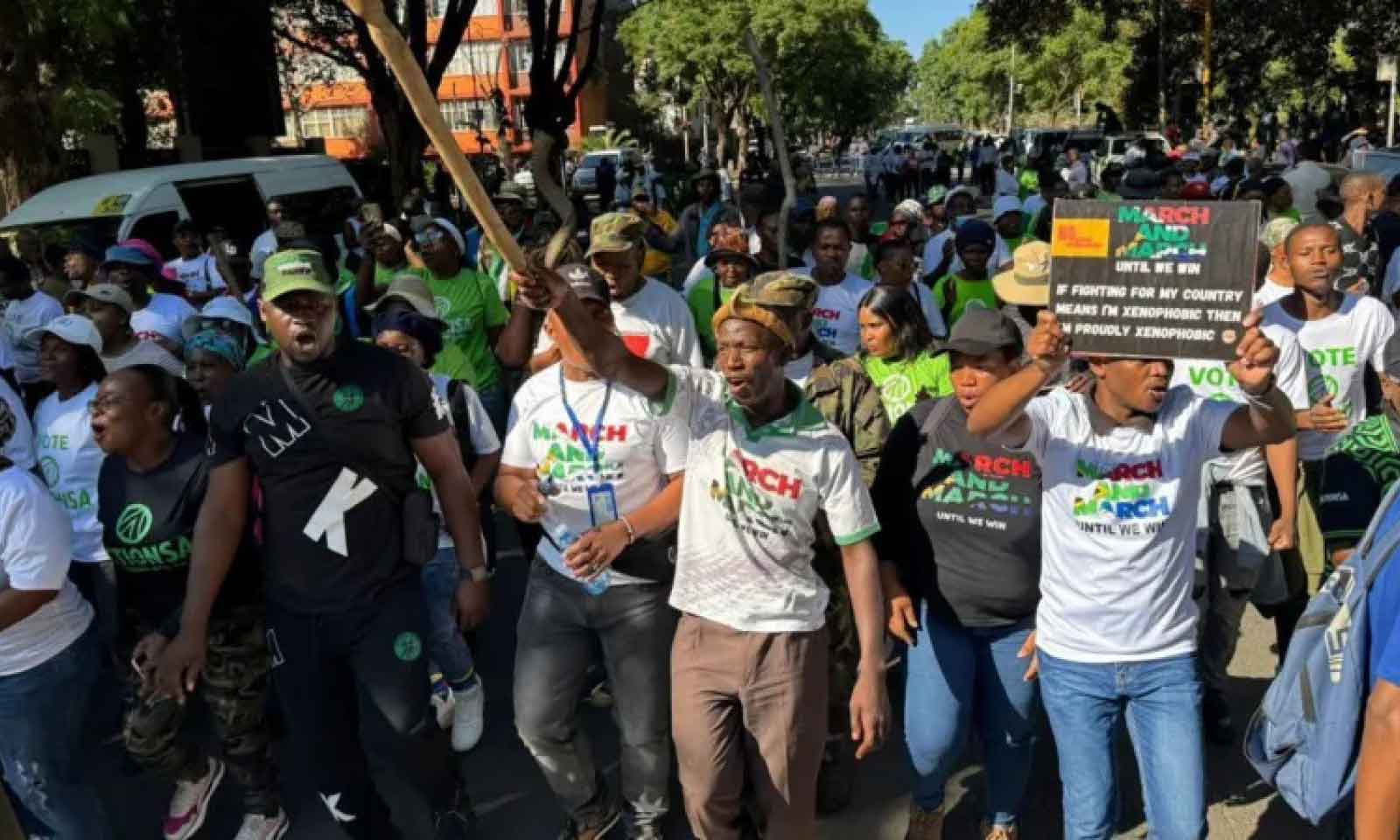
Richard Muponde
Zimpapers Politics Hub
THE resurgence of xenophobic tensions in South Africa is not merely a social crisis; it is a profound ideological contradiction that undermines the very foundation of Pan-Africanism and Ubuntu.
An advisory issued by the Zimbabwean Embassy on Tuesday underscores the gravity of the situation, warning of “disturbing demonstrations that are targeting foreign nationals” and highlighting the “serious risk to the safety and well-being of Zimbabwean nationals residing in South Africa.”
Such developments are retrogressive, representing a dangerous retreat from the collective African identity forged through shared struggles against colonialism and apartheid.
Xenophobia, by its very nature, negates the African philosophy of Ubuntu, which emphasises interconnectedness, humanity and mutual respect. To target fellow Africans as “foreigners” is to distort history and deny a shared heritage of resistance, sacrifice and solidarity.
Amid the growing unease, voices of leadership and reason have emerged, calling for restraint and unity. South Africa President Cyril Ramaphosa has firmly condemned the violence, urging citizens to resist the lure of division and not to allow legitimate concerns to manifest as xenophobia, emphasising the need for unity, peace and respect for human rights.
This position reinforces the official stance of the South African government, yet it stands in stark contrast to the rhetoric and actions of certain political actors and movements who continue to inflame anti-immigrant sentiment. Groups such as Operation Dudula, alongside figures like Herman Mashaba have been associated with narratives that blame migrants for socio-economic challenges, thereby legitimising hostility.
Human rights lawyer Advocate Gabriel Shumba aptly captured the urgency of the situation:
“We endorse the advice to be cautious, given the disturbing and potentially life-threatening nature of the reports emerging from different areas.”
His call reflects a broader concern that xenophobia is being normalised under the guise of addressing economic grievances.
The historical debt: Zim and Africa’s role in SA’s liberation
The current hostility toward African migrants becomes even more troubling when viewed against the backdrop of history. Zimbabwe and other African nations played a pivotal role in South Africa’s liberation struggle.
“As we welcome these patriots back home, we owe our everlasting gratitude to the countries that offered these freedom fighters shelter, support and, in the end, a fitting resting place,” President Ramaphosa said recently.
“We are grateful in this instance to the governments and peoples of Zambia and Zimbabwe for having taken great care of our compatriots and for enabling their remains to be repatriated.”
He said this whilst receiving remains of South African freedom fighters repatriated from Zimbabwe, where they died during the liberation struggle, fighting together with Zanla and Zipra to liberate South Africa.
These words are not mere ceremonial acknowledgements; they are historical truths. Zimbabwe served as a sanctuary for South African freedom fighters, including figures such as former South African President Thabo Mbeki, former Deputy President Baleka Mbete, and many others who found refuge, education and operational support within its borders.
President Mnangagwa emphasised the enduring bond between the two nations recently when he was speaking at the ceremony, where he received the eighth Zimbabwe Bird and ancestral human remains repatriated from South Africa and presented by that country’s Minister of Sport, Arts and Culture, Gayton McKenzie at State House recently.
This solidarity was not symbolic, it was material, costly and often dangerous. Zimbabwe and other frontline states endured cross-border raids, economic sabotage and loss of life in their support for South Africa’s liberation.
Wenela labour and the building of SA
Beyond political solidarity, Zimbabweans and other Africans contributed directly to the economic foundation of modern South Africa. Under the Witwatersrand Native Labour Association (Wenela), thousands of Zimbabweans worked in South African mines in harsh, hazardous conditions.
These workers were not outsiders — they were integral to South Africa’s industrial growth. Their labour built the wealth that sustains the country today. To now label their descendants or compatriots as “foreigners” is not only unjust but historically dishonest.
The dangerous politics of blame
The rise of xenophobia is often fuelled by political opportunism. Economic Freedom Fighters (EFF) Julius Malema has offered a contrasting perspective, identifying systemic inequality rather than migration as the root cause of social tensions.
“The problem in South Africa is not foreign nationals, it is inequality, unemployment…,” said Malema.
This statement redirects the discourse toward structural issues, challenging narratives that scapegoat migrants. However, other political voices continue to promote exclusionary rhetoric, deepening divisions within society.
Neo-apartheid and imperialist undercurrents
Xenophobic violence can also be interpreted as a manifestation of neo-apartheid tendencies and imperialist manipulation. By fostering division among African populations, such forces weaken continental unity and derail collective progress.
The targeting of African migrants mirrors apartheid-era strategies of segregation and dehumanisation, albeit in a different form. It is a reminder that the ideological remnants of apartheid persist, often disguised as economic nationalism.
Global lessons on xenophobia
History offers sobering lessons on the consequences of xenophobic violence. Countries that have embraced exclusionary policies often face economic decline, social instability and international isolation.
In Europe, rising anti-immigrant sentiment has led to political fragmentation and strained diplomatic relations. In the United States, periods of intense xenophobia have coincided with civil unrest and policy reversals. These examples illustrate that xenophobia is not a solution but a catalyst for deeper crises.
Reclaiming Ubuntu and African Brotherhood
The path forward lies in reaffirming the principles of Ubuntu and Pan-Africanism. Africans in South Africa are not foreigners; they are part of a shared historical and cultural continuum. The borders that divide them are colonial constructs that should not define their relationships.
Zimbabwe’s role in South Africa’s liberation, the sacrifices of Wenela workers and the enduring ties between the two nations all point to a singular truth: Africa’s strength lies in its unity.
To turn against one another is to betray that legacy. Xenophobia is not only unAfrican — it is a denial of history, humanity and the collective future of the continent.
A call for consciousness and solidarity
The current wave of xenophobic tensions must be confronted with clarity and courage. It is a test of Africa’s commitment to its founding ideals of unity, dignity and mutual respect.
The words of leaders, the lessons of history and the realities of shared struggle all converge on a single imperative to reject division and embrace solidarity.
Africa cannot afford to regress into isolation and hostility. The spirit of Pan-Africanism demands a renewed commitment to brotherhood, where every African, regardless of nationality, is recognised as part of one people bound by a common destiny.