Online Reporter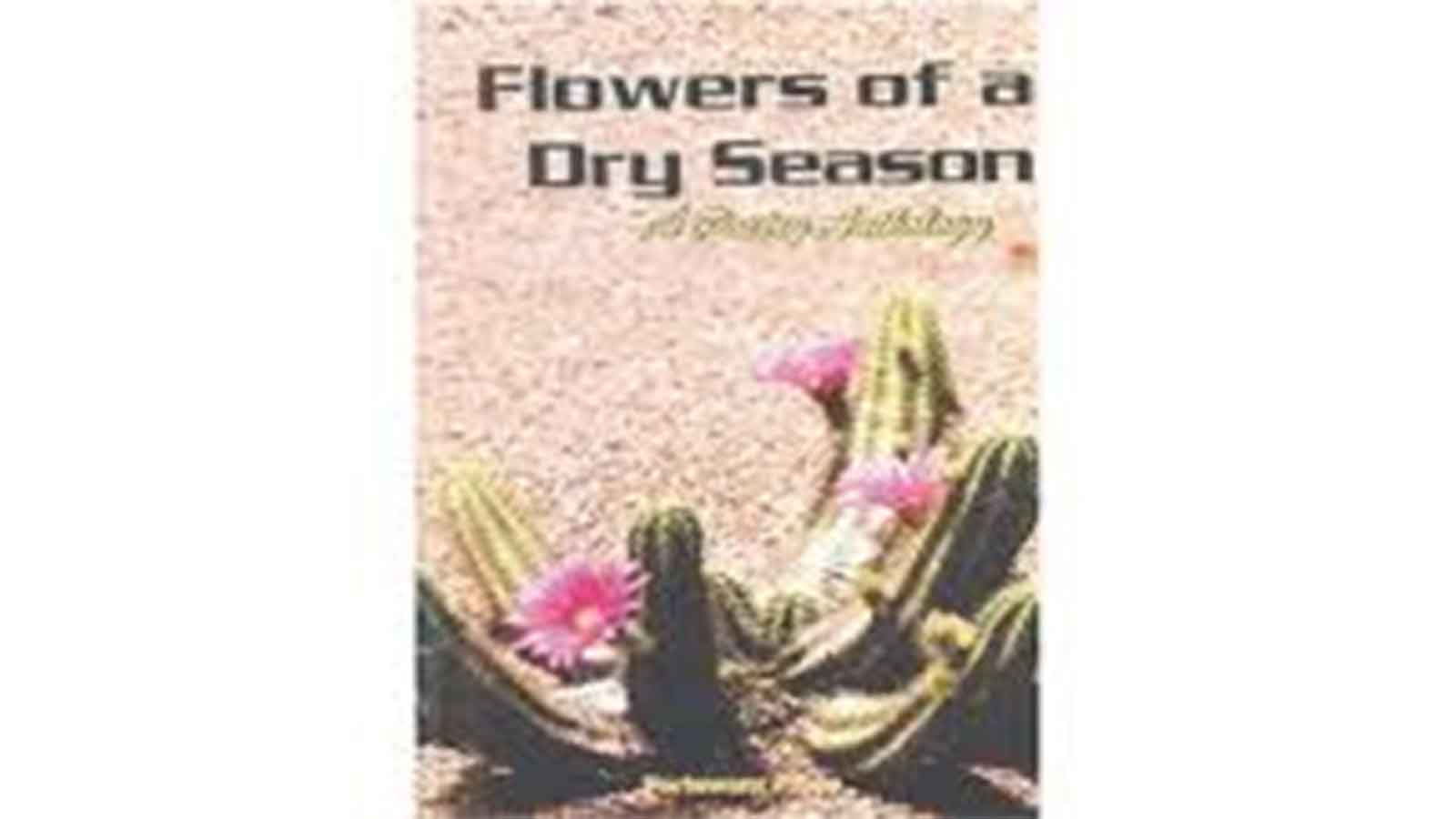
Elliot Ziwira-At the Bookstore
GOOD poetry should be therapeutic, astounding, engaging, evocative, thought-provoking, addictive and challenging.
Poetry should transcend the limitations of geographical and social boundaries to capture universal aspirations shared by both the common man and the man of means alike.
It is that and more, which the anthology “Flowers of a Dry Season”, published by Forteworx Press and edited by Beaven Tapureta and Brian Tafadzwa Penny, aptly does.
More than a decade after its publication, the collection feels painfully prophetic, especially as renewed xenophobic tensions continue to rear their ugly head in South Africa, where fellow Africans are increasingly viewed with suspicion, resentment and hostility.
The chants against foreign nationals, the destruction of livelihoods, and the frightening normalisation of hatred against fellow Africans make the anthology eerily relevant today. The dream of a united Africa, once nurtured in the trenches of anti-colonial struggle, appears under siege from within.
The collection is a product of the convergence of 14 infectious voices that hilariously, scathingly and soothingly yearn for hope, as the African dream, or pertinently, the Zimbabwean reverie, comes under threat from both internal decay and external infernos.
The contributors to this moving collection are Monica Munashe Rupazo, Tinashe Chimuriwo, Owen Kambanje, Audrey Lindani Mutinhiri, Leonard Mutsa Makuya, Gloria Murindi Dangah, Brian Tafadzwa Penny, Jubilant Ncube, Tendai Noreen Sadziwa, Edmond Shonhiwa, Taurai Vincent Sekenya, C.J. Mylton, Patrick Mahlasera and Yeukai Mapingure.
Oozing the ebullience of youth and seemingly inexperienced, yet well-schooled in the voyeuristic nature of Man, the poets articulate their experiences in a world that places so much emphasis on material acquisitions as a milestone to glory. In such a setup, scant consideration is given to familial, communal and national ethos that shape the individual.
Caught up in the race, the individual struggles to locate himself or herself in the national discourse as a result of toil, deceit and avarice.
Although clad in different garbs as they hone their individual voices and take them to separate crescendos, the poets converge on a valley resonant with shared hope.
Since the poets are still seeking their individual tunes, discord cannot be avoided here and there, but the sweet melodies of their unique voices remain top-drawer, blending into a rhapsody that lingers in the reader’s ears long after the music has stopped playing.
The universal tale purveyed is captured through the discarding of contrived poetic forms, the use of symbolic elements, varying styles and a plethora of thematic concerns that cut across social boundaries.
Paralysis, malaise and claustrophobia weighing down familial, communal and national discourses, leading to despondency, frustration and dispiritedness, are told in such a way that the reader cannot help locating himself or herself within the different sites the fictional experiences open up.
Through the yearning voices, Man is implored to own up to his eccentricities so as to redeem society from the jaws of the monster that creeps from its belly — an orgy of its own creation.
Society has become a deathbed and a crucible where dreams are set ablaze, while the nostalgia of a gleeful yesterday attempts to throttle today’s aspirations, as in T.P Brian’s “If Today Were Yesterday”.
The artists are acutely aware of their crucial role as truth’s defence, the voice of the voiceless and custodians of the mores and values that shape their people.
The dream transcends geographical boundaries, as the African story itself is under siege. The problems confronting the motherland seem orchestrated by its own children as a result of avarice, corruption, deceit and selfish individualism.
That reality is particularly glaring today as xenophobic sentiments continue to stalk South African townships and cities, where fellow Africans are reduced to scapegoats for economic frustrations and political disappointments.
The violence does not merely destroy property and livelihoods. It mutilates the spirit of Pan-Africanism that once bound liberation movements across the continent together.
Zimbabweans, Mozambicans, Malawians, Nigerians and Congolese, who sought refuge, opportunity and dignity in South Africa, increasingly find themselves viewed not as brothers and sisters, but as intruders.
Like David Mungoshi in “Live Like an Artist” (2017), Edmond Shonhiwa, in the title poem “Flowers of a Dry Season”, emboldens fellow artists to rise in defence of their people’s cake, even if the guillotine stares them in the face.
He rallies them:
“Arise, authors and book lovers! . . . Be a rock
An oasis of this generation
Spring in this arid era
Let your pen and paper save us.”
The poems “The Inferno Echoes”, “Can We Have One Africa?”, “I Am African” and “Are They Yours Africa?” by Edmond Shonhiwa, Audrey Lindani Mutinhiri, Tendai Noreen Sadziwa and Leonard Mutsa Makuya, respectively, implore Africans to be wary of forces that seek to emasculate the African story through division and hatred.
In “The Inferno Echoes”, Shonhiwa takes a swipe at the xenophobic tendencies of South Africa, leading to the imaginary existence of foes among fellow brothers, forgetting that Africans were “nurtured together . . . brawled against imperialistic regimes” as one family.
The persona implodes:
“I saw my children burn in flames of your anger/
I saw other neighbours burning too.”
The persona remonstrates the wayward sibling:
“This Africa is our mamaland
But you cast my children into the inferno
Where they diminish into ashes
Why, brother Azania, why?”
Those lines reverberate with haunting immediacy today. The inferno Shonhiwa captures continues to echo through the streets of South Africa. The flames do not only consume shops and homes, but they also consume memory. That is, the memory of solidarity forged during the liberation struggle when African nations stood together against colonial oppression and apartheid.
The death of social morality, trivialisation of the sanctity of life, debilitating injustices and voyeurism at the heart of the African discourse culminating in the metaphorical dry season emaciate the motherland’s brood.
It is this that the poets ponder:
“I wonder if they are indeed your seed/I wonder/Africa, are they yours?”
asks Leonard Mutsa Makuya in “Are They Yours Africa?”
Similarly, Audrey Lindani Mutinhiri asks:
“What happened to oneness among Africans?
What happened to humanity?
What has led to division among Africa’s children?”
The artists go beyond gender restrictions in expressing contempt for the vices inherent in man, which prompt him to derive excitement from the trauma and hardships faced by others.
There is no feminism or chauvinism in the poets’ call for redemption and nurturing of the seeds of the dry season for regeneration and progress. They simply give praise where it is due and disdain where it deserves to fall.
The young contributors take up their positions on the valley of national consciousness in the manner artists are wont to do.
Gloria Murindi Dangah admonishes, lashes out, implores and reins in with the authority of the traditional aunt of yore, while C.J. Mylton and Jubilant Ncube emerge as spiritual intercessors reminding society of the role spirituality plays in life’s metaphorical journey.
Monica Munashe Rupazo evokes the spirit of William Wordsworth and the rather sceptical poets Katherine Philips and George Meredith through her immersion in nature, pain and suffering, where past hurts continually threaten present joys. Yet her mastery of language and symbolism places her head and shoulders above many of her contemporaries.
Still, it is not all gloom and doom, for she espies hope in valleys yonder, replenishing pain into blossoming flowers that defy the dry season.
Indeed, “Flowers of a Dry Season” is a powerful collection of individual episodes that interact and merge into the national and continental psyche to relay a tale of hope, shared vision and the urgent need for Africans to rediscover one another before the dry season entirely consumes the garden.
For an immersive reading experience, visit the Typocrafters (DigiHub) retail shop at Herald House, corner George Silundika Avenue and Sam Nujoma Street in Harare.