admin
admin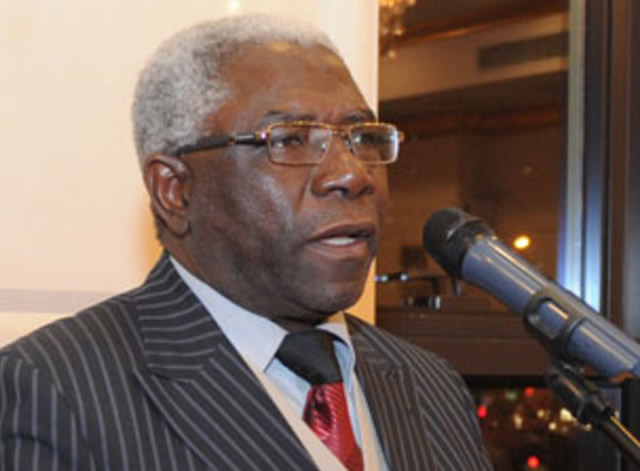
University of Zimbabwe’s Professor Levi Nyagura is the longest serving Vice Chancellor at the institution since the attainment of independence. A Pro-Vice Chancellor from 1995 to 2002, Prof Nyagura was appointed Vice Chancellor in January 2003 thereby heralding a journey that has thus far changed the face of the institution. Besides being at the helm of the University of Zimbabwe, Prof Nyagura was in 2010 appointed chairman of the Zimbabwe Council for Higher Education Committee on Accreditation and Quality Assurance and in 2014 he was also appointed chairman of a 10-member committee to oversee Zimbabwe School Examinations Council (ZIMSEC). Over the years Prof Nyagura has won a number of awards including the Institute of Management Public Services Manager of the Year in 2005 and in 2012 he got the regional award of management by the same institute.
Our Senior Writer Lovemore Ranga Mataire (LRM) recently spoke to Prof Levi Nyagura (LN) (pictured)on the state of higher education in Zimbabwe and how the university is contributing to the socio-economic development of the country.
LRM: You have been at the helm of the University of Zimbabwe since 2003. Can you briefly outline what have been your triumphs and setbacks?
LN: I became a Pro-Vice Chancellor from 1995 to 2002 and the main reason why I came up as Pro-VC was to put order to the chaotic financial arrangement that was at the institution. The second reason was to develop an IT policy and IT infrastructure for the institution. At that time I was probably one of the most well informed individuals of what should happen in the IT area in 1998.
In fact, I was the only academic who had been invited to join the administration meetings chaired by the then Vice Chancellor every first Tuesday of the month and the reason why they wanted me was to educate them on how to migrate from the mainframe which we were using here to a network configuration of computers so that all offices would have access to management information systems rather than walking to the end of the building on the far east where the mainframe was.
I had already set up a networked system in the Faculty of Education. So we were already training people on a network system using the forerunners of the personal computers of desktops that time. I had all this knowledge which I had acquired in the United States where I did my PHD from 1983 to 1986. It was during my stay there that I decided to undertake courses in computer science as a past time. I did lots of programming because I felt that I needed to pick up essential skills so as to make a difference in my institution after completion of the studies. It was extra commitment on my part because computer science had nothing to do with Pure Mathematics.
I, however, knew that computer science was an important endeavour for me as I knew it would be useful here at the university. Between 1990 and 1996 I presented an IT document to Senate outlining how we were going to transform the university in terms of modern communication and how to access massive academic data existing on websites all over the world. People knew nothing then about websites, URL, protocols, switches, routers and savers. But I had already acquainted myself with the big companies that provided pieces of equipment. So it became very useful for the institution to have someone who would then mastered some kind of revolution in communication, accessing live academic information, not just fixed line in a book but real dynamic information. So that was really the major reason why I came up here.
LRM: I presume the things you mentioned were your triumphs and probably the major attributes that made you an ideal candidate for the Vice Chancellorship. After your appointment what were the challenges you encountered?
LN: There was a chaotic financial situation when I took over. There was rampant mismanagement of funds, people were taking unauthorised overdrafts to finance salaries and they were failing to pay bills like water and telephone. The other motivation for me was that having had contact with some of the leading universities especially in North America, I had this vision of making the University of Zimbabwe competitive and to try to match what was happening at those institutions.
These were the universities I had visited like Michigan, Stanford, California etc. The idea was that we could no longer rely on the traditional historical connections with the British. We needed to look at new systems of how to make ourselves competitive. Coming to administration became a massive opportunity for me to now reflect on all these experiences and bring them into action. So that is the background probably why I have stayed longer than all my predecessors.
I am always benchmarking this institution with the best universities in the world. You may be interested to know that in the region we only deal with eight universities in South Africa. We have lots of academic exchanges for example with institutions like University of Cape Town, Rhodes University, University of Pretoria, Western Cape and Witwatersrand. We have Memorandum of Understanding with these institutions, we think they have something useful and they also think the same of us.
LRM: It is also true that one of the major ingredients you have brought to the institution is stability with occasional skirmishes of students. What has been your secret in ensuring that the institution focuses on its main business of producing quality graduates?
LN: When I became VC there was a culture of industrial action not just from students but also from the staff. It was very common to find employees dancing around the flag. We also had a culture of demonstrations, destruction of property by students and one had to say that all these kinds of activities had only the impact of destroying the institution internationally. I realised that if the situation persisted it would make it difficult for our graduates to secure places for further studies at other institutions. So my immediate task was to change that culture.
We came up with new information systems that would create a new culture among student bodies, a new culture among employees and I think you will agree with me that from May-June 2003 up to now we have had very minor attempts by students to try and run around. I also became very firm and people had to understand the things I believe in and what I was trying to achieve in terms of re-orienting the institution to become a new university producing quality graduates for the nation and beyond. I made it clear the old culture would not be tolerated as we wanted to protect students who came to optimise their opportunities to learn and become better individuals. We have managed to create a culture of peace, seriousness, reading and promoting dialogue where we sit down and discuss issues and in the end have a win-win situation.
LRM: But Prof Nyagura you have been accused of being heavy-handed in the handling of student grievances. How do you respond to allegations that your management style stifles academic freedom?
LN: We never discouraged students from doing things that are legal. We are not like for example universities in Malaysia where students have been told not to involve themselves in politics at campus or even demonstrate. No, students can do anything as long as it is legal. But my strong belief is that there is no freedom without responsibility. If you do something, you must be responsible for your actions and you must be able to meet whatever punishment is imposed to correct the wrong things you have done. So there is nothing like freedom without responsibility.
If you just do things and say no I don’t want to be responsible then we will train you under guided democracy not open democracy. Open democracy is non-productive and guided democracy means we are all desiring to move together, we are all desiring to reach consensus in things that we do, we are desiring to become a better country, a better institution. If you think freedom is destroying cars, destroying property, that’s not freedom, that’s hooliganism.
I think it is important to highlight the fact that another problem that we had at this institution was this mentality from students and staff that the government needed to do everything for us. So the first thing I did in 2000 was to address all staff in every faculty telling them that we could no longer rely 100 percent on Government subsidies. We now needed to look at what we had and the largest strength we have is a collection of expertise of engineers, lawyers, accountants and medically qualified people.
We cover the whole spectrum of what is required in any business venture. And I said we have never optimised this particular strength to liberate ourselves from our donor. So I said we now really need to start thinking of how to create wealth. In pursuance of that vision, we registered the first company at this institution in 2005 whose main business was to produce computers.
LRM: You mean before you came on board, there was no registered company belonging to the University of Zimbabwe?
LN: Nothing, the institution was just waiting for Government to do everything. So I made all the arrangements to kick-start the company with companies in Asia to spearhead the business but there was resistance. I had planned to work with SIRDC and had already concluded everything and had brought a highly qualified technician from Malaysia who stayed here for six months but I had to tell him to leave after the project failed to take off. I was trying to tell people that this was the new order, the new thing and that this must be the new philosophy to empower UZ. Some people could not buy the idea.
LRM: Why do you think there was so much resistance?
LN: They said it’s none of our business and that the Government must continue supporting the institution and that if Government does not give us money then we go for industrial action. I had to put in place a critical mass of people who share the same vision with me — wealth creation. The only thing that we managed to do which is something I had said must be done simultaneously was the training of IT operatives. We managed to set up a School of Technology where we train and produce software engineers, hardware engineers, network engineers etc. It was modelled on the systems that were operating in Malaysia.
This institution is the only one that produces these engineers. I realised that there was a gap in our country where we used to have computer graduates who don’t understand networking things, hardware things, proper software engineering and not just to say I did programming using JAVA script, No. If you are a software engineer, you are solution oriented individual. You come up with operational programmes to solve real problems in the banking, health, educational sector and general administration. And we are proud to say that we produced a number of people who are marketable everywhere.
LRM: So the idea of producing computers was permanently abandoned?
LN: No, what I am happy about is that the new council I have seems to be interested in these ideas. One of the ideas that has been embraced is the idea of the Winter School. We realised that we have various lecture rooms lying idle for almost 11 weeks when we close and we decided to introduce Winter School, which is a new experience to a lot of people. It is however very common in North America. So Winter School is intended to give us money. The other thing was to promote consultancy work under the umbrella of the university. We get the consultancy work, we put up a team and 60 percent of the money comes to UZ and the rest is paid to the consultants. We encourage people to initiate projects using UZ physical infrastructure.
L.R.M: So is this how you have managed to keep the institution afloat despite the economic challenges the country is facing?
L.N: Actually we have done more. When I took over, I looked at the university farm and realised that it was being under-utilised. Since it was purchased in 1984, the farm was never productive until we decided to introduce a business culture. Before they used to produce about 30 tonnes of maize out of 800 hectares. So we transformed everything and allocated 30 percent of the arable land to the Faculty of Agriculture for research while the rest is now for commercial farming. Since the introduction of that business culture, we now produce 1 700 tonnes of commercial maize, 700 tones of seed maize which we then sell to Seed Co and seed soya which we produce for the seed houses. We also have horticulture, carrots, potatoes etc. When I took over as VC we were not producing food for students. There was total chaos at hostels. I started refurbishing the kitchens, refurbishing the dining halls and subsidizing food. But now our mealie-meal for the students comes from the maize we produce at the farm. We needed to do that in order to contain the prices that we charge students. So our students’ total board is $400 and for that they have breakfast, lunch, super and they stay in well looked after rooms and I have now introduced blankets and sheets.
L.R.M: You mentioned the issue of food but what about other essential stuff like books, stationery and even furniture for the lecture rooms?
L.N: In any business you must be in a position to prioritise the things that gives you the greatest benefit. The tuition fee that we get per semester, those small amounts, are what we use very wisely, we do strategic planning and we produce strategic management budget to support the business you have identified as having the greatest impact in the institution. So can you buy vehicles for people? That won’t have any impact in terms of producing quality graduates. Can you improve the library so that your IT facilities are first class, yes because you get more benefits from there. We also create a conducive environment for learners. As you have noticed we started sprucing up the halls of residents, to the teaching areas and now we are on the surroundings. The physical environment itself has to be inspiring.
L.R.M: Let’s talk about the two-intakes that you recently introduced. There was a lot of uproar regarding that issue but it seems you have since been vindicated that it wasn’t a bad idea after all.
L.N: The motivation behind the two-intakes is very simple. Last year alone we had 28 000 students who qualified to be at universities. But the question was what are we doing with all these young people who have demonstrated their capacity to enter university. Is it not excessive human wastage especially when a lot would have been invested in them from primary to Advanced Level? So we decided that it was better to train them for tomorrow so that when things get better in country they would be equipped with skills. The other motivation was of course to increase income inflows through a legal way of selling academic services.
L.R.M: What about the pressure on the existing infrastructure? How did you deal with this increased number of students especially with regards to provision of accommodation?
L.N: We had already planned for that and in terms of lecture rooms we have two lecture rooms at social studies which were completed last year and we have started on a new building which is almost complete. We also realised that there were lots of lecture rooms that were being underutilised especially in Faculty of Sciences, which normally has small intakes of students. So all these facilities need to be ustilised. You can see that we had done our homework and besides we had agreed that we were not going to take more than 1 500 students and we only took 1 432 students.
In terms of accommodation, we looked at what was happening across the country. We discovered that at some institutions four students were sharing a room, while others had eight students and the extreme cases were 16 students sharing a room. So we decided to have bunk beds so that a room accommodates about four students. And up to now 1000 beds have not been taken up and the reason is that students don’t have the $400 for board. And the bunk beds were only given to specific halls of residents and to first years.
L.R.M: You recently announced that all teaching staff must at least have a PHD. How has this been received by your academic staff and do you think this will have any effect on the quality of graduates which are already regarded highly in the region and internationally?
L.N: The reason for demanding academic staff to have PHD is in line with our desire to put into practice best practices that are taking place at top universities internationally. I have indicated that we benchmark ourselves with top universities internationally. If you go to UCT for example, a teaching assistant is actually required to have a Masters Degree.
They don’t take a teaching assistant with a First Degree. So we are simply following the best practices worldwide. Initially, people were saying who was I trying to please but I am not trying to please anyone. I am trying to protect my students so that they get the best from their lecturers. I want people who have demonstrated the highest level of expertise in their discipline and I have set aside a fund to help them in their research studies.
L.R.M: Lastly, Vice Chancellor what is your vision of this institution?
L.N: The UZ has major roles to play in our education and in the development of the nation. I am looking at the UZ playing more critical roles with various government departments to empower Zimbabwe to be competitive regionally, continentally and internationally.
I see this university focusing more on developing products that should result in the creation of new businesses in the country. I think we have tried to convince our colleagues in Government that the UZ is a development oriented institution which is very much focused on national issues.
L.R.M: I have seen the infrastructural refurbishments going on but that surely cost a lot of money. Where are you getting these huge sums of money from?
L.N: You know when I started introducing maintenance levy there was a lot of resistance. But later people started buying into my vision. So we use local resources to fund these projects. A good example is that even the money we are using to construct a new building which is almost complete and will have ten lecture rooms came from harnessing our own local resources. The total cost of the building is $1,6 million inclusive of salaries for those doing the work. But you won’t believe that the value of constructing that building at open market is around $6 million. Yet we decided to use our own resources, it’s internally financed by UZ artisans, UZ conceptualised, planned and implemented and soon to be completed.
Sometimes we provide leadership and we initiate things of national importance before even politicians have thought of them. A good example is that we looked at the security situation in the country and felt we needed to bring relevant organs in government to partner us. We established the GIS Earth Observation Centre, a state of the art facility which is assisting the nation in for example monitoring the movement of game in national parks. We have teamed up with the army to develop monitoring systems of what is happening in Gonarezhou and Hwange National Parks and we have tagged 10 different families of elephants. We monitor these elephants from here.
All we are saying is that we are working in various sectors of Government on national projects. After noting that some cases were taking long to be concluded because of the unavailability of forensic scientists, the UZ recently introduced a degree in forensic science and we hope this initiative will empower the nation in having such expertise.
So in a nutshell, my vision is for the university to empower the country to depend on it in dealing with most of its pertinent problems. L.R.M: Universities worldwide have embraced e-learning as an efficient mode of exchange of academic information including the actual teaching of students. What is the state of e-learning at the University of Zimbabwe?
L.N: We started training teaching staff way back in 1998 when we developed campus-wide network consisting of 6 kilometres of fibre optic cable. We taught staff how to use IT vehicles for developing lecture materials and some were quick to adopt while others were slow. The Faculty that became more progressive was the Faculty of Commerce while others started slowly because of lack of knowledge. We have set up undergraduate IT laboratories with over 260 computers and we have also set up graduate training facilities. We have set up an emporium, which is a concept that facilitates an exchange of ideas among students. So yes, the institution has indeed embraced e-learning.
L.R.M: Another thorny issue from the student perspective is the issue of inter-resident visits, which they feel infringes on their rights to interact and that your management style is heavy handed to the extent that you are running the institution as some kind of a High School?
L.N: On that issue we have consulted lots of parents and all of them do not want to promote promiscuity by allowing students to enjoy married life by staying with their girlfriends in the halls of residence. What is defined as a nation in terms of sustaining nationhood are these young men and women. All we are doing here is to instil values that we think will help this nation. We don’t want problems like those being experienced in Scandanaian countries where you have people now buying children mostly from Ethiopia because they have this culture of just moving in. You may also be interested to know that sometime back may be four or so years ago, we carried a survey here which revealed that 47 percent of students who underwent voluntary HIV testing had tested positive. That is a worrisome development. At some stage I was also surprised that Swinton halls or residence had almost became like a maternity wing with hordes of students being pregnant. While this is an adult institution we don’t think its good for us to encourage cohabitation of male and female students.
The same applies to alcohol. We used to have a bar here but students used to indulge in terrible acts after being drunk. One student slit the stomach of another student with a broken bottle while another one attempted to rape a pregnant woman here on campus. There was also rampant destruction of property and hooliganism and decided this had to stop. So if anyone wants beer, he can go outside campus and drink in surrounding night clubs or beer halls but not on campus.
Even in terms of politics, no political party is allow to come here and address meetings including ZANU PF. If they want to address them, let them hire venues outside campus and address them. My mandate is not to politicize anyone but to produce competent human resources for the good of the country.


 Online Reporter