Online Reporter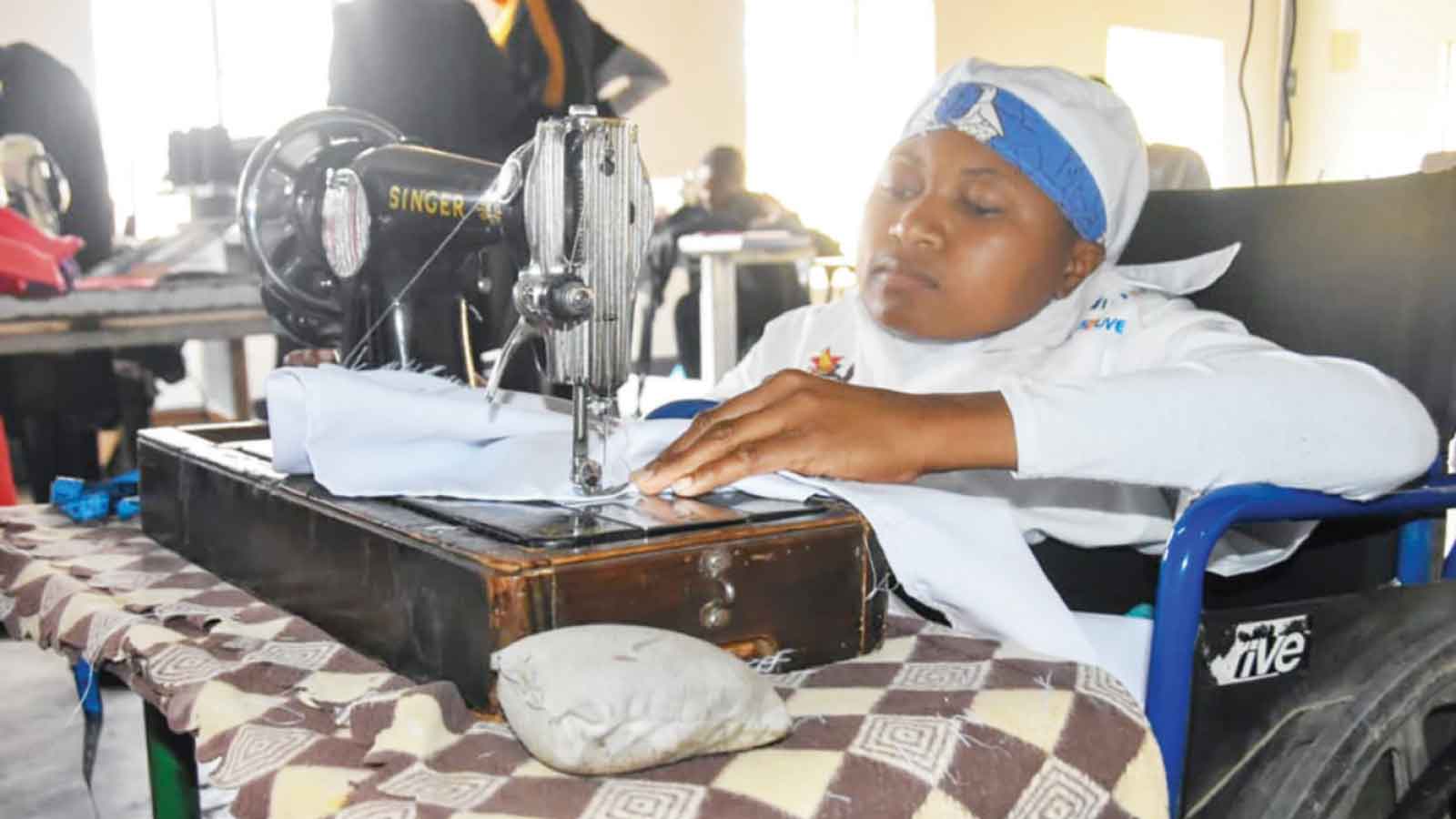
Theseus Mauruki Shambare
Features Writer
THE sound of a sewing machine has become the soundtrack of independence for 23-year-old Anisha Masaire, who was born with Osteogenesis Imperfecta, a condition that affects bone development.
Inside the Madziwa Youth Incubation Hub in Mashonaland Central, rolls of fabric, measuring tapes and design patterns surround the young fashion designer as she transforms ideas into garments, and skills into income.
To many, the room may look like a vocational training centre, yet to Anisha, it represents something much bigger. It is a place where ability was recognised before disability.
She has lived with a reality familiar to many persons with disabilities — a society where barriers often limit opportunities before talent has a chance to emerge.
But at Madziwa, she found something different. She found equipment, mentorship and a platform to excel. Most importantly, she found the confidence to see herself not as someone waiting for assistance, but as someone capable of creating value.
“I am learning cutting and designing here and the skills I have gained are already helping me make money. I am producing apostolic sect garments as well as African-inspired attires.
“This programme has given me confidence because I can now use my skills to create something for myself,” she said in a recent interview.
Anisha’s journey began with learning the basics.
“I was welcomed despite my condition. I was taught from zero. Now I am getting orders from all over,” she said.
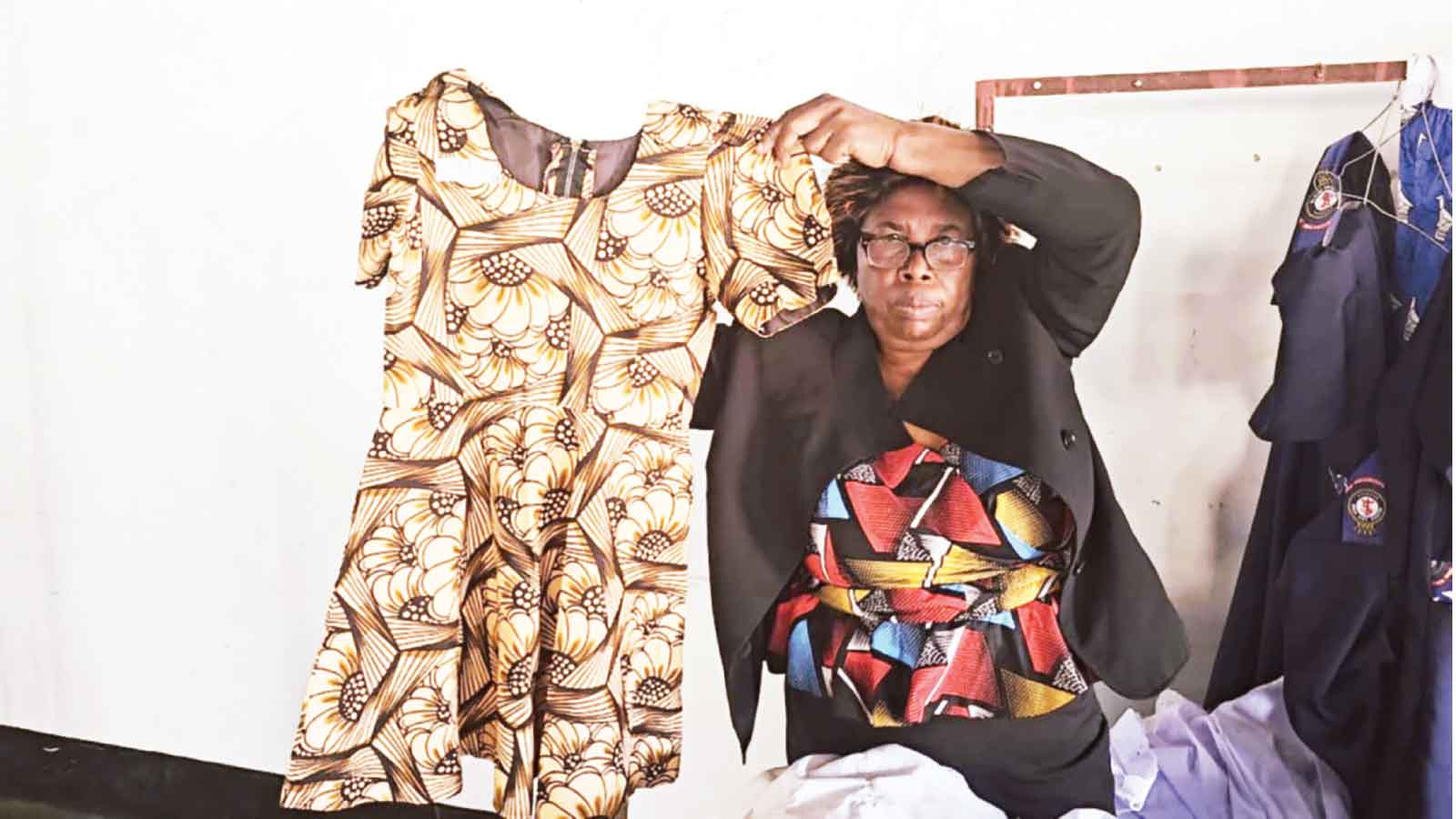
Her understanding of her community has helped shape her business.
“Madziwa area is dominated by apostolic church members and I am good at their garments. Additionally, I have mastered the art of African attire. With the Government now encouraging such dressing, I am getting more orders,” she said.
Every garment she produces carries a message beyond fashion. It challenges an old perception that disability means dependency.
Anisha’s story is unfolding at a time when Zimbabwe is redefining its approach towards disability inclusion. The conversation is moving from welfare to empowerment, and from receiving assistance to creating opportunities. From asking what persons with disabilities need to asking what they can contribute when barriers are removed.
At the 2026 National Disability Expo held at Mucheke Stadium B Arena in Masvingo last week, that message dominated discussions. More than 500 exhibitors, Government ministries, departments and agencies showcased products and initiatives aimed at demonstrating the capabilities of persons with disabilities.
Opening the expo, President Mnangagwa said disability inclusion was central to Zimbabwe’s ambition of becoming an upper-middle-income economy by 2030.
In a speech delivered by Vice President Kembo Mohadi, the President said persons with disabilities were “not objects of charity, but equal citizens, endowed with inherent dignity, rights and capabilities.”
He said disability inclusion was not only a social responsibility, but a constitutional obligation, developmental necessity and human rights issue.
The President pointed to constitutional provisions, including Sections 6, 22 and 83, which provide for the rights of persons with disabilities, while highlighting the enactment of the Persons with Disabilities Act (Chapter 17:13) in 2025 as a milestone in creating a rights-based framework.
The legislation aligns Zimbabwe with global and regional commitments, including the United Nations Convention on the Rights of Persons with Disabilities, the African Disability Protocol and broader sustainable development commitments.
Under the Sustainable Development Goals, disability inclusion cuts across several targets — ending poverty, promoting health and wellbeing, ensuring inclusive education, advancing decent work, reducing inequalities and creating inclusive communities.
The principle is simple: development cannot be sustainable if millions of people are left behind. But policy becomes meaningful when it reaches communities.
At Madziwa, that transformation is taking place through an incubation model designed to ensure skills do not end with graduation.
Since 2024, SOS Children’s Villages has invested US$14 500 towards renovating and strengthening the Madziwa Youth Incubation Hub, supporting safety improvements, clothing and textile facilities, printing incubation, training spaces and equipping the centre with necessary resources for young people to flourish.
The hub supports vocational skills development, entrepreneurship, employability, information technology exposure and provides young people with a safe space.
The results are already emerging.
In 2025, 47 youths were trained, while by 2026 the number had increased to 186, bringing the reported cumulative number of trained youths to 233. Other reported outcomes include two welding ventures and three hair salons established at Madziwa Business Centre.
The intervention addresses a challenge that has affected many vocational graduates; having skills but lacking the tools to turn them into businesses.
Shamva District development officer in the Ministry of Youth Empowerment, Development and Vocational Training, Mrs Patience Fungai Mkwanda, said the incubation hub was created to close that gap.
“We realised that many young people were trained through vocational programmes but after graduating, their skills became dormant because they did not have capital equipment, workspace or mentorship,” she said.
“This incubation hub was created to provide shared equipment, workspace and business guidance so that young people can become entrepreneurs.”
Mrs Mkwanda said 322 youths had directly benefited from the facility through training in clothing and textile, beauty therapy, information communication technology and other skills.
“We are seeing youths creating businesses, joining savings groups and becoming self-reliant. The objective is to ensure young people become contributors to rural industrialisation,” she said.
For 63-year-old Pauline Dongonda, who has spent decades in education and has taught at the institution for two years, the work is about creating a legacy.
“With the experience I have gained over the years and advancing in age, it is now time for me to nurture more people,” she said. “I want to mould future entrepreneurs, who will not only know how to design, but will teach others, build companies and create opportunities.”
Her vision mirrors the broader disability inclusion agenda: empowerment that multiplies.
“Whenever I look at Anisha, I smile. She is the future I have always dreamt of – a living testimony that when young people, including those with disabilities, are given opportunities, they can turn their potential into something that inspires an entire community,” she said.
Beyond skills training, the Madziwa Youth Incubation Hub has also become a safe space where young people access adolescent health and wellbeing support, life skills and information that helps them make informed decisions.
SOS Children’s Villages family strengthening programmes coordinator for Shamva District, Mr Malven Manyeza, said the youth incubation hub was designed to ensure that young people do not only acquire skills, but also gain the support systems needed to turn those skills into sustainable livelihoods.
“The youth incubation hub is creating platforms where young people can develop their skills, access resources and build their own economic base. Our role is to provide the foundation, infrastructure and support, then communities take ownership and grow these initiatives,” he said.
He added that the facility was helping bridge the gap between training and entrepreneurship by giving young people access to equipment, workspace and mentorship.
“When young people are empowered with the right skills and support, they are better positioned to create opportunities for themselves and contribute to the development of their communities,” said Mr Manyeza.
At the Disability Expo, the same philosophy was reflected through Government empowerment initiatives. Persons with disabilities received support aimed at increasing participation in agriculture, mining and entrepreneurship.
President Mnangagwa announced empowerment interventions, including the Presidential Goat Scheme, with an initial 50 goats allocated for persons with disabilities, the Presidential Piggery Project where 60 pigs were distributed, agricultural and farming support, residential stands and mining equipment.
Some beneficiaries received hammer mills to support income-generating ventures. The message was that productive assets are central to genuine inclusion.
As President Mnangagwa said, the phrase “disability is not inability” must move beyond rhetoric. It must translate into opportunities.
For Anisha, the journey continues.
The young designer dreams of expanding her business and inspiring other persons with disabilities to pursue economic independence. Her story is not only about fashion but a national shift. A shift where inclusion is measured not by how much society provides for persons with disabilities, but by how much space it creates for them to participate, lead and innovate.
At Madziwa, every piece of fabric she cuts carries a bigger message. Zimbabwe’s disability story is being redesigned and Anisha Masaire is helping stitch the future.