Chronicle Editor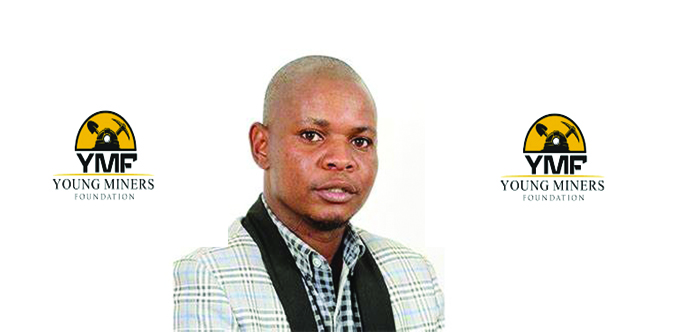
Sikhulekelani Moyo, [email protected]
YOUNG Miners Federation (YMF) has said the Government should look into the newly introduced special capital gains tax saying that tax initiatives help the country on revenue collection which is crucial to public services, however, the taxes should be affordable so that everyone can comply.
This comes at a time when the Government introduced the special capital gains tax (special CGT) on the transfer of mining title that was introduced through the Finance Act No. 13 of 2023 which amended the Capital Gains Tax Act (Chapter 23:01) effective January 1, 2024.
According to the new special capital gains tax, the buyer of a mining title is now levied 20 percent of the value of the transaction.
Responding to questions sent to him by the Business Chronicle, Young Miners Federation chief executive officer Mr Payne Kupfuwa, said being business people who understand how taxes are important to the Government, they have no problem with the new tax.
However, he said the Government should revive the tax so that small-scale miners can afford to pay and also be able to comply with the tax requirements.
“As YMF we are a business minded and we understand the importance of paying taxes as it is the money that develops the country.
“But our cry is that the taxes should not choke us because we are still small businesses who have established themselves to grow,” he said.
“Our idea is to grow from small to medium and then large-scale miners.”
He said they are aiming to redefine the small-scale mining sector narrative through increased formalisation of the industry.
“We don’t mind paying tax but it shouldn’t be too much as we pay tax on everything, we do include selling gold, buying different things in shops,” he said.
A mining title under the special capital gains tax law includes a claim, block of claims, mining lease or special grant.
It also includes any document evidencing a mining right that is precedent to obtaining any of the foregoing titles, such as an exclusive prospecting licence or exclusive exploration licence.
In addition, it can be a share, stake or interest in any mining title.
The new taxation is different from the regular capital gains tax. It is based on the value of the entire mining title transaction, instead of the capital gain made by the seller of the title.
Unlike most capital gains taxes, it is payable by the purchaser. It has the characteristics of value-added tax.
The new policy increases the tax burden for the purchaser compared to a traditional capital gains tax where the seller pays based on profit accrued from the transfer of the mining title.
Mr Kupfuwa said for the benefit of the sector’s growth, the Government should exempt small-scale miners from paying tax or reducing it so that they will both afford to pay it without compromising their production.
Zimbabwe boasts a rich endowment of minerals, ranking second in the world for platinum deposits and holding extensive reserves of chromium, gold, coal and lithium.
This mineral wealth has positioned mining as a crucial pillar of the Zimbabwean economy, accounting for roughly 12 percent of the gross domestic product and 75 percent of exports.
The 20 percent special capital gains tax has remained a contentious issue.
Some analysts say while the tax might deter speculative purchases of mining claims, encouraging more productive utilisation of resources, the industry feels this could stifle investment.
Over the past five years, Zimbabwe’s mining sector has witnessed a surge in investment focusing on several key minerals, according to the Zimbabwe Investment and Development Agency.
Leading the charge is lithium, driven by the global demand for electric vehicle batteries and other huge energy storage facilities for multipurpose appliances. This essential mineral has become a major focus for exploration and development, positioning Zimbabwe to capitalise on the clean energy revolution.
Investment has also reached the iron ore sector, with an outstanding example being the US$1,5 billion investment in Manhize, Chivhu, by a Chinese investor.
Iron ore, a vital component in steel production, is another critical mineral found in abundance within Zimbabwe.
@SikhulekelaniM1


 Online Reporter