Moffat Mungazi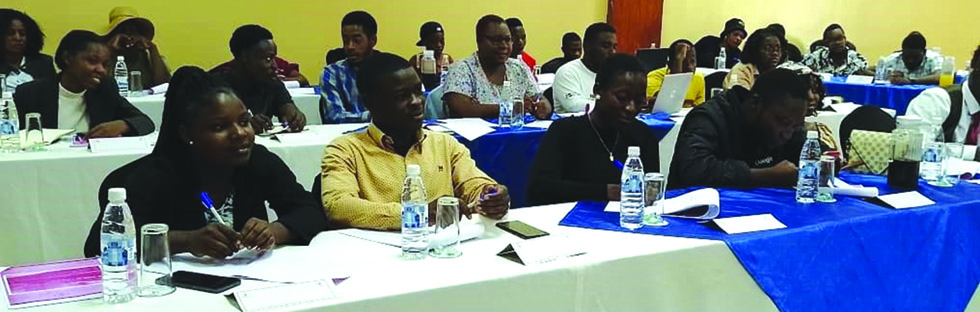
Ray Bande
Senior Reporter
IT is widely acknowledged that Zimbabwean youths face significant challenges in accessing capital which hinders their ability to initiate and sustain economically empowering projects.
Likewise, the country is grappling with a growing problem of drug and substance abuse among youths, largely driven by idleness and unemployment.
The alarming statistic of 2,2 million youths without employment or meaningful sources of income underscores the urgency of addressing these interconnected issues.
Despite decades of talk shows on youth empowerment since independence in 1980, the practical steps for ordinary youths to access support and achieve economic empowerment have remained unclear.
Many youths continue to struggle, with some still staying with their parents, while others have turned to destructive coping mechanisms like drug and substance abuse and crime.
Government’s recent shift towards involving youths directly in the youth economic empowerment initiative is a welcome approach.
As some aptly put it, there can never be anything for the youths without the youths!
By empowering youths to take ownership of their economic empowerment, Government is creating a more inclusive and effective approach to address the challenges faced by this critical demographic.
Director for Monitoring, Evaluation and Strategic Planning in the Ministry of Youth Empowerment, Development and Vocational Training, Dr Blazio Manobo announced a new initiative to create a strategic planning document aimed at empowering youths.
This document will guide the ministry’s actions and outline the resources needed to support a specific number of youths.
The ministry’s previous lack of a strategic planning document has hindered its ability to effectively empower youths.
Dr Manobo’s team is now working to address this issue, with the ultimate goal of promoting youth participation in their own economic emancipation.
To achieve this, the ministry is engaging with youths and other stakeholders across the country, including in Mutare, to identify the real issues and develop effective solutions, which is part of a broader effort to formulate a national youth empowerment strategy.
“The thing is that the Ministry of Youth Empowerment, Development and Vocational Training did not have a strategic planning document. This is what we are now coming up with — the aim of tabulating the amount of resources needed for a given number of youths.
“This explains our presence here in Mutare now. We want to get down to the real issues and map the best possible means to have the youths participate in their own economic emancipation,” said Dr Manobo.
Dr Manobo admitted that a recent survey revealed a startling truth — despite being aware of the Ministry of Youth Empowerment, Development and Vocational Training’s existence — most youths in the country are unclear about its functions and benefits.
This lack of understanding prevents them from utilising the Government department’s resources to improve their lives.
“It is sad that the ministry has been in existence since independence, but little is known out there about its functions and roles in communities. A recent survey that we did indicated that most youths only knew of the ministry’s existence and nothing else. This is the time to change the narrative so that the youths actively partake in their own development,” he said.
Ideally, the Ministry of Youth Empowerment, Development and Vocational training, as a Government arm, is expected to provide youths with technical and entrepreneurial skills through vocational training, public-private partnerships, and curriculum development to improve employability and self-sufficiency.
It also supports youth entrepreneurship through policy creation, funding management, business incubation, and creating economic opportunities for youth in various sectors.
Through its entrepreneurial arm, the ministry focuses on youth entrepreneurship by developing policies, providing technical support, creating business hubs, and establishing public-private partnerships for youth empowerment.
Youths in Manicaland are embracing the opportunity to be involved in the planning phase of the empowerment programme.
During a consultation meeting, some youths expressed happiness about being part of the decision-making process.
They said this level of involvement is crucial, as it allows them to have a say in the programmes designed to benefit them.
The empowerment programme aims to address various challenges faced by youths, including unemployment and lack of access to capital, and by involving youths in the planning phase, the programme can tailor its initiatives to meet the specific needs of the youth.
This collaborative approach can lead to more effective and sustainable solutions.
Mr Nhamo Makwarise, of Chipinge said by giving them a voice in the decision-making process, Government can create programmes that are more responsive to their needs, which in turn, can lead to better outcomes and brighter future for the youths.
“It gives us hope for better things to come when we are involved in what the Government expects from us. If this process is allowed to flow in the manner it has been outlined, I have no doubt that we will be the biggest beneficiaries as the youth,” said Mr Makwarise.
Another youth, Mr Nomore Mukore from Nyanga District said he is taking a proactive approach in addressing climate change by venturing into climate-related businesses.
His entrepreneurial spirit is commendable, especially considering the significant impact of climate change on the economy and environment.
“I think this is my first time to be in touch with a Government related youth empowerment programme, and I happy that I have been given a platform, as an individual, to choose my passion and get assistance on how I can establish myself in that industry.”



 Online Reporter