Online Reporter
Tendai Gukutikwa
Post Reporter
Youths in mining were over the weekend empowered to take active roles in promoting transparency and accountability in the sector.
The Centre for Natural Resource Governance (CNRG), in partnership with the Government, convened a capacity building programme in Mutare where students, mainly law students, from Marange, Hwange, Bikita, Bulawayo and Shurugwi were equipped with knowledge on natural resource governance and sustainable development.
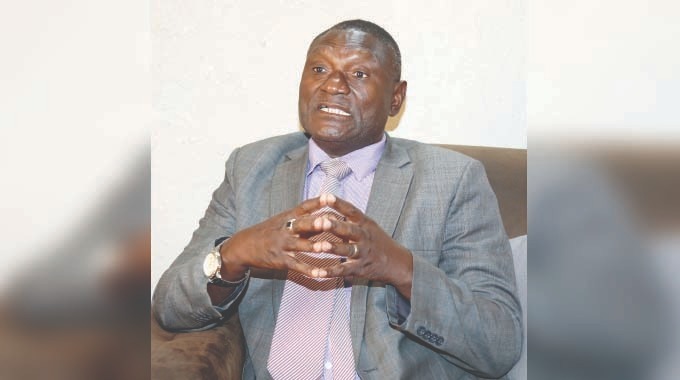
In an interview on the sidelines of the programme, CNRG communications and advocacy officer, Mr Donald Nyarota said the initiative supports the Government’s Vision 2030 agenda, which identifies mining as a cornerstone for economic growth through value addition, industrialisation and job creation.
He said while the country’s policy frameworks are progressive, the reality in most mining communities calls for greater inclusion, especially of young people.
“As the Centre for Natural Resource Governance, we acknowledge the central role mining plays in Zimbabwe’s NDS1, which identifies the extractive sector as a key driver for economic transformation, industrialisation and job creation,” he said.
“However, while NDS1 promotes value addition, formalisation, and sustainable resource utilisation, the lived realities in many mining-affected communities reflect persistent challenges: environmental degradation, community displacement, illicit financial flows and limited community benefit from mineral wealth.
“This is in line with the Government’s thrust to ensure responsible resource utilisation under the National Development Strategy 1 (NDS1),” he said.
He added that CNRG is particularly concerned that the youth, who form the majority of Zimbabwe’s population and are often excluded from decisions and processes that shape the governance of the country’s natural resources.
“This undermines NDS1’s commitment to inclusive development,” he said.
The young participants were exposed to issues affecting their communities and encouraged to act as agents of change, armed with skills to push for fairness, transparency and environmental justice.
“In response, CNRG is investing in building a new generation of informed and empowered youth leaders through programmes such as the Natural Resource Governance and Accountability School. It brings together young people from extractive hotspots to strengthen their capacity to demand transparency, environmental justice and equitable sharing of benefits,” said Mr Nyarota.
He also said the initiative marks a crucial step towards ensuring that Zimbabwe’s mineral wealth benefits all, especially communities closest to extraction zones, with young people positioned to lead the charge for accountability and justice.
One of the facilitators, Mr Freeman Bhoso of the Zimbabwe Natural Resources Dialogue Forum, applauded the Government’s direction on mineral governance but called for broader public participation to complement existing policies.
“Good natural resource management and governance is enabling to the eradication of poverty and sustainability in unlocking value from our natural resources,” he said.
Mr Bhoso also highlighted that community-focused resource governance could support national development priorities in other areas.
“Natural resource governance fundamentals will dovetail and create a platform for a stronger economy and subsidies to fundamentals like education and health. It is key for adherence and observation of natural resource governance essentials so that we do not create an impoverished society amidst affluence,” he said.


 Online Reporter