Online Reporter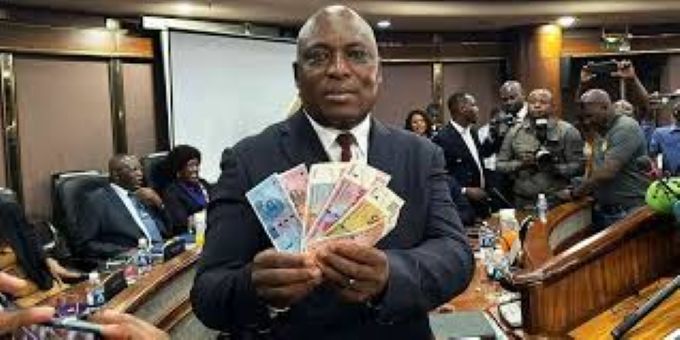
Richard Muponde, Zimpapers Politics Hub
THE 22nd Zanu-PF National People’s Conference, which concluded in Mutare over the weekend, made a bold and transformative declaration — Resolution Number 10 — ushering in far-reaching financial and currency reforms. These include strengthening the ZiG, removing the Intermediated Money Transfer Tax (IMTT) on local transactions, and improving the durability of currency notes.
This resolution transcends mere monetary housekeeping; it serves as both a political and economic shield, crafted to insulate Zimbabwe from the recurring shocks of the United States dollar and the suffocating impact of Western-imposed sanctions.
Its timing is particularly symbolic, coinciding with the

Commemorations on October 25, when the region collectively reaffirms Zimbabwe’s right to economic sovereignty and self-determination.
For years, the Global North has wielded financial dominance as a weapon, systematically undermining the currencies of nations that resist its influence. From Libya to Venezuela, Iraq to Cuba, economic warfare has silently orchestrated the suffering of millions, reducing proud nations to dependent states.
In Zimbabwe’s case, sanctions, financial isolation, and manipulation of exchange mechanisms were deployed to cripple the economy, fuel inflation and force policy surrender.
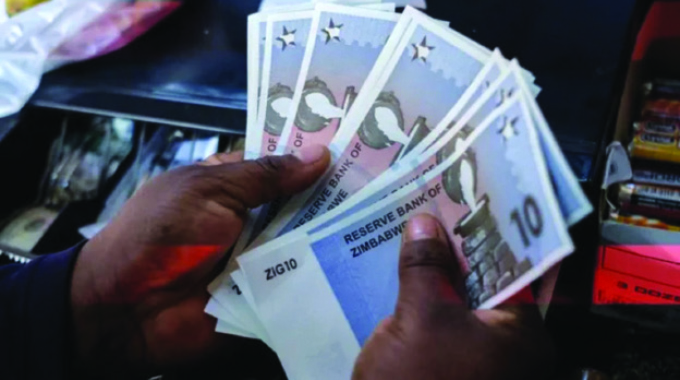
The introduction of the ZiG, Zimbabwe’s gold-backed currency, stands as a monumental act of defiance — an assertion that the country will chart its own economic course, free from external coercion.
Prior to the ZiG’s launch in April 2024, the local currency landscape was marked by volatility. The US dollar had entrenched itself, creating a dual-tier system that penalised the poor and rewarded currency speculators. Ordinary workers were paid in a depreciating local unit, while prices mirrored the parallel market rate of the US dollar. Inflation became a household term, and monetary sovereignty a distant dream.
Reliance on the US dollar effectively handed control of Zimbabwe’s economy to Washington — the architect of the sanctions regime aimed at destabilising Harare. Against this backdrop, the Reserve Bank of Zimbabwe (RBZ), under the leadership of Governor Dr John Mushayavanhu, introduced the ZiG — a currency anchored in tangible assets and guided by disciplined monetary policy.
“Zimbabwe introduced a new currency in April 2024 and is currently in its adjustment phase on the road to full mono-currency by 2030. The transition process to mono-currency requires a cautious and gradual approach in the implementation of appropriate monetary and fiscal policies to create the desired conditions precedent… When the desired fundamentals are in place, the road to mono-currency will be market-driven,” said Dr Mushayavanhu earlier this month.
This approach marks a decisive break from past missteps, where abrupt currency transitions triggered instability. The RBZ’s cautious, data-driven strategy has yielded promising results. Inflation has averaged a remarkable 0.5 percent per month this year — a historic low in Zimbabwe’s post-2000 economic landscape. The exchange rate has remained within the regional convergence target of ±10 percent, while foreign reserves have increased from a meagre 0.4 months of import cover to 1.2 months.
“As a result, gross foreign reserves have risen steadily to over US$900 million, representing about 1.1 months of import cover, on the back of record tobacco, gold output and other mineral exports,” said the RBZ Governor.
“The current foreign currency reserves accumulation strategy, which is also a gradual process, will result in adequate build-up of foreign currency reserves to target levels of three to six months in the short to medium term — critical to promote durable ZiG stability.”
This stability is no accident — it is the product of monetary discipline and a firm rejection of external policy manipulation. Zimbabwe’s financial reform, centred on the ZiG, is a textbook example of how developing nations can reclaim sovereignty over their economic systems.
“The Reserve Bank recognises that confidence-building is not an event but takes time and is being addressed through consistent policy communication, improved liquidity management and increased use of ZiG in Government transactions. The Reserve Bank is also reviewing transaction costs and payment infrastructure to enhance the attractiveness of local currency usage,” Dr Mushayavanhu said.
The impact has been both immediate and measurable. Confidence in the local currency has surged. According to the RBZ’s ZiG Perception and Confidence Survey II, public acceptance of the ZiG rose from 40 percent in June 2024 to over 90 percent by September 2025. Transactions conducted in ZiG within the National Payment System increased from 26 percent in April 2024 to 43 percent by May 2025.
This surge reflects growing trust in the domestic currency — a vital prerequisite for sustainable economic growth.
Historically, the global monetary system has been weaponised against nations that challenge Western dominance. In 2011, Muammar Gaddafi proposed a gold-backed dinar for African trade. Within months, Nato forces invaded Libya, plunging the country into chaos —its central bank looted, its currency obliterated.
In Venezuela, Washington imposed crippling sanctions, blocked oil sales and froze assets, triggering hyperinflation and mass poverty. Similar tactics were used in Iraq and Iran, where currency sabotage was employed to engineer economic and political instability.
Zimbabwe’s introduction of the ZiG is therefore not merely economic reform — it is a bold geopolitical statement that the country refuses to be another casualty of financial imperialism.
Even the International Monetary Fund (IMF), often criticised for promoting Western-aligned policies, has acknowledged Zimbabwe’s progress.
“After facing significant macroeconomic volatility in recent decades, Zimbabwe has recently experienced a degree of stability, thanks to tighter policies. The halting of quasi-fiscal operations and monetary financing by the central bank have helped significantly reduce inflation and exchange rate pressures,” the IMF noted in its latest Article IV consultation report.
The Fund also observed that economic growth had rebounded as extreme weather shocks subsided and trade conditions improved — an implicit recognition that Zimbabwe’s home-grown policies are bearing fruit.
A strong and stable ZiG has emerged as Zimbabwe’s most potent tool to bust sanctions. By reducing dependency on the US dollar, the country is depriving Washington of its most effective instrument of control. Every ZiG transaction — domestic or regional — is a small but significant act of economic liberation.
It signals that Zimbabwe’s destiny will be determined by its people — not by foreign dictates.
Moreover, the strengthening of the ZiG enhances fiscal sustainability, restores confidence in the banking system, and attracts investment by providing predictability — the bedrock of sound economic planning.
As Zimbabwe moves towards full mono-currency status by 2030, as envisioned by Dr Mushayavanhu and the Second Republic under the stewardship of President Mnangagwa, the objective is not simply to have a currency named ZiG, but to institutionalise monetary sovereignty.
The financial and currency reforms adopted at the 22nd Zanu-PF Conference represent a political covenant between the State and its citizens — an assurance that Zimbabwe’s economy will never again be held hostage by foreign currencies or external powers.
Through the ZiG, Zimbabwe is scripting a new chapter in the narrative of economic resistance — a chapter in which a nation under sanctions refuses to be crippled, instead transforming adversity into innovation.
Gold has become both metaphor and mechanism — the enduring symbol of value and the literal foundation of a currency designed to shine under pressure. In doing so, the ZiG does not merely stabilise the economy; it redefines independence itself.