Chronicle Editor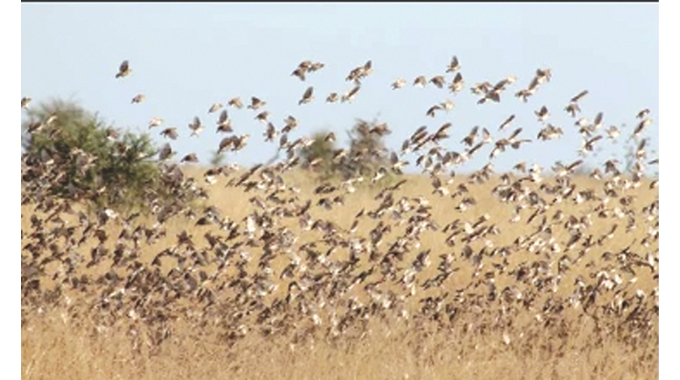
Stephen Mpofu, Perspective
THE phenomenon above appeared to continue ad infitum with little or no disturbance even after the armed revolution freed Zimbabwe from imperialist colonial occupation in 1980 as quelea birds enjoyed field days on wheat fields also with little or no perturbation by people.
The feasts by birds on winter wheat persisted even after the belly revolution — call it land reform — was introduced soon after independence to retrieve vast tracts of fertile land while the blacks who needed that asset the most subsisted on infertile tracts of land.
Who knows for sure that if left untouched, the white farmers would not demonstrate their pathological racism by growing exotic grass on the farms that they worked for export as cattle fodder to demonstrate their self-perceived superiority and control over blacks even in an independent state?
That the white farmers in point left the country in a huff and from their refugee elsewhere on the globe supported the West’s economic reform programme demonstrates beyond any shadow of doubt that they would never ever have reconciled their thinking with that of the black majority rulers in our motherland.
Now at long last, the days of flocks of quelea birds swarming on and literally stripping fields of winter wheat appear numbered — but probably not yet over — as effects of a blitz-Krieg on the quelea bird menace declared by Government are yet to vindicate themselves.
On Tuesday this week, Information, Publicity and Broadcasting Services Minister Monica Mutsvangwa said at a Press briefing after a Cabinet meeting that hectares put under wheat this year exceeded the record set in 2004.
She said that 54 268 tonnes of winter wheat realised this year were sufficient to meet local requirements and that a command-and-control centre had been established to ensure better mapping, and control of quelea birds this season.
In previous years, the birds swarmed on the wheat fields, stripped the grain and swarmed off to spend nights on trees on the outskirts of fields to which they returned the next day to feed themselves unscathed by human individuals on patrol, and even bred in nearby trees, while owners of the fields went without bread or other wheat flour products for themselves and their children with the latter starving and performing poorly at school because of the higher costs which made imported wheat inaccessible to many Zimbabwean consumers.
What appears necessary now is increased hectares under wheat with more small holders of land countrywide being roped in to increase production of that important grain towards self-sufficiency, what with irrigation programs now being setup countrywide by the second Republic Government.
That soon after independence peasants played a pivotal role by making Zimbabwe the bread basket of Southern Africa with maize exports to Zambia and further North to as far as Egypt certainly demonstrates the ability by Zimbabweans to make our country the wheat basket for Sadc and other African states.
Thus — and with tragic finality too — were the prices of wheat products such as bread, biscuits et cetera allowed to soar due to a continuing shortage of wheat in the absence of control measures on quelea as announced by Minister Mutsvangwa, and which must include the birds ending up in boiling peanut butter pots or in frying pans because of expensive wheat imports and in the process causing people to settle on tasteless vegetable chunks as beef and chicken become scarce on the dinner table due to high costs the result would be many Zimbabweans pushing empty bellies.
Now, as anyone should know, to speak of people pushing empty bellies as being free is nothing but mere rhetorical talk which precipitates violence as demonstrated by acts of instability in several African and other countries on the globe where people scramble for food to keep their soul and flesh together.
Therefore the belly revolution should continue to augur well as agents of political, economic and social development of our motherland into a brave new future.


 Online Reporter