Online Reporter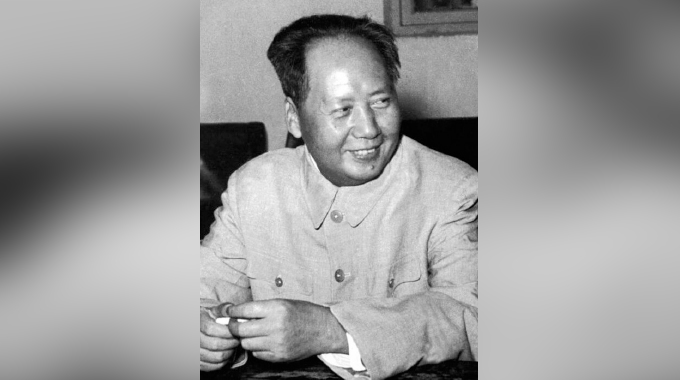
Gibson Nyikadzino, Zimpapers Politics Hub
UNDER the command of Zanla and ZPRA military leaders, Zimbabwe’s two peasant-backed armies defeated colonialism, ending nine decades of racist settler occupation. The two armies emerged as the most inspiring anti-capitalist movements of the 1960s, towards the end of the late 20th century.
From the heroics of these armies, what stood out was not that the guerrilla movements advanced the revolution, but how they integrated a mix of military and strategic decisiveness with political education.
As such, any decisive victory against an enemy force should be anchored on good strategy, tactics and political consciousness. No wonder Burkina Faso’s Thomas Isdore Sankara is often quoted as having said, “An army that has no political education or training is a potential criminal”.
The making of the Zimbabwe Defence Forces in 1980 after the integration of the Zanla, ZPRA and Rhodesia’s forces speaks volumes on the various expertise that was to inform the trajectory that Zimbabwe’s security forces were going to take.
Of interest is the political education that the guerrilla armies received from the teachings of the Communist Party of China’s (CPC) Chairman Mao Zedong, which are instructive in ensuring that the peasant-backed armies should always stay with the people.
Part of Chairman Mao’s glorious military thoughts include the idea that for an army to become invincible, it should become one with the people so that they see it as their own. For years, the ZDF has been a formidable asset of the people, from the days of the Renamo insurgency in Mozambique that had threatened the nation’s interests, to the United Nations (UN) assignments its members have served with distinction. It is the people’s force!
Even when the threat by the West to invade Zimbabwe in 2002 and the use of maximum diplomatic pressure to isolate the country were becoming imminent, according to South Africa’s former President Thabo Mbeki, the ZDF was ready to defend the country’s borders.
To solidify these relations, China, as Zimbabwe’s ally and partner, used its veto in 2008 to reject US efforts to push UN sanctions against Zimbabwe.
What is therefore crucial is to recognise that the Sino-Zimbabwe contacts were not born with the signing and formalisation of bilateral relations only in 1980, but have been products of political interactions that have sought to delink the people from the clutches of colonialism and capitalism.
Crucial to this is first noting that the ability of the ZDF to, as always, deal with the mindset of its military officers is the essence of its adaptability to the changing demands pressuring the world. For that, the ZDF has been able to organise and train the people’s force, revitalising its commitment to change the image of the country in popular imagination.
Because of the emergence of a multiplicity of threats to national security, either manifest or latent, there have been dynamic transformations that continue to occur within the architecture of states. Zimbabwe is not an exception.
From working towards eliminating the threat of global terrorism to alertness when it comes to increased cases of cyber warfare or terrorism, there are increased unconventional methods that are being deployed to threaten nation-states. The recent reports that Israel jammed Iran’s air defence systems ignite concern on what the ZDF should focus on.
Even so, development has moved from the known traditional trajectory to a more scientific one that requires the use of technology, innovation and breakthroughs in inventions. The changing global security, political and economic environments continue to expose countries to many modern realities that are transforming the world’s responses to security demands.
These changes which threaten nations are a result of major factors that include effects of climate change, discovery of deposits of critical and rare earth mineral resources like lithium, and poverty have put countries at risk.
In such times, this calls for an expanded role of the military to suit the changes that are taking place. Where it has been known to be a dormant security force protecting the sovereignty of the state, new developments are calling for its transformation without losing foundational values so that it contributes not only to security, but national development.
Zimbabwe’s strategic security survival and protection of its borders from external attacks or internal destabilisation is a result of a covenant written and solemnised by the blood and sacrifices of past and current military officers. The making of Zimbabwe’s heroes and heroines whose credentials are written with ineradicable sweat which dislodged an exploitative colonial system in 1980, are the authors of the nation’s security and stability.
They are the makers and moulders of the country’s essential political, economic and cultural developments as a reminder of what they fought against and how they want the future to look like.
It is, therefore, unfathomable for Zimbabwe, in the name of democracy, to develop without the input of those who withdrew the country from a colonial abyss. On several occasions, negative-minded outsiders who have failed to create a schism between the people and their defence force have ended up inventing terms like “security sector reforms”.
The organisation of the ZDF has had a considerable impact beyond the confines of traditional roles confined to the military to be counted as a formidable micro-organisation of political, economic, cultural and developmental power.
Of course, this does not mean there is turning a blind eye to the impact China and Maoism have had in the course of making the ZDF.
Zimbabwe and China will continue sharing such experiences because in the scope of their relations, nothing shall stop the course of the history they made then, make now and commit to making in the future.