Freeman Razemba-Senior Reporter
THE Zimbabwe Electoral Commission yesterday launched an artificial intelligence-powered chatbot, ZECBot, designed to answer frequently asked questions on the country’s electoral processes and provide information to the electorate and other stakeholders.
The platform will offer citizens, political parties, observers, media practitioners and the general public timely, accurate and accessible responses on electoral matters around the clock, at no cost to users.
Its rollout marks a significant milestone in the Commission’s efforts to enhance electoral efficiency, integrity and service delivery through AI-enabled systems.
By automating responses to routine enquiries, the chatbot will reduce response times, extend voter education to remote communities and promote consistency and accuracy in public information. It will also generate data insights to support the continuous improvement of electoral services.
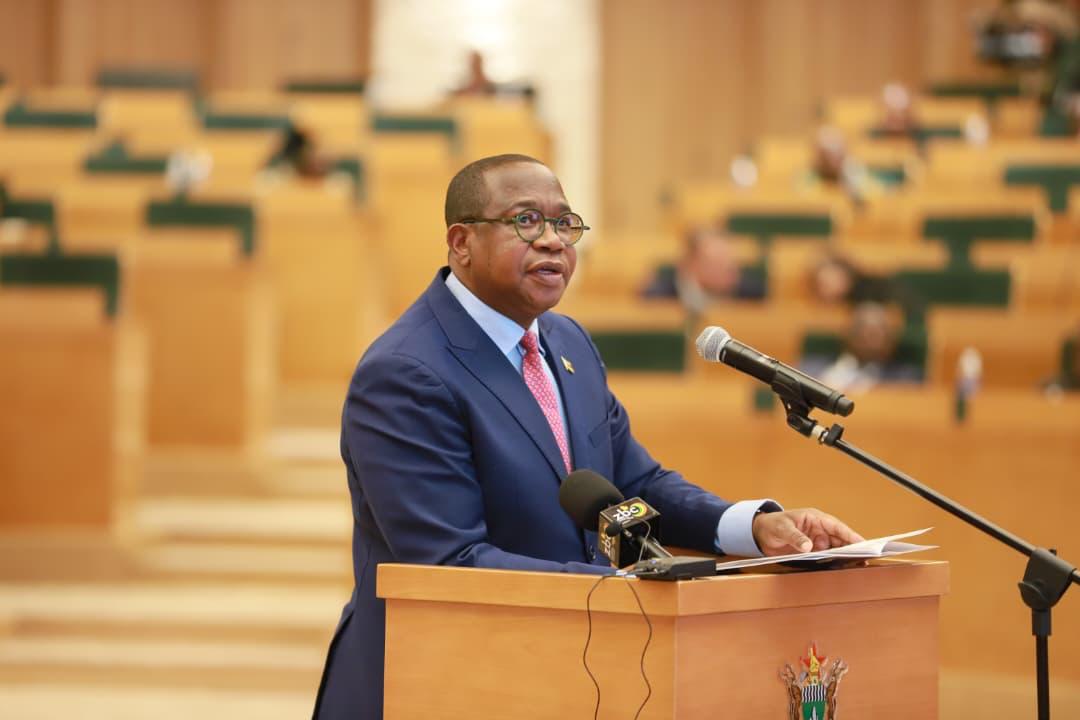
Speaking at the launch of ZECBot, which was developed by the Commission to improve public access to electoral information, Information, Publicity and Broadcasting Services Minister Dr Zhemu Soda commended ZEC for embracing innovation and harnessing information and communication technologies to strengthen voter education.
He said ZECBot represented a practical and forward-looking step towards modernising voter education and improving communication between the Commission and citizens at a time when Governments and public institutions around the world were increasingly exploring artificial intelligence.
Dr Soda said while such technologies could support more efficient administration, improve access to information and strengthen communication between institutions and citizens, their adoption must always be guided by responsibility, transparency, accountability and respect for individual rights and dignity.
“Technology must serve the people; it must never undermine trust, fairness, or the integrity of our democratic institutions,” he said.
Dr Soda said ZECBot was a practical expression of Zimbabwe’s commitment to digital transformation under the National Development Strategy 2 (NDS2), which recognises the importance of building a knowledge-based digital economy through emerging technologies, skills development, innovation and appropriate governance frameworks.
He said the launch was not merely the unveiling of a technological tool, but a demonstration of Government’s commitment to placing innovation at the service of citizens, public institutions and national development.
Turning to democratic participation, Dr Soda said an informed electorate was fundamental to meaningful democracy, and citizens must have access to accurate, timely and understandable information about electoral processes, their rights and the institutions that serve them.
He said this required ZEC, political parties, the media, civil society organisations and digital platforms to provide clear information on voter registration, polling procedures, candidate profiles, electoral rights and mechanisms for reporting concerns.
By offering an additional interactive channel, Dr Soda said ZECBot had the potential to make voter education more accessible, convenient and responsive, bringing electoral information closer to citizens, particularly those who rely on digital platforms.
He emphasised, however, that ZECBot should complement, rather than replace, the Commission’s established voter education programmes and communication platforms.
“Community outreach, face-to-face engagement, traditional media, public meetings and direct engagement with electoral stakeholders remain essential to building trust, addressing local concerns and ensuring that no voter is left behind,” he said.
Dr Soda said technology should broaden the reach of voter education, not narrow it, and that digital tools must work alongside existing channels such as voter educators, radio and television, printed materials, roadshows, community meetings and engagement with civil society and traditional leaders.
He said he understood that the Commission was working on further upgrades, including enhancing ZECBot’s capacity to read and respond in all 16 officially recognised languages of Zimbabwe, an important step towards greater inclusion.
“Language must never be a barrier to democratic participation. Every Zimbabwean should be able to access electoral information in a language they understand and in a manner that respects their identity and dignity,” he said.
Dr Soda said the Commission’s efforts to expand multilingual capability deserved recognition and support, reflecting an understanding that digital transformation must be inclusive, people-centred and responsive to the nation’s diversity.
On the responsible use of artificial intelligence, Dr Soda said AI was not infallible and that ZECBot might not be 100 percent accurate in every response.
He said the public should therefore use ZECBot as an information-support tool while verifying important or time-sensitive information through the Commission’s official channels, a responsible approach that protects citizens and strengthens confidence in public information systems.
The Minister encouraged ZEC to maintain robust oversight of the system, ensure its information remains current and accurate, and respond promptly to concerns raised by users and stakeholders.
He said continuous review, quality control, user feedback and regular updating would be essential in sustaining public trust.
Dr Soda said Government must also look ahead to the wider potential of technology in electoral management, noting that AI and other digital tools could, where appropriately applied, support planning, resource allocation, information analysis and monitoring of the information environment.
He said such technologies could also help institutions identify and respond to misinformation and disinformation.
“In an era where false information can spread rapidly, electoral institutions must be equipped to communicate clearly, authoritatively and timeously with the public,” he said.
Dr Soda encouraged ZEC to continue exploring responsible applications of technology that improve efficiency, strengthen electoral integrity and enhance public confidence, while balancing these opportunities against risks such as cybersecurity threats, data protection and privacy concerns, digital inequality and the misuse of AI to create misleading content, including deepfakes.
He said safeguarding electoral integrity requires sound governance, adequate technical capacity, ethical safeguards and strong collaboration among Government, electoral stakeholders, technology partners, civil society organisations and the wider public.
In her address, ZEC Chairperson Justice Priscilla Chigumba said the Commission had, over the years, delivered voter education through face-to-face engagements, community meetings, workshops, outreach programmes, mobile voter education teams, its website and social media platforms.
“ZECBot builds on these efforts by providing an additional interactive channel through which citizens can ask questions and seek clarification at their convenience,” she said.
Justice Chigumba said the initiative was consistent with the Commission’s mandate, including the adoption of appropriate technology and the provision of information to the public on electoral matters.
“ZECBot is a practical demonstration of our commitment to using appropriate innovation in support of our statutory mandate. For the Commission, innovation must serve a clear public interest. It must improve access, strengthen communication and promote inclusion,” she said.
In his welcome remarks, ZEC Chief Elections Officer Dr Simbarashe Tongayi said ZECBot is an interactive digital assistant that gives the public a new channel through which to ask questions on electoral matters, including voting procedures.
He said the chatbot is available 24 hours a day, providing fast and accurate information to help voters locate polling stations and understand election dates and procedures, while reducing pressure on call centres.
The launch was attended by the Ministry’s Permanent Secretary Mr Nick Mangwana, Director of Media Services in the Ministry of Information, Publicity and Broadcasting Services Mr George Chisoko, Zimbabwe Anti-Corruption Commission chairperson Mr Michael Reza, Chief Director in the Department of Immigration Ms Respect Gono, ZEC board members and various stakeholders.