Online Reporter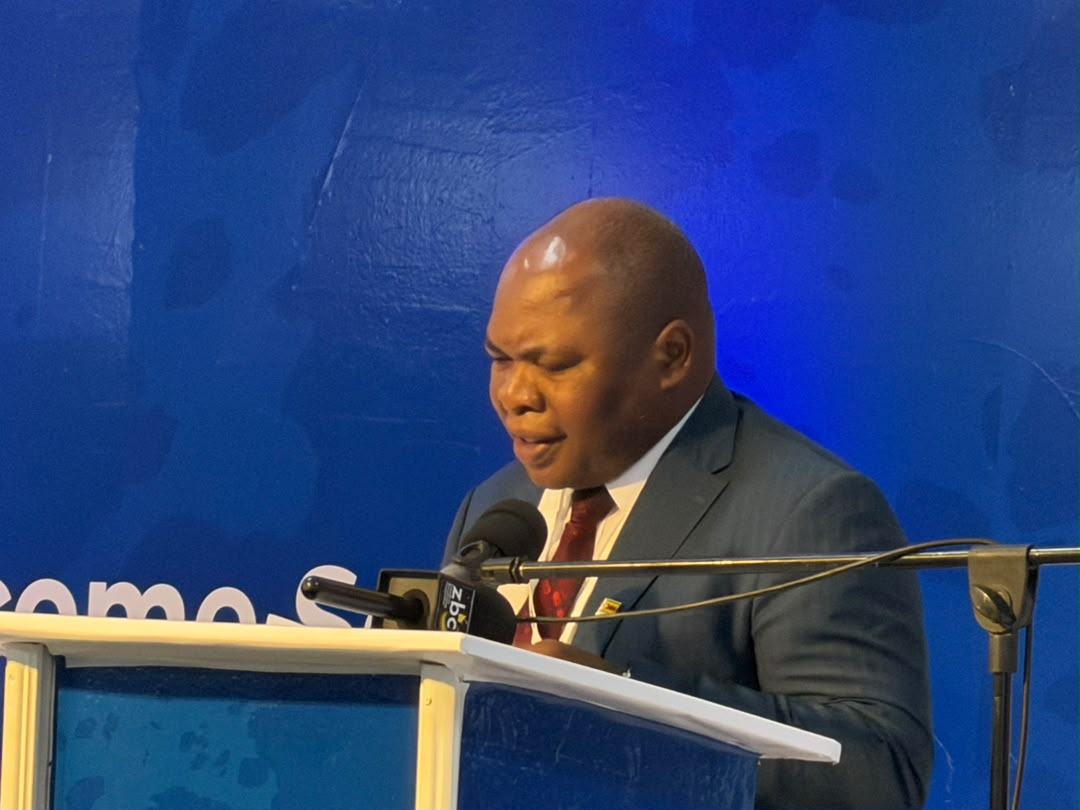
Sikhulekelani Moyo [email protected]
ZIMBABWE Economic Development Conference (ZEDCON) 2026 has strengthened its role as a platform linking research, policy and the National Budget, with Government calling for greater use of technology and private capital to accelerate economic transformation.

Finance, Economic Development and Investment Promotion Permanent Secretary Mr George Guvamatanga said the conference had brought together Government, industry, academia, research institutions, development partners and economic think tanks to deliberate on practical measures to move Zimbabwe towards an upper middle-income society.
Mr Guvamatanga, who was represented by Chief Director Economic Affairs Mr Joseph Mverecha, presented the key takeaways from the conference, which was held in Bulawayo under the theme “Smart Infrastructure for an Upper Middle-Income Society.”
“ZEDCON 2026 has once again brought together a rich diversity of experts from Government, industry, academia, research institutions, private sector, development partners and economic think tanks to deliberate on practical policy matters for accelerating Zimbabwe’s transformation towards an upper middle-income society,” said Mr Guvamatanga.
He said the conference’s strength lay in its ability to connect research and experience with policy formulation, including through the National Budget and other economic policy documents.
“The strength of ZEDCON lies precisely in this confluence of ideas, flowing from a structured platform where research meets policy, where experience meets innovation and where policy discourse can directly feed into macroeconomic policy formulation through the National Budget and other economic policy documents.”
The programme was centred on six strategic pillars: homegrown fintech and financial inclusion; the current economic situation and geopolitical impact on Zimbabwe; rail infrastructure; sustainable energy and power generation; urban infrastructure and smart cities; and ICT and internet connectivity.
Mr Guvamatanga said discussions across the pillars demonstrated the need to treat infrastructure as a productive asset rather than merely a public investment requirement.
“The presentations and discussions have demonstrated a common understanding that infrastructure must be treated not merely as a public investment requirement, but as a productive asset and a key enabler for economic growth and transformation,” he said.
“Participants emphasised the need to move from fragmented and traditional infrastructure provision towards an integrated, AI and technology enabled and financially sustainable infrastructure systems that accelerate economic growth towards realisation of NDS2 and Vision 2030.”
On the macroeconomic environment, he said participants noted that geopolitical tensions, conflicts and El Niño-induced climatic shocks continued to affect Zimbabwe through inflation, reduced fiscal revenues, increased expenditure, pressure on real GDP and higher import costs.
“Participants noted the importance of strengthening domestic resilience, proactive mitigation, optimal fiscal and monetary policy matrix, as necessary to ensure that external shocks do not disproportionately undermine macroeconomic stability, reversing the gains achieved to date,” he said.
On fintech and financial inclusion, discussions highlighted the potential of locally developed financial technologies to widen access to financial services, improve payment efficiency and increase participation in the formal economy.
“Particular attention was drawn to the need to develop a financial ecosystem that responds to Zimbabwe’s specific economic circumstances while leveraging technology to reach underserved households, small businesses, micro enterprises,” said Mr Guvamatanga.
He said interoperability among financial platforms, digital payments, consumer protection and confidence remained critical, while fintech could help formalise and grow micro, small and medium enterprises through improved access to payments, savings and credit.
“The central message is that innovation should deepen access rather than create new forms of exclusion. The development of homegrown financial technologies provides Zimbabwe with an opportunity to create solutions that respond directly to the realities of our industrialisation journey, business, households and community needs,” he said.
“Digital connectivity, AI and technology based and innovation have become new frontiers of business growth, inclusion and wealth creation.”
The conference also identified the need to channel diaspora remittances towards productive investment and long-term savings through innovative instruments supporting infrastructure and enterprise development.
On energy, Mr Guvamatanga said reliable and affordable electricity remained critical to economic growth.
“The discussions reminded us that power infrastructure cannot be treated merely as a utility issue. Its reliability directly influences industrial productivity, investment decisions, agriculture and industry transformation as well as business competitiveness,” he said.
Rail infrastructure also featured prominently, with participants identifying it as an important tool for reducing business costs, improving logistics and strengthening competitiveness.
“An efficient rail system has the potential to strengthen domestic value chains, support value addition, beneficiation, mining and agricultural exports, while easing pressure on the overburdened road network,” he said.
However, Mr Guvamatanga said Zimbabwe needed innovative financing models to meet its infrastructure requirements, as public resources alone could not finance the scale of investment required.
“Our infrastructure requirements must be matched by innovative and sustainable financing arrangements. Public resources alone cannot finance the scale and magnitude of investment required to shift the growth trajectory for our economy,” he said.
“The challenge therefore is to deploy public resources strategically while creating appropriate conditions for crowding in private capital, institutional investors and development finance to participate at scale.”
He said public-private partnerships, blended financing, green finance and diaspora investment instruments required greater attention.
Mr Guvamatanga said the conference had provided a platform for identifying practical interventions to strengthen implementation of the National Development Strategy 2 (NDS2) and Vision 2030.
“As we move forward, our responsibility is to ensure these conversations do not remain within the conference venue. They must find their way into decisions, projects and programmes, to create an economy that confers equally opportunities for all Zimbabweans across the length and breadth of our motherland, from Nyamapanda to Nyamandlovu, from Kotwa to Plumtree, from Chireya to Chiredzi,” he said.
He described ZEDCON 2026 as a success, highlighting multi-stakeholder dialogue, knowledge exchange, actionable policy recommendations and stronger partnerships between Government, development partners and the private sector.
“The involvement of the private sector forms the bedrock of a ‘Growth Coalition’ between Government and Private sector. This must be nurtured, cultivated and expanded, going forward,” said Mr Guvamatanga.