Siphakeme .Mnindwa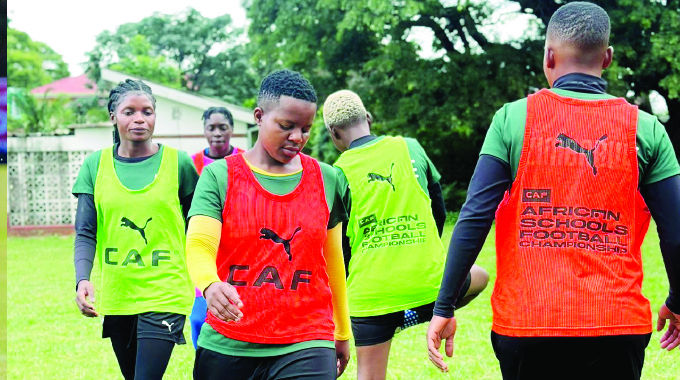
Langton Nyakwenda, Zimpapers Sports Hub
ZIMBABWE’S senior women’s national team, the Mighty Warriors, have failed to qualify for the Africa of Nations since 2016.
They have been to the bi-annual football showpiece on only three occasions since 1998, when the Caf Women’s Afcon finals went full scale.
Their best performance was a fourth place finish at the 2000 finals held in South Africa.
Since then, the Mighty Warriors’ biggest achievement was qualification for the 2016 Rio Olympic Games.
Post Rio, the women’s game has taken a nosedive, largely due to a cocktail of factors with lack of support from successive Zifa boards on top of the list.
Incidences in which the Mighty Warriors have been neglected are well documented.
At one point, during the 2016 Afcon qualifiers, the girls were left stranded at the Zifa Village where they survived on sadza and kapenta.
Zifa gets grants for women football development from the world football governing body Fifa, but previous boards were accused of diverting those funds.
Despite making the nation proud by qualifying for the 2016 Olympic Games, the Mighty Warriors got nothing tangible for that historic achievement.
After qualifying for the 2016 Afcon finals, the Government promised to avail 30 housing stands for the players, but nothing has materialised up to date.
It is against this background that the Mighty Warriors begin their latest quest to reach the Caf Women’s Afcon finals.
They began camp on Tuesday, ahead of their first round first leg qualifier against Angola in Luanda on February 20.
The Mighty Warriors are set to leave for Angola on February 17.
The return leg is set for Lucas Moripe in Pretoria.
Crucially for the girls, the new Zifa leadership under Nqobile Magwizi, has shown some signs that they could go against the trend and support the Mighty Warriors.
Magwizi attended the team’s first training session at Prince Edward on Tuesday and reiterated his board’s commitment to the Mighty Warriors’ cause.
Vibrant board member, Kudzai Kadzombe, set the tone for what could be the dawn of a new era for women’s football in
Zimbabwe with a small but touching speech.
“We promise you undivided attention,” Kadzombe said.
“You have seen that the president has made sure that on the first day of training he has come through to show you the support that the board will be giving you.
“No longer will you be a second class citizen where you are not treated the way you deserve.
“As you do your part on the pitch, our board will do its part in making sure that you have got 100 percent support and resources,” said Kadzombe, amid a thunderous applause from the players.
For the first time in history, the Mighty Warriors players are getting training allowances.
The Zifa board is already making arrangements for the trips to Angola and South Africa.
Should Zimbabwe sail past Angola they will meet the winner of the match between Congo and Malawi for a place at the 2026 CAF Women’s AFCON finals to be held in Morocco.
There is some hope that the inclusion of women on the Zifa board could sway the pendulum in favour of the girl child.
Apart from vice-president Loveness Mukura, the Zifa board also comprises Alice Zeure and Kadzombe.
Mukura, a former Herentals Queens player and administrator, says the new Zifa board is out to change a lot of things in as far as women’s football is concerned.
“One of the major issues was the lack of recognition of women’s football by the association itself and the different shareholders,” Mukura told Zimpapers Sports Hub.
“It’s something that needs to be corrected.
“We need to put women football, at the same level with that of men because it is also as much competitive as men’s football.
“Girls out there in the remote areas need to be motivated to play football and that can only happen if they see the benefits.
“I am happy president Magwizi has prioritised infrastructure development. Most of the grounds for women’s leagues are in a deplorable state.”
Mukura also spoke about the need to protect the girl child from potential sexual abuse in the game.
“Not that I experienced it myself, but we have had cases of abuse within camps, within clubs and we are working on coming up with a framework, or a policy where we take stringent measures on perpetrators.
“We have to safeguard the girl child.
“Sponsorship for women football is also key, because for long the game has suffered a lot from under funding. There’s not been much coming through for women.
“We need to make sure that there’s enough sponsorship from the corporate world, so that the girls are able to achieve what they can achieve.
“They (girls) have proved they can actually do it better,” added Mukura


 Online Reporter