Online Reporter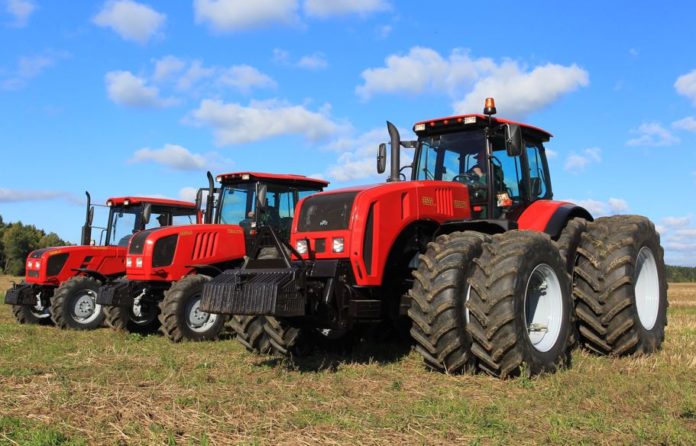
Wayne Matyukira
ZIMBABWE’S population is steadily increasing, driving a significant rise in the demand for key agricultural commodities such as maize, tobacco, wheat, potatoes, dairy milk and poultry products.
To meet this growing demand and safeguard food security, the Government has entered into a strategic bilateral co-operation agreement with Belarus. This partnership is focused on agricultural mechanisation, with Belarus supplying advanced machinery and technical expertise to modernise Zimbabwe’s agricultural sector.
This collaboration has already resulted in the delivery of tractors, combine harvesters and other essential agricultural equipment to Zimbabwean farmers. These developments are instrumental in transforming farming practices and align with Vision 2030, as outlined in the National Development Strategy 1 (NDS1). Vision 2030 aims to elevate Zimbabwe to an upper-middle-income economy by the year 2030.
Agricultural productivity is a cornerstone of this developmental agenda. Mechanisation — the use of machinery and technology in farming — enhances productivity, efficiency and sustainability. In Zimbabwe, agriculture contributes significantly to the gross domestic product, with over 60 percent of the population relying on it for their livelihood.
The sector also employs a large portion of the workforce, making mechanisation vital for rural development, poverty alleviation and national food sovereignty. Mechanisation strengthens food supply chains and helps curb food inflation, a persistent challenge in the country’s economic landscape.
It enables farmers to carry out tasks such as land preparation, planting and harvesting more efficiently. Tractors, for instance, allow for the cultivation of larger areas with less manual effort, leading to higher yields and improved produce quality. For smallholder farmers with limited labour, mechanisation offers a pathway to scale up production and boost incomes.
Increased productivity also contributes to price stability in the domestic market. As agricultural output rises, the supply of food products grows, exerting downward pressure on prices. This is especially crucial in a country where food inflation remains a pressing issue. Lower food prices enhance household access to nutrition and support poverty reduction.
Food security is a national imperative. Mechanisation boosts farmers’ capacity to meet the dietary needs of a growing population. By reducing reliance on rain-fed agriculture and improving production efficiency, farmers can achieve consistent yields despite climate variability. This fosters a more resilient agricultural sector capable of ensuring year-round food availability.
Furthermore, mechanisation supports import substitution by reducing the need to import staple food items. As domestic production improves, Zimbabwe can move towards self-sufficiency in key crops such as maize and wheat, conserving valuable foreign currency reserves.
Modern farm machinery, including precision planters and sprayers, ensures the accurate application of inputs like seed, fertiliser and agrochemicals. This not only enhances crop health and yields but also minimises waste and lowers production costs. Efficient input use is particularly important in Zimbabwe, where input prices are high and access to finance remains constrained.
Improved operational efficiency also allows farmers to better manage their time and labour. Time saved during planting and harvesting can be redirected to other income-generating activities or reinvested into value-adding farming processes.
As Professor Stephen Mashingaidze observes: “Climate change poses significant risks to agriculture in Zimbabwe, with increasingly erratic rainfall patterns and prolonged droughts.
Mechanisation, particularly when integrated with information and communication technologies (ICTs), can help farmers adapt to these changes. Precision farming tools and real-time data analytics enable informed decisions on irrigation, planting schedules and input application.
“Additionally, mechanised irrigation systems provide a reliable water supply during dry spells, reducing dependence on rainfall. This resilience is vital for stabilising food production and ensuring the viability of farming as a livelihood.”
One of the key economic advantages of mechanisation is the reduction in labour and harvest-related costs. Manual harvesting is time-intensive and often leads to significant post-harvest losses. In contrast, mechanised harvesting ensures timely and efficient collection of produce, minimising losses and maximising marketable output.
Reduced reliance on manual labour also lowers wage expenses, thereby increasing farmers’ profit margins. The capital saved can be reinvested in farm expansion, diversification into high-value crops, or the acquisition of additional equipment. These investments drive the growth and modernisation of the agricultural sector.
A mechanised and modern agricultural sector is more appealing to both domestic and foreign investors. Zimbabwe once held the title of Africa’s breadbasket. Restoring this status requires substantial investment in infrastructure, technology and capacity building. Mechanisation lays the groundwork for commercial viability, scalability and export competitiveness.
As farmers gain access to improved tools and technologies, the sector becomes more predictable and bankable, encouraging financial institutions to extend agricultural financing. This unlocks opportunities for increased private sector involvement and public-private partnerships.
The Belarus-Zimbabwe partnership also includes dairy development. The initiative supports the establishment of milk collection centres and the expansion of the dairy value chain. With rising demand for dairy products, mechanisation in dairy farming can enhance milk quality, reduce production costs, and increase output — crucial for an economy where milk is a key component in many products.
Affordable and accessible milk is vital for nutritional security, particularly for children. Moreover, mechanisation enables more farmers to enter the dairy sector, fostering competition and helping to lower retail prices.
The growth of dairy processing industries also promotes job creation and rural industrialisation.
Belarusian support extends to agro-processing, with plans to decentralise micro-processing plants in rural areas. These facilities allow farmers to convert raw produce into finished goods such as flour, oil and dairy products.
Value addition is essential for boosting agricultural income, reducing post-harvest losses, and enhancing export competitiveness. By processing raw materials locally, Zimbabwe can reduce its import bill and improve its trade balance.
This shift towards local processing also supports rural industrialisation, creating employment and raising rural incomes. As processed goods command higher market prices, farmers benefit from increased earnings, contributing to poverty reduction and broader economic inclusion.
Farm mechanisation is a vital driver of agricultural transformation and economic progress in Zimbabwe. With continued support from Belarus, the country stands to gain significantly through improved productivity, enhanced food security, greater efficiency and macroeconomic stability.
Through embracing sustainable mechanisation practices, the country can achieve the objectives of the National Development Strategy 1 (NDS1), and move closer to becoming an upper-middle-income economy by 2030.
The modernisation of agriculture, supported by strategic partnerships, is a key enabler of inclusive growth, employment creation and national prosperity.
Wayne Matyukira is an economic analyst. He can be reached on: email: [email protected]/Tel: +263 77 695 4317