malvernmugadzikwa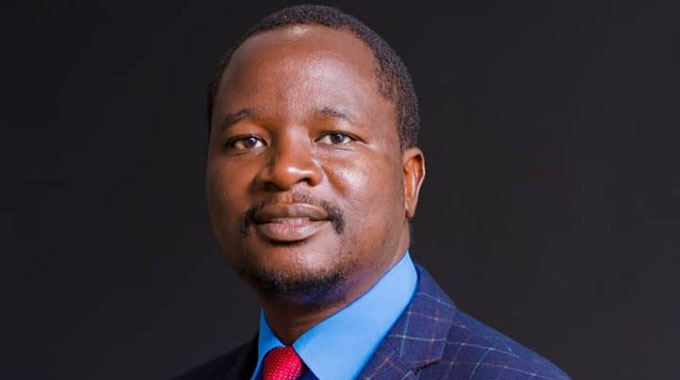
The Harare Institute of Public Health (HIPH) is on the brink of setting up the country’s first fully fledged public health surveillance and drug discovery modelling centre. The ambitious initiative is being spearheaded by the institution’s principal, DR AMOS MARUME (AM), who is also president of the Public Health Practitioners Association of Zimbabwe (PHPAZ). The Sunday Mail’s FATIMA BULLA-MUSAKWA (FBM) interviewed Dr Marume on the envisaged functions of the centre, among other issues.
*********************
FBM: What is the objective behind setting up a public health surveillance data centre?
AM: The objective of setting up a public health surveillance centre and drug discovery modelling centre is to build our capacity to predict what is likely to happen in future.
You saw with Covid-19 that scientists from the Global North were coming up with models predicting what was going to happen in terms of trends of the pandemic.
That is the same capacity we want to build, such that we don’t rely on models generated from the Global North, because those models use data from those countries. Those models also do not apply to our situation.
Using the Covid-19 pandemic as an example, we saw that most of their predictions when it came to Sub-Saharan Africa were off the mark.That was primarily because the data used to generate those models was drawn from populations outside Sub-Saharan Africa.
FBM: How will the data centre contribute to the country’s development?
AM: In the health sector, we have a concept that says a healthy population can work for socio-economic development of the country.
They don’t miss work because they are sick.
The healthier a nation is, the more economic prosperity it accrues.
Also, the cost of treating an ailment is much more than the cost of preventing it.
As an example, Zimbabwe is seeing an upsurge in the prevalence of non-communicable diseases (NCDs).We are seeing people dying suddenly from strokes and hypertension because it seems there is no data to show what exactly is happening.At HIPH, we have a model to predict a lot of issues around cardiovascular diseases. That new centre will be very helpful because we will be able to track trends and predict what is going to happen.
The demise of a colleague of mine provides an insight into why we need this centre.
He died from the bursting of a major blood vessel because of high blood pressure.
He was a young entrepreneur and that means Zimbabwe lost someone who had a bright future in business.
Through the centre, we will be able to pick up such trends earlier and stop them from happening.We have the expertise here in Zimbabwe, the region and beyond in all the disciplines that are important for public health.
We even have experts like mathematicians, who may not be traditionally regarded as experts in public health.
But we have mathematics professors who have developed models that we are going to use in terms of predicting the future.
While we wait for requisite approvals from the Ministry of Health and Child Care, we are already working with professors at Witwatersrand and Johannesburg universities.
So, presently, all these models we are developing for public health and drug discovery will be recorded as having been done in South Africa. As you know, drug discovery is a very long and costly process, where we do a lot of chemistry tests that take not less than five years.
But the models we are putting in place significantly shorten testing times, maybe to a matter of months, and we would have new drugs. For example, we are working on a drug for Covid-19, which, unfortunately, as I have said, will come out as something that was not done in Zimbabwe.
FBM: Can you outline the services the centre will offer?
AM: We are receiving a lot of support from the Ministry of Higher and Tertiary Education, (Innovation, Science and Technology Development), led by Professor Amon Murwira.We are working with the ministry to have higher degrees done through research at the centre.So, apart from the centre providing services, it will also train more experts.
Also, the centre will do work to avert future public epidemics like cholera.
You can use mass data to predict, among other things, that in November, there is likely to be a cholera outbreak in Mbare.
This is what we call big data analysis.
You collect big data, then analyse it and put it in a model. After that, Government can take action using your recommendations.
You can predict and tell them that we are likely to see a cholera epidemic or a rise in the HIV prevalence. So, the concept is meant to help in gathering public health intelligence and improving Government’s decision-making through evidence-based science.
We want Government decisions on public health to be based on high-quality data so that whatever actions they take are within the margin of error and lead to success.
This work will also help Government to save financial resources.
FBM: Do you have the funding and infrastructure for such an expansive project?
AM: Generally, the centre is fully funded by HIPH, including all the other projects we are doing. They are funded using local resources.
We are, however, hoping for additional support from Government. When Government sees value in this, I think this will unlock a lot of more opportunities. But the critical infrastructure to start is there; what is left is the regulatory greenlight to commence work.
What will the Government lose?
We are just asking that Government gives us the greenlight to do what we believe will help, and we know is helping elsewhere.
Canada put up public health sentinel centres to gather data and public health intelligence more than 50 years ago and it worked.
So, some of the concepts we are talking about are more than half a century old.
We know it works.
The aim is to enhance our public health systems. I have done research in many areas of Zimbabwe. I have done research on schistosomiasis, which causes bilharzia, and I have been to Burma Valley and almost every part of Zimbabwe doing public health research.
I know what needs to be done.
The centre will help in terms of providing quality intelligence and information on public health so that we have robust evidence-based decision-making. We want to put Zimbabwe on the world map in terms of drug discovery.
As an example, I have made an ointment from four herbs, which heals wounds, so this is drug discovery using heritage-based solutions.
FBM: Who are you collaborating with in doing all this work?
AM: We have quite a lot of collaborations through working with experts from the Ministries of Health, and Higher and Tertiary Education.
We are also working with scientists from several universities here in Zimbabwe.
In addition, we are working with scientists from universities in KwaZulu Natal and Limpopo in South Africa and Kwame Nkrumah University in Ghana, as well as others at higher learning institutions in Nigeria, Europe, the UK and America.
FBM: Can you highlight how the centre will impact the region?
AM: The centre, as envisioned, is likely to be the first of its kind in Sub-Saharan Africa.
I see a situation where other countries will learn from us.
Zimbabwe has a very good mass of academics and expertise; the whole Sub-Saharan region believes Zimbabweans are educated experts.
I think we can build on that.
We can be a regional expert and training hub for public health specialists.
X (formerly Twitter): @BullaFatima


 Online Reporter