admin
admin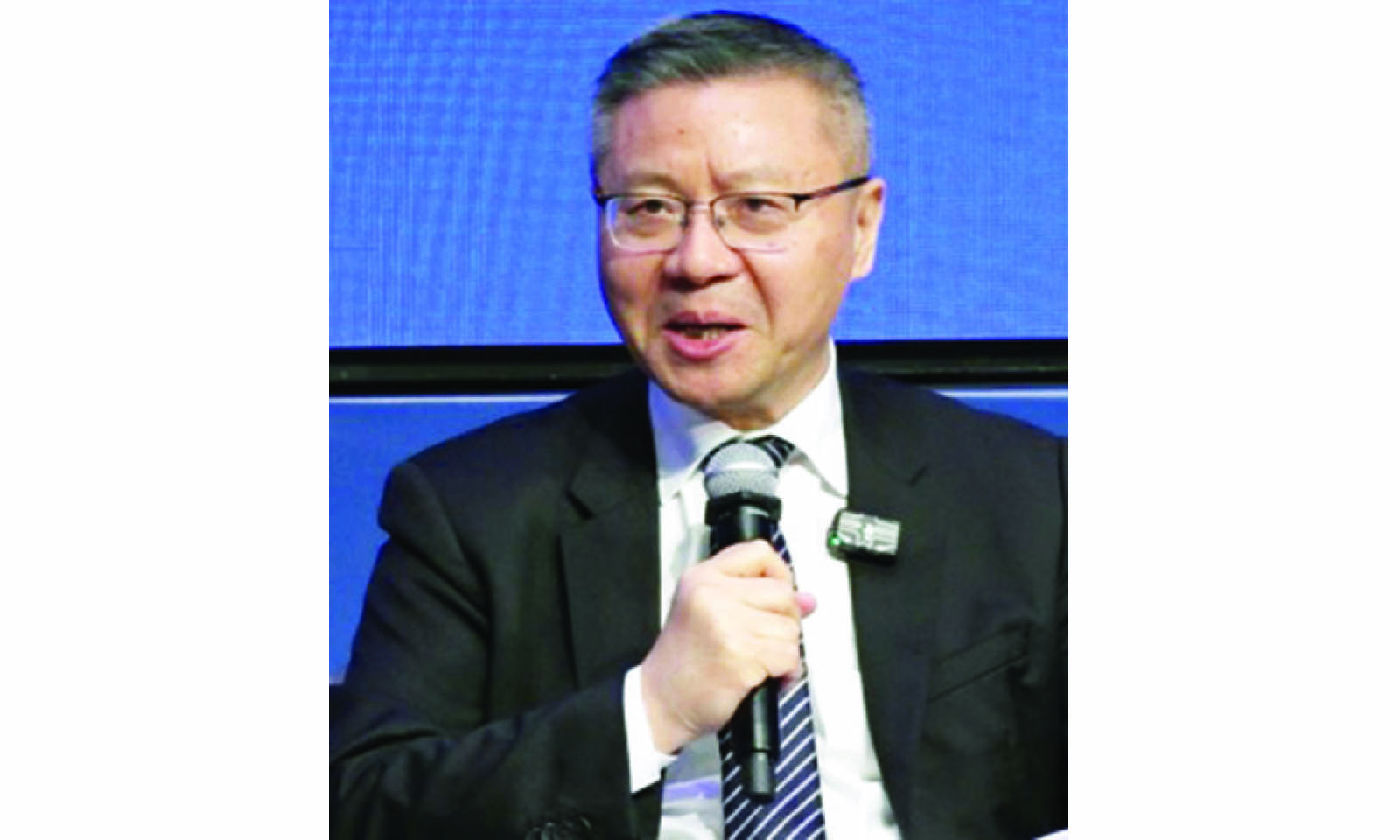
Tichaona Zindoga-Herald Correspondent
Artificial Intelligence (AI) is arguably the most exciting area today for policymakers globally given the vast opportunities it presents economically and socially, with governments across the world exploring ways to leverage the benefits of the technology.
Already, AI has transformed the way people live and conduct business, from how they gain knowledge of everyday things, the convenience of smart applications to industrial usage.
Zimbabwe is among countries excited by the limitless AI prospects, and is currently crafting an appropriate policy framework.
China’s advances in AI and its openness to sharing technology with the rest of the world – particularly the Global South – mean African countries have a better future through collaboration with China.
A Chinese expert, Professor Zhang Weiwei recently shed light on the future of AI, as well as science education for young people, during a lecture at Chitepo School of Ideology in Harare.
The institution is the brainchild of the ruling Zanu PF party.
Zhang explained that the future of AI was Chinese.
China and its largest competitor, the US, are said to be on the same level of development of AI. However, China, through its advantage in leading 5G technologies, is set to nudge ahead.
Zhang explained that while China and the US were at par, they were on diverging paths, “and maybe the Chinese path represents the future”, given how the technology was being deployed and developed.
He said China had the “most comprehensive” manufacturing base with branches, sub-branches and sub-sub-branches to produce virtually anything and everything.
The proliferation of AI promises to make the difference because every branch of the Chinese economy is AI-linked.
Said Zhang: “China already has succeeded in establishing AI for harbours (for marine transport), mines, automobiles, industry and villages, thanks to its leadership in 5G telecommunications, which are the backbone for AI and internet of things (IoT).
“But United States has ChatGPT which is more for liberal arts, not for hard science and hard industries. If you come to China, you will see that AI is extensively used for good purposes.”
China’s innovation is also extending to virtual payment system, which uses block chain technology allowing users to transact free of charge in digital currency, which is set to revive America’s SWIFT.
“The Chinese system is brand new, (with) no cost, but still not having many users (yet) but the capacity – the highway – is already there.”
China-Africa cooperation on AI
There is already a framework for African countries and China to cooperate in the field of AI, which sets the stage for comprehensive cooperation across various sectors between the two sides.
China is involved in telecommunications infrastructure development in Zimbabwe for broadband, firebrand and 5G as the next generation technology.
During the Forum on China-Africa Cooperation (FOCAC) summit in Beijing in September, the two sides discussed various dynamics of cooperation on AI, data and information economy.
The African side welcomed the Global AI Governance Initiative and the Global Initiative on Data Security put forward by China. Africa appreciates China’s efforts in strengthening developing countries’ rights concerning global AI governance, and is willing to work with the country to implement the UN General Assembly resolution on enhancing international cooperation on capacity building of AI.
China and Africa agreed that it was important to put equal emphasis on development and security, bridge the AI and digital divide, jointly prevent risks, and build an international governance framework in this field with the UN as the main channel.
They opposed “drawing lines on an ideological basis or putting together exclusive blocs, and creating development barriers through technological monopoly and unilateral coercive measures to hinder AI development of other countries” and pledged to cooperate to stem the potential dangers that could arise in AI use.
According to the outcome of the Beijing Action Plan (2025-2027), the two sides will strengthen international cooperation on capacity building of AI and promote exchanges areas such as rules governing cross-border data flow and legitimate and safe application of new technologies.
The two parties will also strengthen personal privacy protection, and internet laws and regulations within the international frameworks including the Global AI Governance Initiative, the China-Africa Initiative on Jointly Building a Community with a Shared Future in Cyberspace, and the Global Initiative on Data Security.
This is meant to jointly advance rules-making for global digital governance.
Further, the two sides agreed to conduct exchanges and dialogue on AI, data security and in other areas.
STEM, the game-changer
Another key area that holds the future for the world is the study of science subjects, the so-called STEM subjects; Science, Technology, Engineering and Mathematics; widely acknowledged as laying the foundation of science development and industrialisation.
China is a global leader on this. Available information says China, with significant advancements in scientific research, innovation, and international collaboration, is on track to achieve parity with the US in terms of scientific leadership by 2027-2028.
The Asian giant’s progress in STEM education is attributed to its significant investments in human capital, research infrastructure, and international partnerships which have seen it make substantial strides in critical technology areas, such as artificial intelligence, biotechnology, and advanced materials; and leading in eight out of 11 critical technology areas.
China is leading on the back of international scientific collaborations, with a growing number of joint research projects and publications with countries like the US, EU, and UK, human capital base and attracting a growing number of international students, particularly from Belt and Road Initiative countries, to study STEM fields at Chinese universities; and massive research infrastructure, including state-of-the-art laboratories, research centres, and innovation hubs.
Zhang explained that young people played a key role in the future of science and technology, with the ubiquity of the internet enabling more education in the hard sciences.
“In Chinese high school curriculum today, the overall emphasis is on hard sciences; so this is something unique,” he said.
He advised Zimbabwe to encourage young people to learn and master the basics of science, explaining that this has been the policy of China since 1949 during the time of Mao Zedong who advocated for a revolution in science learning, a philosophy that has continued to this day.
China and Zimbabwe are collaborating in science education from engaging young people in university and colleges, driven by Huawei under its flagship programme called Seeds for the Future; while undertaking human capital development in training education and professional personnel, which had increased in recent years.
The 2024 Beijing Summit also laid out a number of cooperation areas in science education wherein the Chinese and African universities will implement the “China-Africa Universities 100 Cooperation Plan”, partner with UNESCO to carry out the “Campus Africa: Reinforcing Higher Education in Africa through China-Africa Cooperation” programme, and support study and professional visits to China by African researchers, to strengthen exchanges and cooperation in scientific research between Chinese and African universities.
China pledged to work with African countries towards creating a China-Africa Regional Cooperation Centre on Digital Education.
This will enhance digital proficiency training for teachers, sharing courses for students, education on cultural heritage and promoting the application of digital education in more African countries.
China intends to develop a China-Africa Cooperation Programme for STEM Teacher Training in the next three years for African teachers tutoring science subjects.
China is also providing quality education to African countries under Chinese government scholarships and bilateral and multilateral training programmes.
Beijing has undertaken to continue making use of its government scholarship programmes to help Africa train professionals across a broad spectrum of fields in scientific and technological innovation and impact; and talent development in academic fields relating, among others, to agricultural, fisheries, aeronautics and satellite, digital, medical and public health, engineering, oil and gas sciences, digitisation, satellite science, aerospace and medicine.
Tichaona Zindoga is the director of Ruzivo Media and Resource Centre think tank that analyses global and local issues


 Online Reporter