Nqobile Bhebhe, Senior Writer
ZIMBABWE is stepping up efforts to secure international bridge financing to clear external debt arrears, with Government targeting tangible progress by March 2027 as it seeks to capitalise on renewed global goodwill and improve the country’s engagement with creditors.
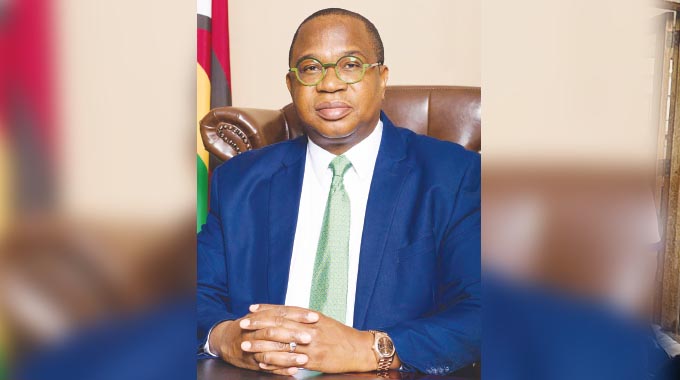
Finance Minister Professor Mthuli Ncube said Government would approach potential financiers in Europe and other international capitals to mobilise funding for arrears clearance, a critical step towards normalising relations with external creditors and improving access to affordable capital.
The strategy comes as Zimbabwe’s public and publicly guaranteed debt stood at US$23,4 billion as at September 2025, indicating the scale of the country’s financing challenges and the importance of resolving outstanding obligations to unlock new funding opportunities.
“We will be visiting various capitals around the world to cajole potential providers of finance for arrears clearance. The idea is, if we could secure the finance, that would enable us to clear our arrears,” said Prof Ncube during a wide-ranging online media briefing on the sidelines of the 2026 IMF/World Bank Annual Meetings in Bangkok, Thailand on Wednesday.
The Government is prioritising bridge financing to provide the resources needed to settle outstanding arrears and advance its re-engagement efforts.
However, Prof Ncube said authorities were also considering commercial financing options should concessional funding prove difficult to secure.
“If we can secure this bridge financing, then that will enable us to clear our arrears. If there is no champion to help us with bridge financing, then we may be able to look at commercial solutions as well,” he said.
The minister said the Government was determined to avoid losing the momentum generated by improving international engagement, setting the end of March 2027 as a key milestone for progress on arrears clearance.
“We are determined that by the end of March next year we should have really made progress on debt arrears and not to delay any further. We do not want to waste the current global goodwill and momentum.”
A major development in the process has been progress in negotiations with China, with Beijing agreeing to restructure some of Zimbabwe’s debt on improved terms, potentially easing repayment pressures and reducing the cost of servicing the obligations.
Prof Ncube said the Chinese the Government had agreed to a restructuring arrangement that would see some debt shifted to concessional terms, while repayment periods on certain obligations would be extended to 10 and 15 years.
“The good news is we started with Beijing and we have had very positive negotiations with China and we are very pleased to say that the Chinese government has agreed to a scheme that will be restructured.
“Some of the debt is now going to be on concessional terms, and the tenure of some of the debt has been increased up to 10 years, and then up to 15 years, which will then lower the cost of servicing this debt.”
Longer repayment periods can ease immediate cash-flow pressures by spreading debt repayments over an extended period, while concessional terms can reduce borrowing costs. The extent of the benefit, however, will depend on the specific terms of the restructuring arrangements.
The minister also revealed that some private-sector creditors had agreed to restructure their exposure to Zimbabwe, offering improved interest rates and longer repayment periods.
“We are also pleased that some of the private sector providers of credit have also agreed to restructuring of the debt without mentioning them. They agreed again to give us better interest rate terms as well as longer tenure. So the process has started. Beijing was the first to go and we are very pleased that we were able to restructure that debt.”
The developments provide an initial indication of progress in Zimbabwe’s efforts to negotiate more manageable debt terms, although securing bridge financing remains central to the Government’s plans to clear arrears.
According to Treasury figures, Zimbabwe’s total public and publicly guaranteed debt increased from US$21,5 billion at the end of December 2024 to US$23,4 billion by the end of September 2025, representing an 8,5 percent increase.
External debt accounted for US$13,6 billion, or 58,1 percent of the total, while domestic debt stood at US$9,8 billion, representing 41,9 percent.
The increase was primarily attributed to a sharp rise in domestic expenditure arrears owed to service providers, which grew from US$34 million in December 2024 to US$1,3 billion by September 2025.
Treasury indicated that the domestic arrears figures had been derived from raw data that had not yet been validated, a qualification that is important in assessing the reported increase.
Beyond debt restructuring, Prof Ncube called for stronger international financial support for African economies facing growing financing needs, particularly those seeking to invest in infrastructure and strengthen resilience against climate-related shocks.
He urged the International Monetary Fund to expand its support for the continent, arguing that African countries required more affordable and longer-term financing to sustain development.
“We need the IMF to double down on supporting African countries with their various funding needs to deal with climate shocks, to deal with resilience, but also to have access to cheaper capital, longer-term capital, finance infrastructure and so forth,” he said.
The immediate priority is to translate creditor engagement into concrete financing arrangements that can support arrears clearance without creating unsustainable repayment obligations.
The Government’s March 2027 target places renewed emphasis on securing funding, negotiating improved debt terms and maintaining international confidence as it pursues a pathway towards more normalised financial relations with external creditors.