
George Maponga
Masvingo Bureau
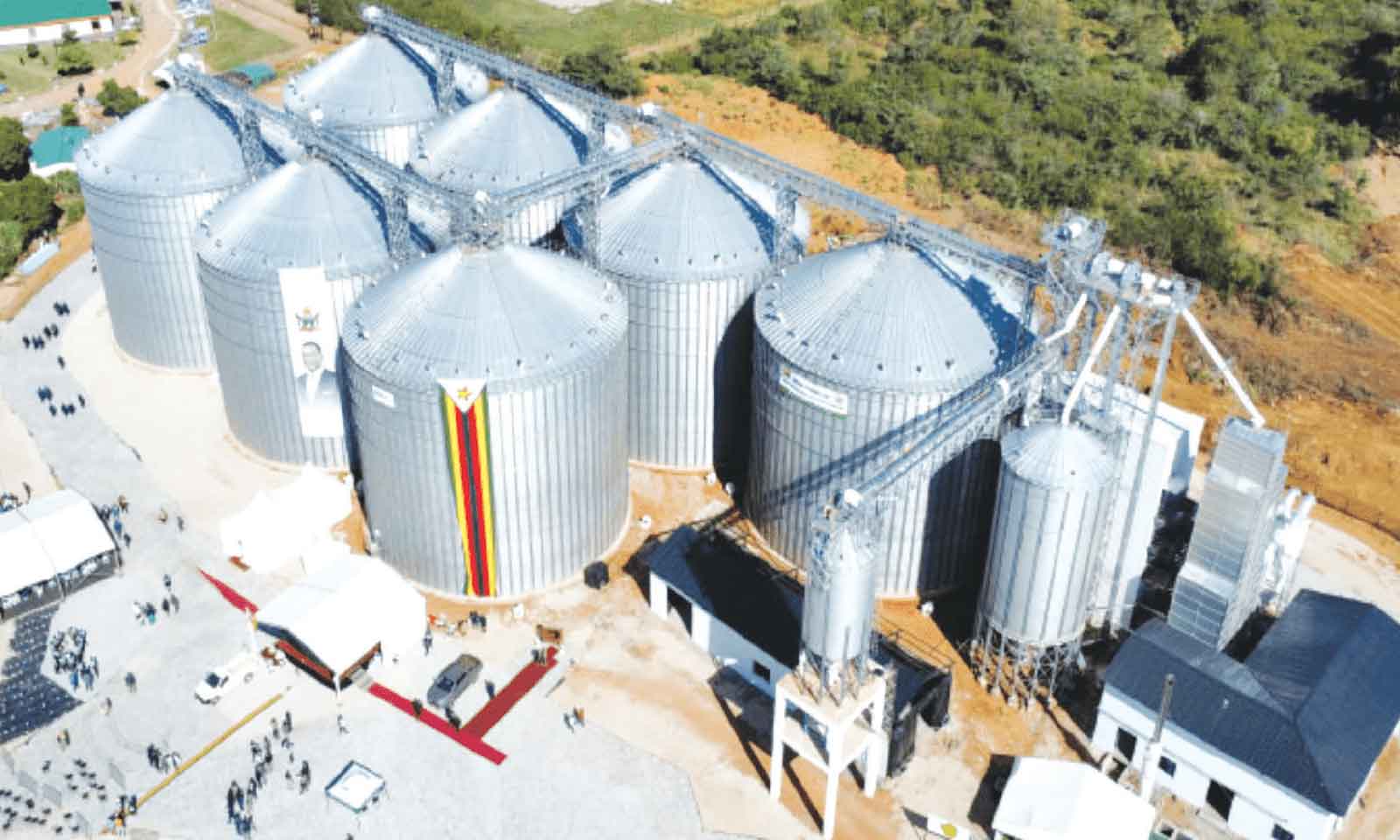
The country is steadily expanding its national grain storage capacity, with construction of 12 new state-of-the-art, artificial intelligence-powered silo complexes progressing at Grain Marketing Board depots across Zimbabwe.
The Government is intensifying efforts to modernise agricultural infrastructure and safeguard food security in line with Vision 2030.
Once commissioned, the new facilities will raise the number of AI-powered silo complexes in the country to 14, following last year’s commissioning of the first two such facilities in Mutare and Kwekwe by President Mnangagwa.
This expansion will bring the total number of silo facilities in Zimbabwe to 26 and increase national grain storage capacity to more than 1.5 million tonnes.
Each AI-powered complex has the capacity to store 56 000 tonnes of grain and comprises seven high-tech silos, each holding 8 000 tonnes.
The investment forms part of the Second Republic’s broader drive to deploy modern infrastructure to reduce post-harvest losses, strengthen strategic grain reserves, and boost national food security as Zimbabwe pursues its upper-middle-income economy aspirations by 2030.
GMB operations manager, Mr Patrick Muzvimbiri, said construction of the 12 new AI-powered silo complexes at various locations around the country was progressing well.
He explained that the initiative was aimed at reducing post-harvest losses while supporting the national vision of transforming Zimbabwe into a net food exporter by 2030
The Second Republic, Mr Muzvimbiri added, was also focused on strengthening the country’s strategic grain reserves through the development of modern grain infrastructure in key agricultural regions.
“Our overall goal was to open 14 complexes, each with new state-of-the-art AI-powered grain silos around the country. So far, two of them have already been commissioned by President Mnangagwa (in Mutare and Kwekwe), and work is ongoing on the remaining 12 complexes, which are at various stages of completion and will be commissioned as work is finished,” he said.
“The new 14 silo complexes have a capacity of 56 000 tonnes each. After completion, they will add more than 750 000 tonnes of grain storage capacity, taking the total national capacity to over 1,5 million tonnes.”
Mr Muzvimbiri said the expanded infrastructure would significantly enhance the country’s strategic grain reserves and overall food security.
“We are also trying to reduce post-harvest losses and the cost and time of moving grain to all corners of the country in the event of a distress call,” he said.
“If we have such modern grain storage facilities in all four corners of Zimbabwe, it means we can easily move grain to all needy areas in a short space of time.”
Construction of silo complexes at the Masvingo GMB depot and in Rutenga, Mwenezi, is progressing smoothly, reflecting the Lowveld’s growing importance as an emerging traditional grains production zone. In the previous agricultural season, the Lowveld produced a record of more than 25 000 tonnes of traditional grains, positioning the region as a key contributor to the national food production matrix.
Mr Muzvimbiri revealed that GMB was expanding its grain swap facility to allow farmers with traditional grains to exchange them for staple maize, while maize producers could also swap their grain.
“It’s a kilogram-for-kilogram, or bag-for-bag swap deal, where we are saying those farmers with traditional grains can visit any of our GMB depots and swap their grain for maize and vice versa,” he said.
To prevent abuse of the facility for commercial purposes, GMB has capped the swap limit at 150 kilogrammes of traditional grains or maize per family per month.
The Government has been encouraging farmers in low-rainfall areas to specialise in drought-tolerant traditional grains, amid growing uncertainty in rain-fed agriculture caused by climate change-induced recurrent droughts.