Online Reporter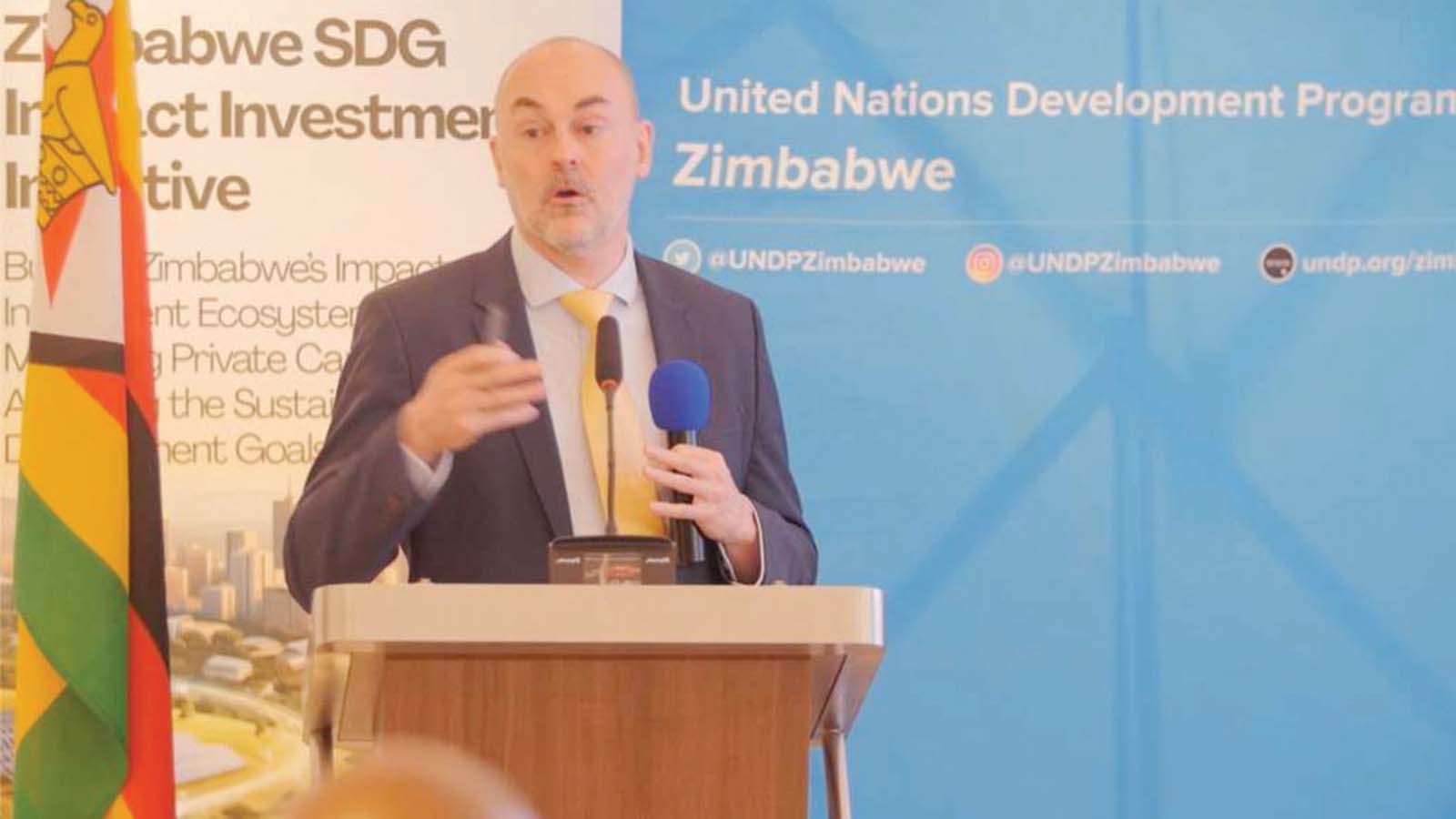
Edgar Vhera
Specialist Writer – Agribusiness
INVESTORS now increasingly view Zimbabwe as a safer and attractive destination for capital, following revelations that $923 million worth of new business opportunities have been identified.
This emerged at the Zimbabwe National Stakeholder Forum on Impact Assessment, hosted by the United Nations Development Programme (UNDP) Zimbabwe and the Zimbabwe Investment and Development Agency (ZIDA) in Harare, recently.
The impact investment forum was aimed at validating findings from a study of Zimbabwe’s investment ecosystem.
The forum brought together representatives from the Government, financial institutions, investors, development partners, business associations and the private sector to consider the findings of Zimbabwe’s Strategic Development Goal (SDG) Impact Investment Map (IIM) and discuss practical measures to strengthen the country’s impact investment ecosystem.
According to UNDP, impact investment refers to investment made with the intention of generating measurable positive social or environmental outcomes alongside a financial return.
It differs from philanthropy because the capital is expected to generate a return and goes beyond conventional environmental, social and governance compliance because development impact is a deliberate objective of the investment.
The Zimbabwe IIM is a market-building initiative developed by UNDP and ZIDA, with technical support from Cross Boundary Advisory.
Its purpose is to identify where commercially viable investment can also deliver measurable development impact; assess the capital potentially available for those opportunities and recommend practical measures to improve the movement of capital from investor interest to financial close.
Cross Boundary Advisory managing director, Mr Marcos Sampablo said the latest assessment identified 98 investment opportunities, 31 of which have been prioritised.
This represents approximately US$535 million in financing needs across key sectors including agriculture, renewable energy, financial services, manufacturing and real estate.
Mr Sampablo said Zimbabwe had turned her fortunes around by transforming challenges into opportunities and was now actively engaging with the International Monetary Fund (IMF) and creditors and there are good prospects of resolution.
“The land reform process is largely resolved, with investor confidence gradually recovering. On political sanctions, the United Kingdom (UK) and European union (EU) have largely lifted with the United States (US) programme terminated in 2024, leaving only a small number of targeted designations, he said.
“Episodes of hyperinflation and currency devaluation have ended with stability over the last two years following dollarisation. The United States dollar adoption has brought monetary stability,” he added.
Impact investment is beginning to emerge in Zimbabwe, supported by an established institutional base that is well positioned to strengthen the ecosystem and attract capital
“Investment conditions in Zimbabwe are improving and impact-specific infrastructure is beginning to form,” Mr Sampablo noted.
Econet Wireless chief executive, Mr Douglas Mboweni concurred that impact investment addresses both issues of making money and positively transforming lives.
“Public resources and philanthropy are not adequate in dealing with the urgent needs facing the nation, therefore private capital must be part of the solution.
“Impact capital can finance the very foundations of productivity thereby propelling the nation’s development in a viable manner,” he said.
Mr Mboweni said impact investment begins with an intentional choice to solve a problem viably, grows through consistent action, scales through partnerships and ultimately becomes a better future that communities can share in.
He said their three decades of operational experience have taught them that in most cases the greatest impact is created not by a programme labelled “impact” but by a business model around solving human problems at scale.
“Connectivity is a good example, a base station is a commercial asset, but it also becomes a social and economic infrastructure by connecting various facets of society. Today we serve more than 16 million customers in Zimbabwe.
“The central lesson from our experience is: impact becomes scalable when it is embedded in the economics of the solution. A project dependent on goodwill is fragile,” he disclosed.
The UNDP in April this year put the global Impact Investment market at about US$1, 6 trillion advising that capital was always looking for opportunity in environments which are attractive characterised by confidence and consistency of policies and laws.