Online Reporter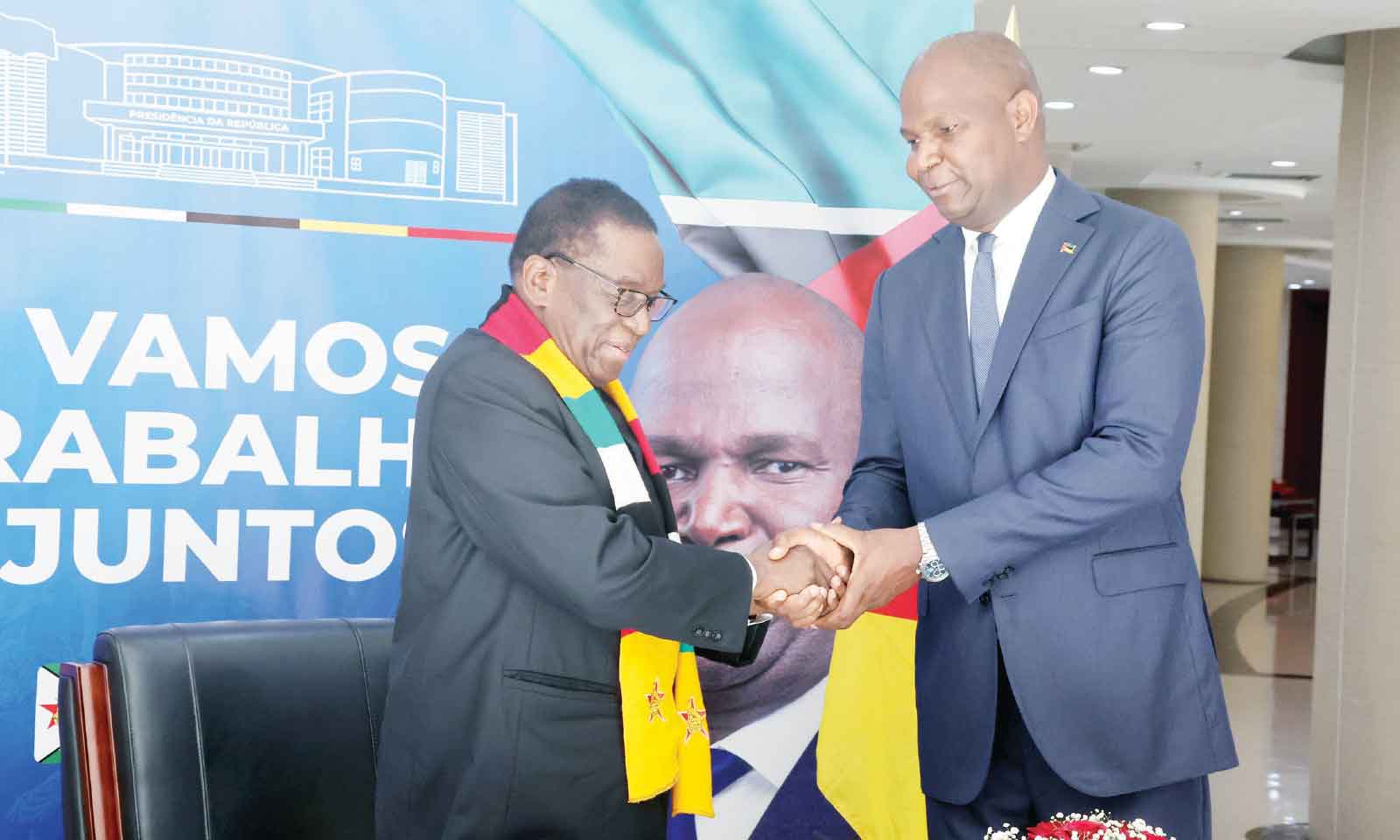
Africa Moyo recently in
MAPUTO, Mozambique
PRESIDENT Mnangagwa’s State visit and inaugural Bi-National Commission with Mozambique marks a major milestone in diplomatic relationship between the two neighbouring countries.
As the first State visit by any leader since the inauguration of President Daniel Chapo on January 15 this year, it symbolises a renewed commitment to strengthening bilateral ties in different spheres of the economy, all aimed at ensuring increased trade between Zimbabwe and Mozambique.
President Mnangagwa not only underscores the deep-rooted historical connections between the two nations, but also sets the stage for strategic collaborations aimed at addressing contemporary challenges.
Historical context, diplomatic significance
Zimbabwe and Mozambique share a profound relationship, forged through a common struggle for independence from colonial rule.
The legacy of cooperation during the liberation wars, which saw Zimbabwean nationalists being sheltered in Mozambique to fight the Ian Smith regime, has laid a solid foundation for bilateral relations that have continued to evolve over the years.
President Mnangagwa’s State visit and BNC which ran from Friday to Saturday last week, serves as a reminder of this shared history and the mutual support that both nations have provided each other in times of need, particularly in the context of regional stability within the Southern African Development Community (SADC).
The timing of Mnangagwa’s visit is particularly noteworthy.
President Chapo’s presidency represents a fresh chapter in Mozambique’s leadership, and President Mnangagwa’s willingness to be the first Head of State to visit underscores Zimbabwe’s recognition of the leadership transition.
The visit also highlights Zimbabwe’s strategic intent to solidify alliances in the region, especially at a time when global geopolitics are shifting rapidly.
Key outcomes, agreements
The highlight of the President’s visit was the inaugural meeting of the Zimbabwe-Mozambique BNC, which provides a structured framework for cooperation in various sectors.
Both Presidents expressed their commitment to exploring new frontiers of collaboration, focusing on initiatives that transcend traditional economic partnerships.
This is significant in an era when nations are increasingly recognising the importance of holistic development that addresses social, political and economic dimensions concurrently.
Among the key projects agreed upon under the BNC are the establishment of a dry port facility in Beira, modernisation of the oil pipeline, and the establishment of a one-stop-border post at Forbes/Machipanda.
These initiatives not only aim to enhance trade and transport links between the two countries, but also to bolster regional integration within SADC.
Such developments are crucial as they seek to create a seamless corridor for goods and people, facilitating economic growth and fostering a conducive environment for investment.
In addition, the signing of three Memoranda of Understanding (MoUs) focusing on Women Empowerment and Gender Equality, Youth Development, and Small and Medium Enterprises (SMEs) reflects a progressive approach towards inclusive economic development.
By prioritising these sectors, both governments are acknowledging the need for shared prosperity and the vital role that women and youths play in economic growth.
Regional cooperation and beyond
During the BNC, President Mnangagwa reiterated the need for robust cooperation in various fields such as agriculture, education and science and technology. Collaboration in agriculture is particularly timely, as both countries face challenges related to food security and climate change.
Joint initiatives aimed at developing sustainable value chains and improving market access will be crucial in addressing these pressing issues.
It is essential that both nations leverage their shared resources for mutual benefit, thus promoting resilience against global shocks such as economic downturns and environmental challenges.
In the field of science and technology, the commitment to enhance collaboration through partnerships in research and innovation highlights an understanding that modern challenges require innovative solutions.
This forward-looking approach aligns with global trends, where nations are increasingly investing in technology and education to drive economic development.
Commitment to Pan-Africanism
A recurring theme during President Mnangagwa’s speeches was the commitment to Pan-Africanism and solidarity among African nations.
His acknowledgment of Mozambique’s support for Zimbabwe in the fight against illegal sanctions imposed by Western nations demonstrates a unified front against external pressures.
Such solidarity is vital, especially as African countries navigate complex geopolitical landscapes marked by shifting alliances and development paradigms.
The call for reform within the United Nations Security Council, aiming for a more representative and equitable body, further reinforces this dedication to collective influence on the global stage.
By fostering a spirit of cooperation and mutual respect, both countries are setting an example for others in the region.
Challenges, opportunities ahead
Despite the optimistic developments, several challenges remain. The historical burden of economic difficulties in both Zimbabwe and Mozambique poses risks to progress.
Political stability will be crucial in ensuring that the agreements made during the BNC are successfully implemented and yield tangible benefits for the citizens of both nations.
Reports of a resurgence in instability in Cabo Delgado require an urgent, united response, while sanctions imposed on Zimbabwe by the West, mainly the United States, must be removed completely for the country to chart a successful way forward.
Further, external factors, including global economic shifts and environmental challenges, underline the need for both governments to remain agile and responsive.
As they embark on this path of renewed cooperation, it is crucial that they continuously engage with their populations, ensuring that development initiatives align with local needs and aspirations.
In sum, President Mnangagwa’s State visit to Mozambique and the subsequent outcomes of the BNC signify a promising step towards a deeper and more structured partnership between the two nations. As they navigate a complex global landscape, the commitment to collaboration, inclusivity and Pan-African unity will be essential in addressing shared challenges and seizing opportunities for growth.
The President’s visit not only reinforces longstanding ties, but also sets a framework for a future that prioritises collective progress, ultimately benefiting the citizens of both Zimbabwe and Mozambique.
As both nations move forward, they must remain steadfast in their commitment to working hand-in-hand, ensuring that the legacy of their shared history continues to shape a brighter future.