Online Reporter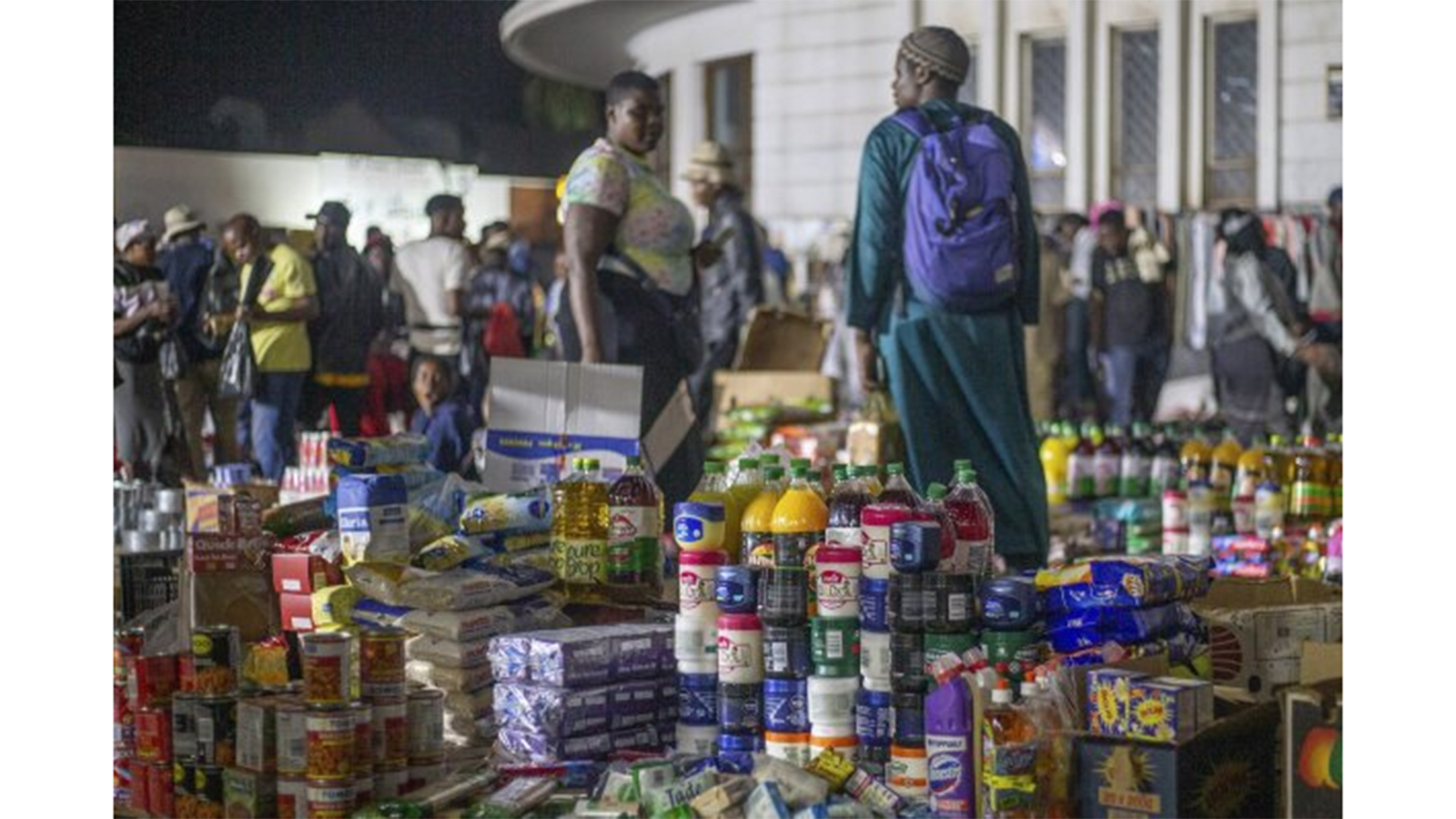
Raymond Jaravaza in BULAWAYO
AMID calls for recognition of night vending and adoption of a 24-hour economic model, the Government has said it is premature to do so in the absence of supporting legislation and facilities to cater for such operations.
In that regard, night vending is still outlawed in the country and those engaging in the sale of commodities ranging from second hand clothes, groceries, cooked food to footwear at night are breaking the law as towns and cities in Zimbabwe lack the support systems for trading after normal day business hours.
Local Government and Public Works Minister, Daniel Garwe, said this in an interview in Bulawayo as he set the record straight on policy following the August announcement that prohibited night vending operations.
Local authorities were directed to implement the ban in a humane manner while ensuring that those trading in second hand clothing were halted while night vendors were to be arrested and their wares confiscated.
Government has said the proliferation of street and night vending was undermining formal businesses, which have remained loyal to local authorities by paying rates, bills and taxes.
Night vending was also cited as a major contributor to the increasing cases of drug and illegal substance peddling while also posing a threat to health, the economy and national security.
In an interview on the sidelines of a disaster preparedness and management workshop in Bulawayo on Wednesday, Minister Garwe said the country is not yet ready for a 24-hour economy that allows night vending.
“Night vending is not allowed in Zimbabwe. It has never been allowed because as a country we don’t have laws that allow people to trade in the streets at night,” he said.
Minister Garwe said the country does not have facilities that make it possible for vendors to trade at night.
“Night vending in our country has brought with it social ills such as the peddling of illegal drugs and harmful substances.
“In Harare, for instance, we have received complaints from local authority employees complaining about starting work at 3am only to start their shifts by cleaning human waste in the streets,” said Minister Garwe.
“So, our position as the Ministry of Local Government and Public Works is that Zimbabwe is not ready for night vending. There is nothing wrong with night vending if the right facilities are there as we have seen in countries such as China where the economy runs for 24 hours a day.”
Finance, Economic Development and Investment Promotion Minister, Professor Mthuli Ncube, has backed the 24-hour economy proposition citing the need to expand business activity and unlock more economic benefits.
Minister Garwe said the Government has told local authorities to attend to the construction of critical infrastructure that adequately supports night vending before a decision can be taken to lift the ban.
“We are saying if local authorities provide the right facilities that enable night vending then the Government will reconsider the ban on night trading,” he said.
“As far as day vending is concerned, the Government has demonstrated that it is open to allow the trade to flourish as long as it is done in the right manner through the reconstructing Phase 1 of the Mbare Traders Market, which has all the facilities including banks, CCTV systems for security and other state of the art services.
“This is where Zimbabwe ought to go in terms of allowing our people to trade in well-built and well-resourced spaces as envisaged by Vision 2030 for the country to attain an upper middle class economy,” said Garwe.
With the rainy season fast approaching, he said night vending poses serious health risks, which the Government cannot ignore.
Some parts of the country such as Bulawayo and Matabeleland North have already received rains.
“On the health front, vendors that sell their wares everywhere pose health risks such as the spread of water borne diseases. We have situations where vendors throw away litter ranging from left over vegetables and fruits all over the place,” the Minister said.
The risks of waterborne diseases, he said, are particularly high during the rainy season when the garbage that is dumped on the streets is washed away by rain and ends up clogging drainage systems.
“When night vendors sell their wares wherever they decide to, it’s always in places without sanitary or ablution facilities, a situation that presents health risks to residents in our cities and towns,” Minister Garwe.
“We have realised that the people who throw away garbage in sanitary lanes and pavements have become so rogue and undeterred in their behaviour that they disregard the health concerns of other citizens”.
Minister Garwe said there were situations where illegal vendors relieve themselves on sanitary lanes and, next to trees and behind buildings and when it starts raining all that human waste is washed into water bodies, posing the risk of waterborne diseases.