Andrew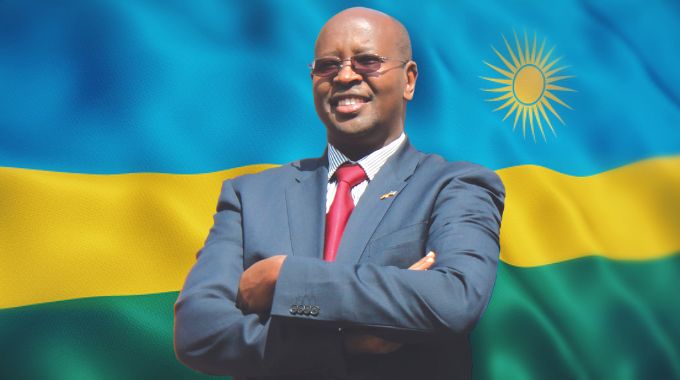
On July 4, Rwanda celebrated Liberation Day to mark the end of the 1994 genocide against the Tutsi people. The Sunday Mail’s Wallace Ruzvidzo (WR) engaged Rwanda’s Ambassador to Zimbabwe James Musoni (JM), who outlined the importance of Liberation Day to his country and how Harare under the New Dispensation was deepening relations with Kigali.
***************
WR: On July 4, Rwanda celebrated Liberation Day. Of what significance is this day to the people of Rwanda?
JM: July 4 marks the defeat of genocidal regime and end of the 1994 genocide against the Tutsi, the breakthrough that led to the return of Rwandans to their own country from exile after over 34 years.
The day is also a reflection of the unforgettable sacrifice, struggle and resilience by sons and daughters of Rwanda under the brave leadership of His Excellency President Paul Kagame that ended discrimination based on race and place of origin.
With the new setup of clear national identity, Rwandans are freely enjoying the true happiness. To Rwandans, July 4 is considered as a cornerstone for unity, decent living standards and an inclusive functional economic system the world witnesses today.
WR: How would you describe bilateral relations between Zimbabwe and Rwanda?
JM: Warm, cordial, premised on mutual respect, inclusiveness and effective participation in the international system.
As we speak, a number of Memoranda of Understanding and agreements of co-operation in different sectors have been signed and are now under implementation.
WR: Trade between the two countries is currently negligible; what measures are being put in place to boost bilateral trade between Harare and Kigali?
JM: This is an interesting observation which is statistically correct.
However, a number of activities happened after establishing embassies in Kigali and Harare in 2019. For example, two fully subscribed trade and investment conferences took place in Kigali and Harare.
There was also Zimbabwe’s participation at Commonwealth Business Forum 2022 in Kigali, there are co-operation agreements in energy and some companies have started establishing their businesses in Rwanda and Zimbabwe. Rwanda and Zimbabwe enjoy an excellent bilateral relationship and we do encourage private sector players from both countries to take advantage of that and grow their businesses in both countries.
WR: What is Rwanda’s position on illegal sanctions imposed on Zimbabwe?
JM: Sanctions are an impediment to the development of any country, and our President, His Excellency Paul Kagame, as African Union chairperson, has called for the removal of these sanctions. The sooner this is done the better for the country.
WR: Rwanda has registered significant growth and development over the years, what do you attribute this to?
JM: This progress is a result of collective efforts from leadership, institutions, policy and the people.
For business to prevail, the underlying fundamentals have to communicate a consistent message that Rwanda is an investment destination of choice. The progress we see today is a result of more than two decades of stability under the visionary leadership of President Kagame that has positioned the country to be where it is.
WR: What lessons can Zimbabwe draw from the Rwandan miracle?
JM: Well, to start with, since the inception of the New Dispensation, quite a number of considerable reforms have been put in place and have improved the ease of doing business through reducing bureaucracy.
In the background, constructive dialogue will be taking place; for example, the model for Zimbabwe Investment and Development Agency (ZIDA) borrows from the best practice and benchmarking exercise with the sister institution RDB (Rwanda Development Board) of Rwanda. In terms of advice, intra-Africa trade and investment provide low-hanging fruits which can be exploited through having efficient systems, supportive infrastructure and policy consistency which the AfDB (African Development Bank) and Afreximbank are assisting with.
Progress is a slow process, however, there is confidence that Zimbabwe is headed that way.
WR: Rwanda heavily depends on imports to meet some of its basic food requirements, how can Zimbabwe tap into Rwanda’s market in terms of food exports?
JM: Access to the Rwandan market is simple: We have a one-stop shop, the RDB, where company registration can be done in six hours and permits facilitated through the click of a button.
Once registered, the Food and Drug Authority, which stands as a regulator, approves your products and you are good to go.
The good thing is that there is ZimTrade, which is on an aggressive drive to promote international trade that can assist producers on the necessary paperwork, regulations against single-use plastics and exemptions that one can benefit from as a member of COMESA.
In addition, there is a direct flight that connects Kigali and Harare, an opportunity that should be exploited by the business community, mainly those involved in perishables, finances and skills development.
WR: From your experiences, what would you say are Zimbabwe’s greatest assets?
JM: The greatest asset of every country is its people.
Zimbabwe has a friendly and highly literate population that is a springboard for development. The centrality of the country as a regional transport corridor cannot be ignored together with the ongoing infrastructure refurbishments.
It would be prejudice also not to mention the abundance of natural resources that the country is endowed with, which can generate wealth for the nation decades to come.


 Online Reporter