Online Reporter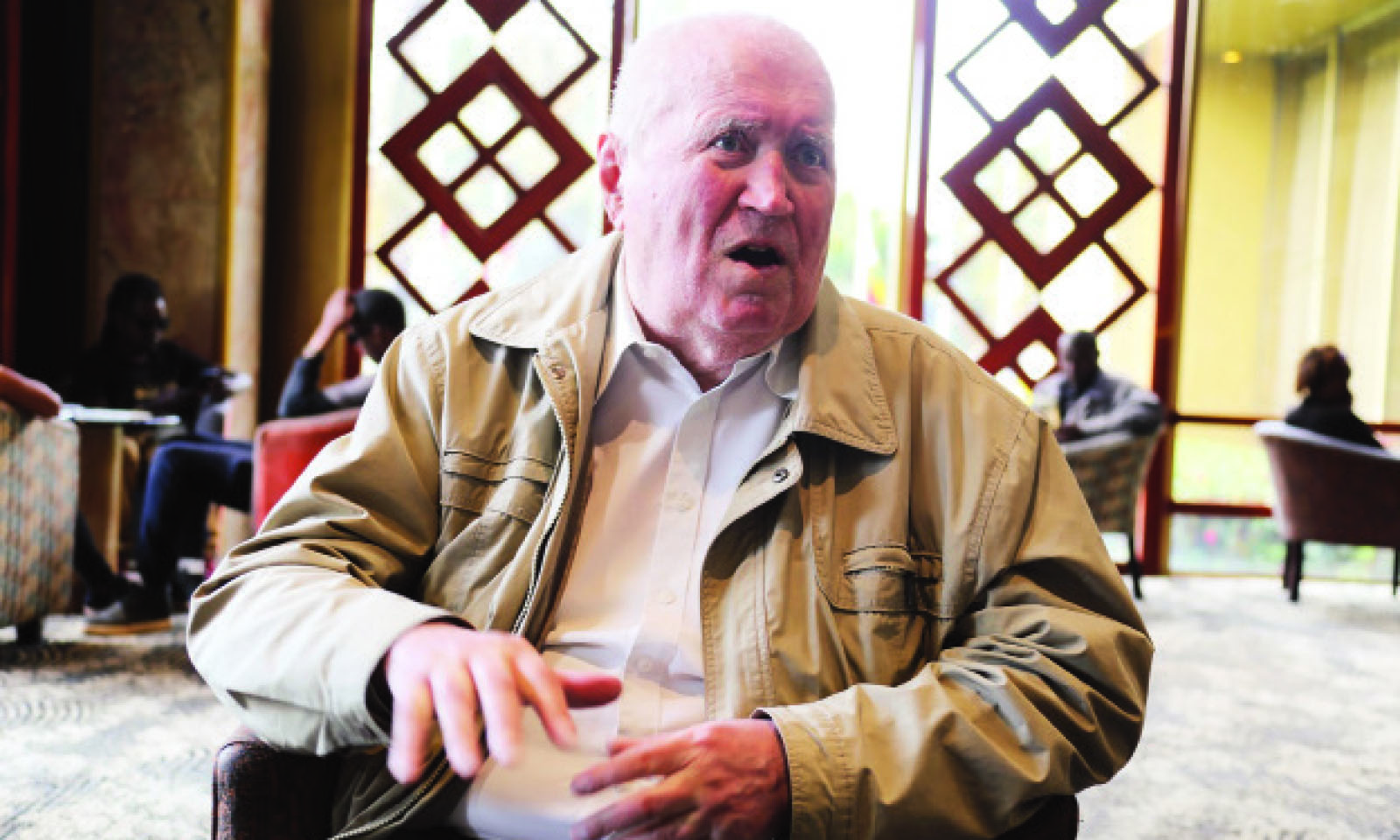
Zimbabwe today honours Russia’s Professor Vladimir Shubin (VS) with the Royal Order of the Munhumutapa for his contributions and support to Zimbabwe’s independence since the 1960s. Here he talks to Zimpapers Politics Hub’s Gibson Nyikadzino (GN), where he highlights why it is important for Zimbabwe and Russia to stand side-by-side as they defend their independence. Below are the excerpts:
GN: Congratulations on receiving the Royal Order of the Munhumutapa. How does this award, in your view, bring into relevance the solid cultural relations between Zimbabwe and Russia?
VS: I would not use the word cultural relations, relations between our two countries are much wider than cultural relations. And just to speak about this very award, it is for support rendered during the struggle for the independence Zimbabwe. I feel this as a recognition of contribution by the old Soviet Union, which is represented mostly by Russia today, in assisting the liberation struggle beginning from the early 1960s to the independence of Zimbabwe in 1980 and beyond.
GN: How did you contribute or how did you participate?
VS: At the beginning of 1969, I was working initially as a head of department and then as secretary for African Affairs in the organisation which used to be called the Soviet Operation Solidarity Committee, which was a conduit for immigration movements to approach the liberation parties and the government of the Soviet Union. Apart from that, it also organised providing direct support to the parties. For Zimbabwe, initially it was not even ZAPU, it was NDP.
It all started with a visit in 1961 of Tarcisius George Silundika and the assistance was provided in different forms. First of all, it was political assistance in the sense of supporting the liberation struggle, calling for the true independence of Zimbabwe. Then, there was also humanitarian support. Hundreds of Zimbabweans were trained in the Soviet Union.
GN: Any memories of your Zimbabwean friends who benefited from this assistance?
VS: One of them, who was my good friend is Tshinga Dube, who at some stage was a Minister of War Veterans. He died last year. Before he died, he was proclaimed as honorary doctor of a university in Moscow, he was a writer there. But unfortunately, he failed to make it due to illness. This is just one example.
From 1964, there were groups of Zimbabwean fighters who were trained in the Soviet Union. So, it was multifaceted assistance, and we were involved in it.
GN: You were with Zimbabwe’s liberation fighters since contacts you made in 1961 as a member of the Soviet Operation Solidarity Committee?
VS: In September 1971, I left the committee for doctoral studies, so for three years I was not directly involved but was involved to some extent, not as an office bearer. Then from 1982, I was working at the International Department within the ruling party for the last three years as the head of the Africa section. We already had contacts with the ruling party here, including Nathan Shamuyarira, who was first Minister of Information, and then as Foreign Affairs Minister (1987-1995).
GN: You mentioned Cdes Shamuyarira, Dube and Silundika, who are all Zimbabwe’s National Heroes. When you look at their heroism and contributions to national development or societal unity, how do you see that in relation to today’s generation?
VS: It is very difficult for me to speak about the younger generation. But if you speak seriously, we can say it is very important for the whole system of education, of books, videos, and so on, to show how Zimbabwe’s independence was won. Sometimes people say, look at the old story, now they use things about the difference. Yes, youth have to think about present development, but they should not forget about how these developments came into life.
And again, it depends also on the elder generation, the middle-aged generation. How do they explain to the youngsters what really happened? It’s very important. Of course there were difficulties, there were maybe some contradictions, but now, 45 years after independence, I believe that there is a time, of course, to educate more strongly the younger generation and to show them that they should follow the example of their forefathers in the new conditions, in the development of national unity. As you know, during the liberation struggle, never forget that even in the racist army there were more blacks than whites. So, they’re using maybe the same formula. It is very important for people to keep, in spite of all difficulties, in spite of all contradictions, unity for the purpose of building a strong country as beautiful as Zimbabwe is.
GN: In your view, how useful have been African studies in shaping Global South independence or decolonisation?
VS: I think it’s very important what you say now. Unfortunately, or fortunately, we again have to speak about decolonisation to understand it in a very broad form. Sometimes I even mention (jokingly) about the decolonisation of Russia in the sense that in the 1990s there was too much of Western influence which has to be fought now. Importantly we do cherish our good relations with most of the African countries, in particular with Zimbabwe.
And the reason is very simple. Apart from our historical knowledge of the situation, I think we are united in two points. Your country and us, want to protect our independence, but we don’t want to quarrel with anybody. And that’s very important. This principle is easy to perform unless others are sabotaging.
GN: It could be the changing geo-political context. How do you asses the changes that are currently happening?
VS: It’s very complicated now. The developments are so rapid, or quick, or whatever you like, that it is very difficult even to follow it. But once again, I believe what I mentioned before, it is important to defend independence. Too many people are trying to impose, especially those people who are overseas, their will on us, giving ultimatums and all this. Your country withstood many problems which were created officially from abroad.
GN: In relation to your visit and receiving the award, what are your impressions about this gesture from Zimbabwe?
VS: I must say, once again, that it is a great honour, but not just for me. I think it’s not an order given to me, it’s an order given to those hundreds, if not maybe ourselves, the Russians, or Soviets, who one way or another assisted in Zimbabwe’s road to independence, and in future development of our relations. All I can say, I think we should work hard not to improve each other’s world, but to develop our relations. There is a great potential.