Sundaymail Editor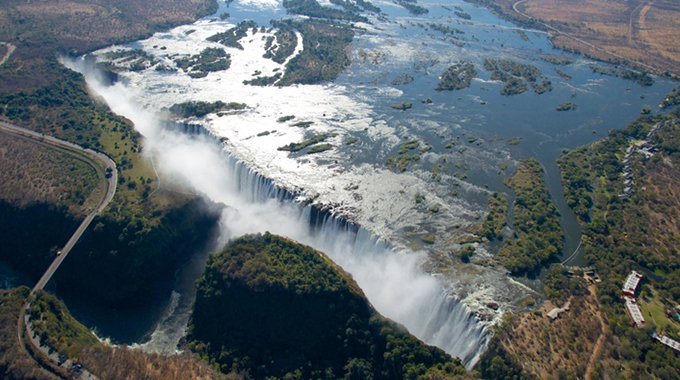
Tawanda Musarurwa
The Covid-19 pandemic has forced industries across the globe to adjust in significant ways, and the local tourism sector has not been excluded.
Re-emerging lockdowns and travel restrictions are currently acting as a major drag for travel and hospitality firms locally and across the globe.
Although tourism has perhaps been the hardest-hit sector by the long-drawn-out health pandemic, signs are showing that Zimbabwe’s tourism sector is indeed resilient.
Just this week, the Government announced a major policy shift around the travel industry that could be a game-changer for Zimbabwe’s tourism industry, especially within the context of the pandemic.
Zimbabwe became the first country to exempt all Sadc member states from visa requirements.
What this means for the local tourism sector is that it stands to benefit in terms of tourist traffic from the region, especially given limited global travel.
Said Information Publicity and Broadcasting Services secretary Nick Mangwana:
“Any citizen of the a Sadc member state can now come to Zimbabwe without the need of a Visa. We are playing our part and our tourism will benefit.”
The country is stepping up its engagement with other countries in tourism exchange through the Kaza UniVisa which is available to 65 nations which allows visitors to Zimbabwe and Zambia unlimited access to the two countries over a period of 30 days.
Traffic from the region can help Zimbabwe’s tourism sector boost its contribution to the country’s Gross Domestic Product (GDP). In 2018 the sector accounted for 7,2 percent of GDP, and that declined to 6,5 percent in 2019.
Efforts to tap into the regional markets complement the country’s pivot to domestic tourism in an effort to offsets weaknesses occasioned by the pandemic.
Notwithstanding the devastating impact of the Covid-19 pandemic on the tourism sector, last September Cabinet announced measures to slowly re-start tourism activities in the country.
Around the same time, Statutory Instrument 216 of 2020 was promulgated, which among other things, operationalised the resumption of the aviation sector, regulates tourism operations under the lockdown, and the special provisions for liquor licensees.
It was a vital step in the right direction as the authorities moved to pivot tourism to the domestic market.
But the domestic market focus is targeted to underpin the sector, even beyond the Covid-19 pandemic.
“Post the Covid-19 pandemic, domestic tourism is expected to provide a cushioning effect to the sector as international source markets are projected to take long to recover,” reads part of the National Tourism Recovery and Growth Strategy (2020 – 2025).
“The strategy seeks to extensively promote domestic tourism development in close collaboration with the tourism private sector.
“The domestic tourism campaign, will also leverage on tourist assets operated by public institutions such as the Zimbabwe National Parks and Wildlife Management Authority and the National Museums and Monuments of Zimbabwe to offer affordable and exciting products to the domestic market.”
Despite being accelerated by the pandemic, the domestic tourism drive was always necessary for Zimbabwe given the rather limited number of international tourists visiting the country.
Official data shows that in 2019, Zimbabwe’s international tourist arrivals declined by 11 percent from 2 579 974 in the prior year to 2 294 259, while tourism receipts also declined from US$1,3 billion to US$1,2 billion over the same period.
And its not a problem that is peculiar to Zimbabwe. According to the United Nations World Tourism Organisation (UNWTO), Africa accounted for just 4 percent of international arrivals in 2019.
Although figures from last year are yet to be availed, they are likely to be negligible. But the domestic tourism drive can only be successful to the extent that locals begin to appreciate the very concept of tourism.
In a recent interview with The Sunday Mail, Lodge At The Ancient City (Masvingo) general manager Steve Manyangadze said locals need to have a greater appreciation of the country’s wide array of tourism assets.
“As Zimbabweans, we don’t do justice to the national monuments. Look at the national emblems, everything is about the Great Zimbabwe. But people talk about the Victoria Falls, so if as locals we don’t value these monuments, the source of our national emblems, who then will?”
Zimbabwe has numerous tourist attractions across the country, with the more popular destinations including Victoria Falls, Great Zimbabwe, Nyanga and Mutare. And with 26 percent of its total surface dedicated to wildlife conservation, the country has numerous stunning game parks.
And in the National Tourism Recovery and Growth Strategy (2020 — 2025), the Government has announced plans to expand the country’s tourism attractions into new areas, a development that is expected to unlock at least US$2,7 billion in new tourism infrastructure by 2025.
Targeted areas for new tourism infrastructure include Tugwi-Mukosi, Binga, Kanyemba, Osborne Dam and Kariba.
Investments into the Tugwi-Mukosi Integrated National Park area alone, are estimated to reach US$1,5 billion by 2025, through investments in hotels, boat cruises, exclusive conference facilities, and lodges.
Areas such as Kariba and Binga are already popular tourist destinations, and new infrastructure in these areas is expected to boost arrivals in these areas going forward, as the Government anticipates a booming post-Covid-19 tourism sector.


 Online Reporter