admin
admin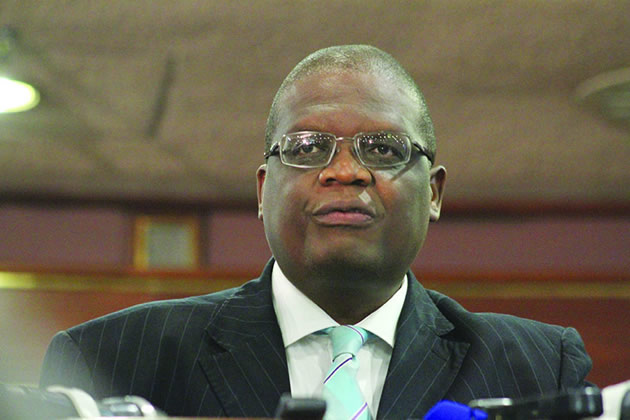
THE Reserve Bank of Zimbabwe (RBZ) has put paid to speculation that Zimbabwe could adopt the South African rand despite the challenges in utilising the multicurrency system that is dominated by the United States dollar.
Some local economic observers have suggested that Zimbabwe could benefit from joining the rand monetary union in so far as South Africa is already Zimbabwe’s major trading partner, accounting for around 60 percent of the latter’s imports.
The union comprises South Africa, Lesotho, Swaziland and Namibia. These analysts also say adopting the weaker rand (compared to the US dollar) will help local industries reduce their costs of production.
RBZ deputy governor Dr Kupukile Mlambo, however, said yesterday that there are significant technicalities that need to be overcome for adoption of the rand to become a distinct possibility.
“Pertaining to the adoption of the rand, we need to understand a couple of things. One of the things is that you cannot be a member of the common monetary area or rand monetary area unless you have your own currency. So we don’t have a currency.
“Why (a local currency is essential)? Because South Africa prints the rand for the South African market. Their fear is that if they print for the region they have no way of stopping those rands from coming back into South Africa and become inflationary. And that is why Swaziland, Lesotho and Namibia have alongside the rand their own currencies,” he said.
Zimbabwean authorities have already said return of the Zimbabwean dollar will not happen anytime soon the macro-economic fundamentals are not right.
Dr Nebson Mupunga, a principal director in the central bank’s External Sector Economic Research Division weighed in and said the real challenge that Zimbabwe currently faces is not one of currency, but production.
“Whether we adopt the rand, whether we adopt the yuan or the Botswana pula and so on, to me our challenge in this economy is not a currency issue, but our challenge is a production issues.
“So even if we adopt the rand and we are not producing, it doesn’t mean that South Africa will print the rand for us, we still need to earn the rand in the same way that we are earning the United States dollar, so it may not be a solution to our current challenges,” said Dr Mupunga.
“We need to produce, we need to increase production.”
Meanwhile, the rand has shown itself to be a rather unstable currency. As at present, the rand has been weakening after fraud charges were yesterday laid on against South African Finance Minister Pravin Gordhan. By mid-morning the rand was at R14,3405 to the dollar from yesterday’s R14,2307. And long-term projections for the rand are not too bright either. Local economist Joseph Mverecha says with the US Federal Reserve likely to keep tightening interest rates going forward, this should push the Rand even weaker against the US dollar. — BH24



 Online Reporter