

 admin
admin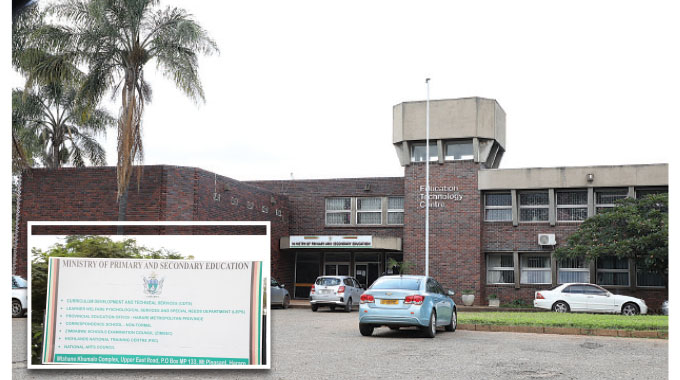
Elliot Ziwira–Senior Reporter
To affirm its commitment to the national ethos embodied in shared memory, in 2021 the Second Republic under President Mnangagwa, the custodian of the people of Zimbabwe’s cultural mores and values, renamed some of the buildings owned by the Government in honour of the heroes and heroines of the First and Second Chimurenga, thus, immortalising the gallant sons and daughters of the soil’s legacies.
Among those honoured through buildings and other monuments are General Mtshana Khumalo, Chief Chingaira Makoni, Mgandane Dlodlo, Chief Chiwashira Muchecheterwa, Queen Lozikeyi, and Chinengundu Mashayamombe.
They join other heroes of the First Chimurenga, Sekuru Kaguvi, Mbuya Nehanda and Chaminuka, among others, whose contribution to the liberation of Zimbabweans from colonialism, have already been recognised through monuments, shrines, roads, hospitals and buildings.
This dovetails with the spirit of Zimbabwe’s 42nd Independence Day celebrations theme: “Zim@42: Leaving No One and No People Behind”, as the Second Republic takes every citizen on board.
It is befitting, also, that Bulawayo, Zimbabwe’s second largest city, which is both the site of the great robbery by settlers through the deceitful Rudd Concession of 1888; and the site for the birth of the Chimurenga, is hosting the event for the first time since Independence in 1980.
Notably, the list of the honoured heroes of the First Chimurenga are chiefs, a queen and spirit mediums. It follows, therefore, that in the African’s story, chiefs, spirit mediums and shrines were crucial, and remain so in the spiritual connection between the dead and the living. Each man, each family or community lived in communion with the gods.
There were gods of war, gods of rains and good harvest, gods of fairness and justice, gods of the land and gods of protection during times of strife. And all this was connected to the land.
White supremacist deity, Cecil John Rhodes and his fellow settlers were aware of the pivotal role that culture and history play in the everyday lives of Africans.
Through Christianity, therefore, they robbed Africans of their spiritual connectedness to the land of their ancestors. After destroying or capturing Africans’ shrines, settlers went on to build monumental ones of their own heroes and themselves. Thus, immortalising the history of plunder, brutality and murder characteristic of colonialism.
In “The Chimurenga Protocol” (2008), Nyaradzo Mtizira points out that after realising the essence of spirituality to the struggle, settlers captured and hanged “awe-inspiring individuals”, like Mbuya Nehanda and Sekuru Kaguvi, “who towered over the battlefield and motivated the fighters of the Chimurenga to feats of heroism against the settlers and the British forces.”
Historian Aeneas Chigwedere, in “Shona Chieftainships: Principles of Succession” (2014), complements the quintessence of spirituality to Africans and how settlers dealt with the issue.
Chigwedere notes: “The agents of colonialism were left in no doubt that the Resistance War called Chimurenga was called for by the Shona national spiritual authorities with Murenga at the apex.
“But they also observed that these ancestral spirits, operating through human mediums, organised the whole war through the chiefs.”
From then on, the settler authorities declared war on “Shona traditional religion” and instructed that “whoever claimed to be a medium of a national spirit such as Chaminuka, Nehanda, Kaguvi or Mukwati, should be shot on sight” (ibid).
In “The Rain Goddess” (1973), Peter Stiff captures the centrality of spirituality to Africans, and in their struggle for independence, though he does so from a Eurocentric point of view. In his view, retributive justice is meted on “terrorists”, whose violence is believed to have angered the gods. In their anger the gods withhold the rains.
Therefore, by tapping into the rich African heritage, either through destroying their shrines or capturing them, settlers consolidated their power, and weakened Africans.
In “Coming Home” (2007), Oley Maruma (2007) echoes the same sentiment when he writes: “That is why the Rhodesians don’t want to accept that Africans built Great Zimbabwe. If you want to subjugate a people, you have to wipe their culture and history and then their self-confidence.”
After alienating Africans from their culture by projecting it as an epitome of evil (Fanon, 1967), and capturing their shrines, Europeans enforced their own Christian God on the indigenous people (calling it Christian Civilisation), and installed themselves as the new gods.
Franz Fanon avers in “The Wretched of the Earth” (1967) that the Church “in the colonies, is the White people’s Church”, which does not teach the native the ways of God, “but the ways of the White man, of the master, of the oppressor”.
There is no better way of telling the African story than naming; for it is in nomenclature that identity lies. Through monuments, shrines and buildings, which stand the test of time, it should be inculcated in the present and future generations, particularly in youths, that history is more than a silent past — it is a source of agency that moves and speaks to the present and the future.
So, who are these heroes?
Mtshana Khumalo
Honoured through the Education Services Centre in Mt Pleasant, which has been renamed Mtshana Khumalo Complex, General Khumalo was a military tactician. He commanded an elite group of fighters tasked to safeguard King Lobengula’s life and dignity as he trekked north at the height of the Anglo-Ndebele (Matabele) War of 1893.
He protected not only his king, but the dignity of the African people reduced to “half-devil-half-children” by colonists.
General Khumalo’s Imbizo Regiment vanquished the colonial stronghold embodied in the settler commander, Major Allan Wilson’s party, comprising 34 men, also known as the Allan Wilson Patrol, at the Battle of Pupu in Lupane along the Shangani River on December 4, 1893.
This was despite the Patrol having superior weaponry at its disposal. The Battle of Pupu set in motion the wheels of resistance that halted Ian Douglas Smith’s colonial train on April 18, 1980.
General Khumalo, is, indeed, a national hero, a status President Mnangagwa posthumously conferred on him.
The recognition, along with the erection of a memorial statue for Zimbabwe’s First Chimurenga heroine, Mbuya Nehanda at the intersection of Samora Machel Avenue and Julius Nyerere Way, is symbolically apt as it corrects historical distortions of the Zimbabwean story by colonialists.
His contribution to the concept of struggle against colonial subjugation will forever be cherished. The settler community hailed the 34 as men of men, for having died for a “worthy” cause.
Settlers also recognised Allan Wilson through an annual holiday between 1895 and 1920; and a school for white children founded in Salisbury (now Harare) in 1940 as a modern high school for boys.
Colonialists had bloated General Khumalo’s name out of history, yet he was the one who masterminded the annihilation of the said men of men. Neither are his selfless and courageous men known by name.
Allan Wilson’s name has been institutionalised as a training paragon, notwithstanding what it stands for.
Now that General Khumalo’s name has been encrypted in stone through the Pupu National Monument in Lupane District, Matabeleland North Province, as a commemoration site and Mtshane Khumalo Complex in the capital, the selfless national hero will forever be remembered.
Chiwashira Muchecheterwa
Chief Chiwashira Muchecheterwa has been honoured through the Central Registry Building along Herbert Chitepo Avenue in Harare, which was renamed after him.
Chief Chiwashira Muchecheterwa was of the Masarirambi/Nyashanu/Musiyamwa people, the VaHera, who occupied the land near Featherstone and were known for their massive cattle herd.
The Chikomba area, in Mashonaland East Province, which was home to the VaHera, Njanja, Maromo and Rozvi people, had been occupied by Europeans; the English and Boers since the 1850s, who were angling for the Chiwashiras’ cattle and land.
Chikomba is one of the places that left a permanent mark on the history of the people of Zimbabwe’s fight against colonial hegemony.
The name is derived from an abyss or hell, Dhorongo, Gehena or Gomba in Shona; a culmination of the colonial apparatus for brutality and violence against black people.
It is not Chikomba, as in “boyfriend”, no.
Naturally, Chiwashira vowed not to take whatever was to come to his people lying down.
According to the historian, Aeneas Chigwedere, the First Chimurenga was ignited around the Chikomba area, which the white settlers called “The Nursery of the Shona Rebellion”.
In an article titled “Tormenting whites from a British museum: The legacy of Chiwashira”, published in The Patriot on August 20, 2015, Munhamu Pekeshe writes that the rebellion pivoted on four individuals.
These were Bhonda, a Mwari priest, Sango; a spiritual figure and headman, Maromo and Chiwashira as a well as a fifth one, who, however, was to the west of Chikomba; Mashayamombe of Mhondoro.
It was such a formidable quintet, no wonder why the area was referred to as the nursery of the rebellion. Both Pekeshe and Chigwedere concur that the spiritual component of the Chimurenga was of essence in bringing the Zimbabwean people together in the fight against colonial oppression.
As the Chimurenga broke out, Chiwashira Muchecheterwa stood his ground at Zuru and Zhororiya, before falling at the third battle, leading to his decapitation; after being tied to a horse and dragged along to the colonial prison at Fort Charter, where, unfortunately, he arrived dead.
The iconic hero’s head, along with those of Mapondera, Chingaira and Mashonganyika, was taken to Britain as a trophy.
Although versions differ at every turn, Chigwedere refutes that Chiwashira was in love with a white woman or that he was a rapist; hence, his brutal death at Dhorongo or Gomba (hell). This view is shared by the First Chimurenga hero’s descendants Tichadii Ziwenga Chiwashira and incumbent Chief Mutekedza, Andrew Zhakata.
According to Chigwedere, when the war broke out, one William Taylor, who was the first Native Commissioner of Chikomba (Enkeldoorn), in May 1895 left his wife behind and Chiwashira captured her, forced her to dress like the VaHera women and cut incisions on her body. This angered Taylor and his fellow settlers on their return.
With the war having been lost on our part in October 1897; Mbuya Nehanda and Sekuru Kaguvi hanged in April 1898, colonialists set out to thwart any future resistance.
Chingaira Makoni
Chief Chingaira Makoni was a military genius who evaded bloodthirsty colonialists for many months. He even defeated them on many fronts, although he was later executed. His head, as was the case with Chiwashira, Mapondera and Mashonganyika, was taken to Westminster Abbey in London, Britain, as a trophy.
The Immigration Building along Herbert Chitepo Avenue in Harare was renamed in his honour.
As the historian, Terrence Ranger notes, through his military prowess, Chingaira killed 372 colonists, a tenth of the settler population then.
No wonder why he was a thorn in their flesh.
Lozikeyi Dlodlo
The struggle against colonial oppression, displacement and supremacist hegemony of the West cannot be complete without reference to the names Lozikeyi Dlodlo and Nehanda Nyakasikana, the heroines of the First Chimurenga.
Queen Lozikeyi was King Lobengula’s first wife.
Clarke (2006) cited in Joyce Jenje Makwenda’s “Women Musicians of Zimbabwe: A Celebration of Women’s Struggle for Voice and Artistic Expression: 1930s-2013” published in 2013, writes that like Mbuya Nehanda, Queen Lozikeyi inspired the liberation war, which gave birth to independent Zimbabwe.
“Like with the ZANLA forces (mainly Shona) were inspired by Nehanda, the ZIPRA forces were also inspired by Lozikeyi’s spirit; she inspired her people to lay down the pen and pick up the guns again,” Clarke asserts.
The queen’s legacy lives on as the Ambassador House in Kwame Nkrumah Avenue, Harare, which houses the Ministry of Primary and Secondary Education, was renamed Queen Lozikeyi House in her honour.
Chinengundu Mashayamombe
Chief Chinengundu Mashayamombe of Mhondoro was one of the five individuals who tormented settlers in the First Chimurenga around the Chikomba area. The other four, according to Munhamu Pekeshe (2015), were the priest, Bhonda, another spiritual figure named Sango, Maromo and Chiwashira.
The First Chimurenga hero launched his onslaught at the settlers from the west of Chikomba. A great strategist, he unleashed death on colonists in several battles between June and July 1896.
The Quality International Hotel at the corner of Nelson Mandela Avenue and Simon Muzenda Street in the capital was renamed Chinengundu Mashayamombe House in recognition of his contribution to the struggle.
Mgandane Dlodlo
The son of Loyiswayo Dlodlo, Mgandane was King Lobengula’s regional commander in charge of the present day Midlands Province. His father, Loyiswayo, headed Inxa Village, a section of Amakhanda.
Irked by the confiscation of their cattle by colonists based in Fort Victoria (Masvingo), in July 1893, the Ndebele King sent a royal delegation led by Mgandane to investigate the matter, and possibly collect their stolen herd.
The settlers identified Mgandane as the leader and killed him, thus, triggering the Anglo-Ndebele War of 1893.
Mgandane Dlodlo is believed to have been decapitated and his head taken to the United Kingdom. Historian Pathisa Nyathi said although most of the people who were beheaded were from Mashonaland, the hero is believed to be the only one from Matabeleland whose head is stuck in a museum in Britain.
“We know the skulls that were taken around that time are those of the Makonis,” he told The Herald in 2015. “They should certainly be among those that are in the UK.
“This side (Matabeleland), we are not aware of any who were decapitated, but the only person we suspect to have been beheaded and his head taken to the UK is Mgandane Dlodlo, who was the leader of the group that was sent by King Lobengula to Fort Victoria to collect cattle that were taken by the whites.
“That led to the Anglo-Ndebele War. The whites then followed Mgandane and his party and they beheaded him. What we can’t say is whether they took his head to the UK or not. But what is clear is that beheading started in 1893, then the Makonis were beheaded in 1896.”
The New Government Complex at the corner of Samora Machel Avenue and Simon Muzenda Street in Harare was named after Mgandane Dlodlo.


 Online Reporter