admin
admin
Bernard Gwarada, Correspondent
Research shows that elections all over the world tend to have an effect on a given country’s economy. This is not surprising because elections represent concerted and focused human activity which has implications for resource consumption, resource allocation and reallocation as governments seek to appease competing interests. Past studies have indicated that during the pre-election period, there is a noticeable slowdown in the economy for both developed and emerging economies.
It can be noted that numerous studies document that the three largest economies in sub-Saharan Africa, which is Nigeria, South Africa and Kenya have experienced a slump in the economy during a pre-election period. The same can be observed in Britain and Turkey’s recent elections in December 2019 and May 2023 respectively.
Zimbabwe can therefore not be an exception hence this article seeks to examine the impact of elections on the economy, specifically focusing on the pre-election period. Past studies have indicated that during the pre-election period there is a noticeable slowdown in the economy and the reasons for this will be discussed below.
Uncertainty
Uncertainty provides the background to all that follows during the pre-election period. In a democracy it is usual to find a number of competing political parties. Such a scenario is usually given legitimacy by the constitution of a given country. In Zimbabwe, the constitution allows for the existence of different political parties. However, it is the competition for political supremacy towards elections among the parties and the parties’ strategies to secure power that engenders uncertainty. It is human nature for people to scan their environment and consider the best course of action as a result of an event and taking into account all the factors that are at play. The uncertainty affects not only individuals but communities as well as businesses. In this regard, plans are usually short-term until the elections are over.
Inflation
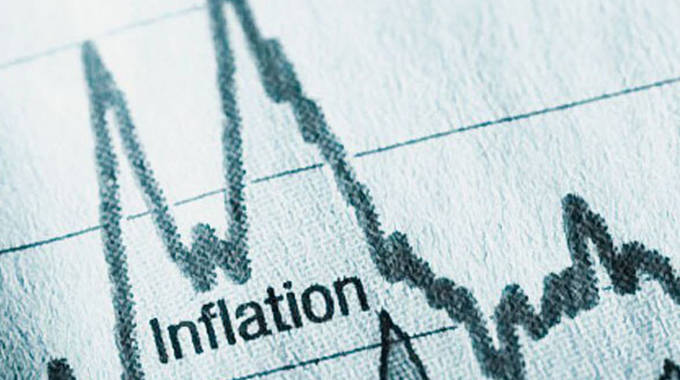
It can be noted that uncertainty can potentially create market instability. Zimbabwe recently witnessed a spike in inflation causing a 175 percent inflation rate. It is observed that the month-on-month inflation rate for June 2023 was 74,5 percent, gaining 58,8 percentage points on the May 2023 rate of 15,7 percent. This development according to at least one school of thought was linked to black market speculation which sought to take advantage of the existing multicurrency regime. However, media reports suggest that the Reserve Bank of Zimbabwe blamed forward pricing for the deleterious state of economic affairs. It should be noted that this dangerous spike in inflation took place in the pre-election period and in fact resulted in some observers ascribing the sudden spike to the work of detractors. The human nature dimension as stated above also comes into play here. Because of the uncertainty in the pre-election period some economic actors seek to maximise their gains even at the expense of the national interest. Their motivation being that the future is unknown and uncertain and through, for instance, forward pricing, seek to selfishly protect their narrow interests and minimise their loses.
However, the government reacted to this scenario with a cocktail of measures that had the effect of stabilising prices of goods and services. The measures include limiting foreign currency auctions to US$5 million per week, increase of bank policy rate from 140 percent 150 percent per annum and bank overnight accommodation rate from 70 percent to 75 percent.
Campaign Strategies
Election campaigns provide an opportunity to competing parties to put their best foot forward. The language that is used in the pre-election period can either serve to unite or divide. Where the language is unnecessarily inflammatory, this can lead to violence and looting of businesses. When this happens the economy suffers and in some cases may take time to recover even after elections because of the magnitude of damage caused particularly to infrastructure.
This is the reason why political campaigners should use restraint in their utterances. Research indicates that in some cases, individuals from different political parties take advantage of pre-election period to settle personal scores which is most unfortunate. While the government is coming up with strategies to alleviate the urban housing shortage and incubating businesses, someone is busy skimming to bomb someone’s property during the pre-election period. Existing studies suggest that elections fundamentally contribute to democratic governance, which in turn impacts on the economic growth. It is therefore important that political parties, being crucial actors in the political processes, continue preaching peace and curb political violence. Media is awash with calls for peaceful elections from election stakeholders such as churches, traditional leaders and business.
Investment flows
During the pre-election period, investors’ confidence tend to be reduced. Investors therefore take a pragmatic and wait-and-see approach. This is because investors want assurances that their investment is safe. This approach is also documented in literature as something that happens in a number of countries. According to reports, The Zimbabwe Investment and Development Agency (ZIDA) has targeted US$4 billion worth of investments for 2023 from both domestic and foreign investments and in the first half of the year they have received actual investments of about US$600 million. However, it remains to be seen the extent to which this target, if at all, will be adversely affected by the elections.
Currency performance
Research suggests that there is a correlation between currency performance and elections. For instance, in Britain, the British pound tends to weaken if there is a perception of instability or hung parliament. In the European Union, the same is also the case with regard to its currency in similar circumstances. However in the USA, investigations indicate that the US dollar actually strengthens in similar circumstance as it is perceived as a safe-haven currency. It is well documented that the unexpected exchange rate shifts often happen around election periods.
In Zimbabwe, it can be noted that political polarisation in the pre-election period can negatively affect the performance of its currency. This is because polarisation dents market confidence. The loss of confidence can cause uncertainty, which results in a potentially detrimental speculative mode which in turn can lead to inflation.
As can be seen from the above, the pre-election period is a sensitive period. A lot can happen that can help the economy to move forward or even regress. However, research shows that the pre-election period is associated with a slowdown in business activity.
λ Bernard Gwarada is a Business Consultant and a Doctoral Research candidate focusing on Entrepreneurial Innovation at Binary University. He is an alumnus of the University of Pretoria and University of Leicester. He writes in his own capacity.
For feedback: +263712430591 or email: [email protected]



 Online Reporter