Chronicle Editor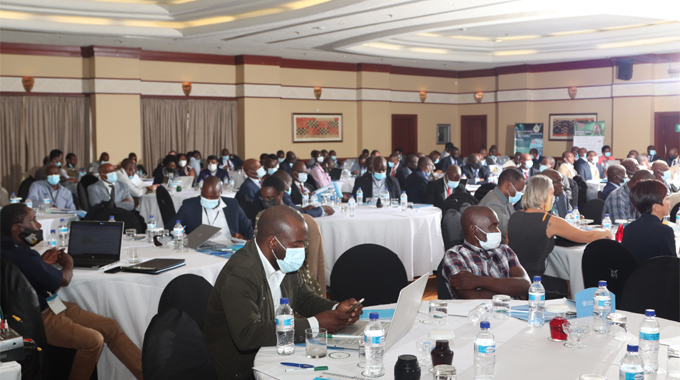
Leonard Ncube, Victoria Falls Reporter
THE Zimbabwe agriculture industry needs strong partnerships to maintain the momentum gained by the sector last season, continue transforming the country’s economy and meeting national goals in line with the vision for an upper-middle income society by 2030.
This was said by Lands, Agriculture, Fisheries, Water and Rural Development Permanent Secretary Dr John Basera in his virtual welcome remarks at the opening of a two-day Round Table meeting organised by Government and the Food and Agriculture Organisation (FAO) in Victoria Falls.
The Round Table Meeting is being held through the Hand-in-Hand (HiH) Zimbabwe initiative and started in Victoria Falls yesterday, to deliberate on strategies of striking smart partnerships for agricultural transformation.
The theme is: “Enhancing Partnerships, Defining Priorities and Targeted Investments for Agricultural Transformation in Zimbabwe.”
Experts from the agricultural sector in Government and private sector as well as development partners are attending the meeting which seeks to provide a platform to deepen consultations, deliberations and enhance partnerships in the agricultural sector in the country, with the aim of supporting initiatives that support a food sustainable nation.
Dr Basera said agriculture occupies a central place in Zimbabwe’s economy and has the potential to significantly reduce poverty, enhance economic growth and entrench economic stability.
He said the sector grew by over 36 percent last year.
“Our sector grew by 36 percent last season and all sub-sectors also grew quite sharply. The food production food sector grew by 189 percent, maize production grew by 200 percent to 2,7 million metric tonnes. Total cereal production amounted to over 3 million metric tonnes against a national requirement of 2,2 million metric tonnes. So that gave us a surplus of between 0,8 and 1 million metric tonnes for the first time in many years.
“Our challenge now is that pressure is on our shoulders to do more than we did last year and achieve what we achieved. This platform provides us with the opportunity to partner more to achieve more, this should be the buzz word. Smart partnerships and smart collaborations are therefore key between Government and private sector, development partners, civic society and Hand in Hand,” said Dr Basera.
He said a dollar invested in agriculture has two to four times transformative power than the same dollar invested in any other sector and this can transform rural communities and cause growth of rural communities.
Dr Basera said Government accelerated agricultural development programmes and climate-proofed programmes will spur the sector.
Agriculture is one area of the economy that cuts across almost all the 17 Sustainable Development Goals directly or indirectly.
The meeting comes at an opportune time as the Second Republic has put agriculture at the centre stage of meeting its objectives for an upper middle-income society by 2030.
Dr Basera said the meeting seeks to enhance partnerships and define priorities and investments in agriculture as he called for collective commitments
He rallied all of the country’s provinces and districts not to be left behind in the transformative agenda, to achieve agriculture food systems and transformation strategy which is part of Vision 2030, for food sufficiency as the ultimate goal.
The Hand in Hand Initiative was launched by FAO in October 2019 as a new Strategic Framework (2022-2031) around seeking to support the 2030 Agenda through the transformation to more efficient, inclusive, resilient and sustainable agri-food systems for better production, better nutrition, better environment and a better life, leaving no one behind.
This is an evidence-based and country-led programme with the objective of eradicating poverty, ending hunger and all forms of malnutrition while reducing inequalities by accelerating agricultural transformation and sustainable rural development.
Dr Basera said the Hand-in-Hand Initiative is a framework that is relevant to Zimbabwe’s development goals and approaches and is in line with the Agriculture and Food System Transformation Strategy that aims to accelerate agricultural production, productivity and growth and is seamlessly linked to NDS1 and Vision 2030.
FAO Sub-regional Co-ordinator for Southern Africa Mr Patrice Talla said the round table meeting is key in enhancing an environment for all sectors of the economy and partners to move together in the implementation of investment plans. — @ncubeleon


 Online Reporter