


 admin
admin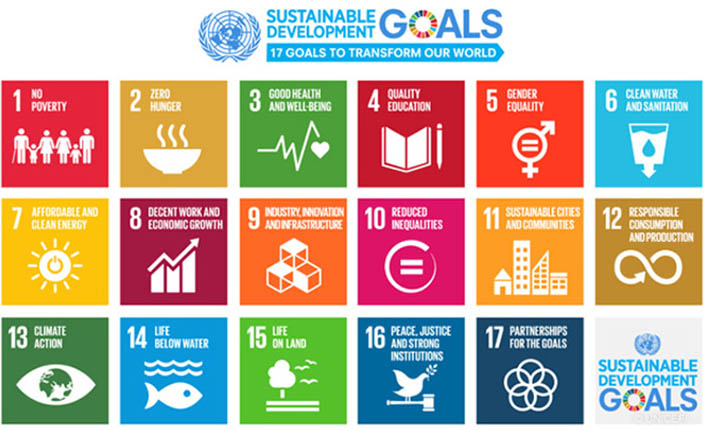
Dr Obert Mpofu
The Government of Zimbabwe is committed to implementing the Sustainable Development Goals (SDGs) in line with other member states of the United Nations. The adoption of the Agenda 2030 in September 2015 by the United Nations represented a firm commitment by the world leaders and United Nations member states to address the most challenging issues facing the world.The SDGs are expected to influence the course of the history of humanity in the next 15 years: 2016-2030, while tackling issues such as poverty, inequality and unemployment which are more crucial in Africa.
The Government of Zimbabwe is signatory to the SDGs and was also signatory to the former Millennium Development Goals (MDGs): 2000-2015. The Eight Millennium Development Goals (MDGs) 2000-2015 were implemented during a difficult economic era for Zimbabwe.
In fact, between 2000 and 2008, the Government lost close to 40 percent of GDP because of sanctions and other economic problems.
Despite the challenges, Zimbabwe made significant progress, mainly in MDG 2 Universal Primary Education; MDG3 Promoting Gender Equality and Empowering Women and MDG6 Combating HIV/AIDS, Malaria and other diseases. MDGs came to an end in December 2015, and were succeeded by the Sustainable Development Goals (SDGs) that will be implemented over a 15-year period from 2016 to 2030 by all UN member countries.
Alongside continuing development priorities of poverty eradication, health, education, food security and nutrition, the SDGs incorporate a wider range of economic, social and environmental objectives, hence the adoption at global level of a multi-stakeholder approach in their implementation.
Unlike the MDGs, which were donor driven, the 17 SDGS were agreed on after a lengthy inter-governmental negotiation process that involved all the UN member states.
The African Union negotiated and finalised her Continental Position Paper on the new Global Development Agenda that provided input to the AU member state negotiators that participated in the global inter-governmental negotiating process.
Zimbabwe, through the Ministry of Macro-Economic Planning and Investment Promotion and other stakeholders, actively participated in both the continent and global negotiating process.
The African Position Paper, therefore, played a significant role in the finalisation of new Global Development Agenda. Therefore, the SDGs are in line with the Africa Vision 2063 and the Africa We Want: 2013-2063. The ministry took cognisant of the SDG Agenda in crafting 2017 Macro-Economic Framework that guides national development and budgeting processes.
This helped in domesticating the Global Development Agenda in the national development process.
Zimbabwe SDG Position Paper
Following the Global Launch in New York, the Ministry of Macro-Economic Planning and Investment Promotion coordinated the consultations that led to the Zimbabwe SDG Position Paper that is meant to raise public awareness on the SDG Agenda, align the SDGs to the existing Zim-Asset Clusters and Sub-Clusters, and allow sectors to prioritise the SDGs targets and indicators in terms of implementation.
In coming up with the position paper, Government undertook a wide consultation process, which entailed multi-stakeholder workshops and several follow up meetings. The stakeholders included Government departments, private sector, civil society, academia, UN agencies and other development partners, the youth, women’s organisations and people living with disabilities.
Zimbabwe, therefore, is among the countries that have produced country position papers on the SDGs.
This has been a welcome development as we look forward to effectively implementing the SDGs within the Zimbabwe development nexus.
The position paper is meant to inform policy makers, Government (national and sub-national structures), private sector, community-based organisations, development partners, youth organisations, women’s organisations, local authorities, faith-based organisations, organisations representing people living with disabilities (PLWD), the elderly and the general populace on the prioritisation and implementation of the new development agenda.
The position paper also emphasises the prioritised 10 SDGs by the Government of Zimbabwe and their linkages to the National Development Plan, the Zim-Asset and the Africa Vision 2063.
Zimbabwe chose the following 10 SDGs as priorities and in our position paper we state the reasons and rationale.
Goal 8: Economic growth: Sustained and inclusive economic growth is necessary if we are to create wealth which can be channelled to the social sectors, create economic opportunities for citizens to go into business or to become gainfully employed.
A growth rate of 7 percent for developing countries has been proposed in the SDG document. Zim-Asset targeted a growth rate of 7 percent per annum. We should take all steps to grow the economy if we are to achieve SDGs.
Goal 7: Energy: Energy is critical for all sectors of the economy to be fully functional and productive.
Goal 2: Agriculture, food security and nutrition: Sustainable agriculture is the bedrock of our economy (agro-based economy) and the bulk of our population derive their livelihood from this sector. (Also important are the attendant food security and nutrition aspects). Agriculture is the mainstay of the economy as emphasised in Zim-Asset and the 10 Point Plan.
Goal 9: Infrastructure: Resilient infrastructure, industrialisation and innovation are again key in promoting sustainable economic growth. Zim-Asset and the 10 Point Plan also emphasise the importance of infrastructure development.
Goal 6: Water and sanitation: Availability and sustainable management of water and sanitation are key in supporting all sectors of the economy.
No sector can function without water, these are key enablers in the Zim-Asset and the 10 point plan.
Goal 17: Global partnerships and financing: Means of implementation and revitalised global partnerships are key in the implementation of the agenda since there is outright acknowledgement that domestically mobilised resources will not be enough to finance the SDG Agenda.
Financing will require much more players than Government alone. The country needs both foreign and domestic investment for it to grow. Private sector participation is critical in the 10 Point Plan. On global partnerships, Zimbabwe has introduced the Special Economic Zones to ensure that we export manufactured goods.
Goal 3: Health: For the economy to grow, it will require healthy people. The relationship between a healthy nation and economic growth is pivotal. Health is key in improving labour productivity and hence economic growth.
Goal 4: Education: Quality education is key in imparting the necessary skills required in all sectors of the economy and enhancing labour productivity.
Goal 13: Combating climate change: The economy (including the anchor sector of agriculture) depends on the environment. There is therefore urgent need to combat climate change and its negative impact on the environment.
Goal 5: Gender and women empowerment: The achievement of full human potential and sustainable development is not possible if one half of humanity continues to be denied its full potential of sustainable development. Economic empowerment of women and girls is therefore imperative for them to participate in all sectors of the economy.
It should be borne in mind that focus on the above mentioned goals will trigger activity in the remaining seven, leading to the ultimate goal of eliminating poverty in all its forms everywhere.
It should be appreciated, however, that implementation of policies, projects, and programmes on all the SDGs is currently under way in the country, with Government working in collaboration with development partners, particularly the United Nations family and all sectors, including the private sector.
SDGs implementation modalities
The Ministry of Macro-Economic Planning and Investment Promotion, in conjunction with the Office of the President and Cabinet, organised multi-stakeholder consultative processes that came up with the SDG implementation mechanisms.
The SDG implementation in Zimbabwe is being coordinated by the Ministry of Macro-Economic Planning and Investment Promotion under the guidance and supervision of the Office of the President and Cabinet. The SDGs have been therefore integrated into the Zim-Asset clusters for ease of implementation and ensuring synergies between the SDGs and the country’s economic blueprint, the Zim-Asset and 2015 was adapted as the base year.
Our key partners are involved in the financing, implementation, monitoring and evaluation of the SDGs.
This has all been done under the direct supervision of the Office of the President and Cabinet. The technical teams are being co-ordinated by the Ministry of Macro-Economic Planning and Investment Promotion.
Communication and
advocacy in 2017
The Ministry of Macro-Economic Planning and Investment Promotion observed that during the implementation of the MDGs, not many people were aware of the MDGs: 2000-2015, particularly the private sector, the provinces and districts. Communication and advocacy will be key in the implementation of the new SDGs: 2016-2030 to ensure that all relevant stakeholders play their part.
Unlike under the MDGs, where there was very little communication to the stakeholders, the SDGs present an opportunity for Government to widely disseminate and update the citizenry on this development agenda before and during its implementation.
An elaborate communication and advocacy strategy has been put in place to ensure that the SDGs are known by as many stakeholders as possible at national, provincial and district levels.
Communication and advocacy has been further boosted by the establishment of Regional Planning Economists, who have been working with Provincial Development Planning Committees (PDCs) in all the provinces as well as extensive use of the media in disseminating information on the SDG Agenda.
The regional economists will facilitate linkages between SDG working groups to all provincial development committees to ensure congruence among the SDGs Development Agenda, Zim-Asset and provincial development plans.
The ministry will continue to engage all stakeholders that include community-based organisations, development partners, youth organisations, women’s organisations, local authorities, faith-based organisations and organisations representing PLWD, the elderly, the private sector and the general citizenry to ensure that nobody is left behind.
2017 should see a more co-ordinated and effective implementation of the SDGs. The ministry, in collaboration with other stakeholder, will organise the formal SDG national and provincial launches in the first quarter of 2017. The launches will further publicise the global development agenda to the nation at large to ensure its ownership and successful implementation.
As stated before, the SDGs represent sound international macro-economic management practices, and Zimbabwe and other countries can learn international best practices in macro-economic management and poverty reduction.
The legislature and SDGs
During 2016, the ministry has been working closely with Parliament to ensure that all legislators are aware of the SDGs and that Parliamentary Committees use the SDGs information in calling the Executive to account in the implementation of development programmes.
Parliament oversight functions now include oversight on the implementation of the SDGs.
We thank the Speaker of Parliament for the sensitisation programmes organised during 2016 by Parliament and the Ministry of Macro-Economic Planning and Investment Promotion.
Private sector and the SDGs
On the other hand, the ministry was concerned to note that the private sector had very little knowledge on the implementation of the MDGs: 2000-2015.
Steps are being taken to engage the captains of industry to ensure that the private sector plays an important role in the implementation of the new SDGs: 2016-2030.
Workshops have been planned to engage the private sector in the implementation of the SDGs.
Implementing SDGs
The SDGs Agenda emphasises national ownership underpinned by robust domestic resource mobilisation and their effective utilisation.
As we continue to implement the global development programme, it will be important for the country to focus on the enabling goals so that they deliver on sustainable and inclusive economic growth, which is at the centre of successful implementation of the whole agenda.
Zimbabwe is geared to implement the SDGs in line with the country’s development priorities.
All stakeholders, including development partners, civil society, members of Parliament, the private sector and vulnerable groups, will continue to be mobilised to work together to achieve the sustainable development goals to ensure that nobody is left behind.
Dr Obert Mpofu is the Minister of Macro-Economic Planning and Investment Promotion.


 Online Reporter