Online Reporter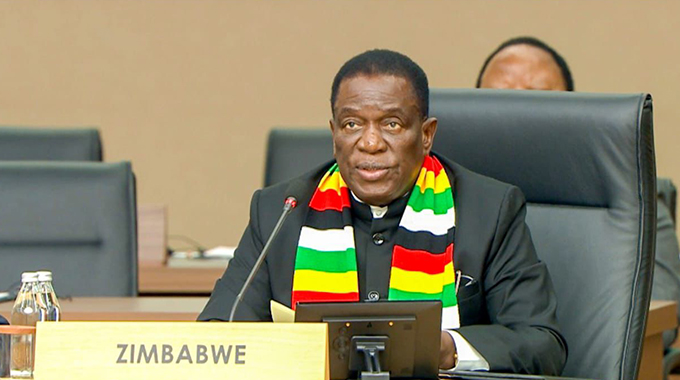
Ranga Mataire
Group Political Editor
TODAY, global attention turns to the iconic Victoria Falls as Zimbabwe hosts the 15th Conference of Parties (COP15) to Ramsar Convention on Wetlands where over 1000 delegates from 176 countries are in attendance at this crucial event running from today to the 31st of July.
This landmark event marks Zimbabwe’s debut as host of the Ramsar COP, and the only second time the prestigious gathering has been held on African soil, following Uganda’s hosting of COP9 in 2005.
President Mnangagwa is set to officially open the summit, which will also usher in Zimbabwe’s presidency of the convention for the next three years.
Besides showing the world the country’s capacity to host such a big event, the country is set to benefit in a number of ways.
Hosting the 15th Conference of the Parties (COP 15) to the Ramsar Convention on Wetlands offers an ideal platform for the country to showcase its ecological and cultural wealth and provide a major boost to tourism and the business sector in general.
Given the massive numbers of delegates attending the conference and the number of countries (176) present, including policy makers, environmentalists, scientists, and global media- Zimbabwe stands to benefit both in terms of short term and long term economic rewards.
The influx of international visitors is going to create significant demand for accommodation, transport, food, and other services, stimulating local businesses and creating new employment opportunities.
Hotels, restaurants, tour operators and other service providers would have to acquire additional staff to deal with the increased number of visitors.
Local artisans and craftspeople are likely to benefit as visitors are likely to purchase souvenirs and other cultural products.
The global attention on the COP 15 thrusts Zimbabwe as a credible destination of choice for visitors and further enhances the country’s reputational capacity in eco-tourism and conservation.
Given the fact that the summit is to focus on wetland preservation, sustainability and biodiversity- eco-conscious travellers attending the summit are automatic ambassadors of the country and will likely pay a reference role to other tourists’ attractions like Hwange, the Great Zimbabwe, and Mana Pools.
Last year, the tourism sector in Zimbabwe emerged as a leading economic force, contributing 12 percent to the country’s Gross Domestic Product (GDP) and surpassing both mining and agriculture.
The growth was catalysed by a notable increase in international tourist arrivals, rising 27 percent in the first half of the year, and corresponding 24 percent surge in tourism receipts.
Besides the obvious economic benefits, COP15 positions Zimbabwe at the centre of global environmental discussions, reinforcing its commitment to conservation and sustainable development.
Hosting such a prestigious event presents an opportunity for the country to showcase its efforts in wetland protection, wildlife conservation, and eco-friendly practices.
This international recognition is expected to strengthen Zimbabwe’s environmental policies and attract further support for conservation programmes.
Zimbabwe was not randomly chosen to host the COP15 summit. The country was chosen to host the 15th Conference of the Parties (COP15) to the Ramsar Convention on Wetlands after expressing interest in hosting the event and successfully bidding for it.
The decision was endorsed by the Zimbabwean government way back in 2023.
Zimbabwe’s commitment to wetland conservation and the efforts it is undertaking to preserve its wetlands played favourably for being given the nod to host the summit.
Other key reasons for being awarded the right to host the event include the fact that the country has experience in hosting similar international events and the suitability of the venue-the Victoria Falls- a Ramsar listed wetland of international importance.
The other key initiatives undertaken by Zimbabwe in safeguarding wetlands is the development of a comprehensive Wetlands Management Act, which aligns with the principles of the Ramsar Convention on Wetlands.
This legislation, coupled with the country’s existing Environmental Management Act, aims to strengthen the regulatory framework and enforcement mechanisms for wetland protection.
President Mnangagwa has led from the front in initiating policies that protects and safeguards wetlands.
In a recent speech read on his behalf by Defence Minister Oppah Muchinguri- Kashiri at the belated 2025 World Wetlands Day at Kasibo area in Hwange District, Matabeleland North, President Mnangagwa said his administration had put in place a raft of measures and an ambitious plan towards wetland management through increasing wetland area under sustainable management.
Zimbabwe is one of the 173 contracting parties to the Convention on Wetlands having ratified it in 2014.
President Mnangagwa said his Government has increased the area under sustainable wetland management in alignment with the National Development Strategy 1 (NDS1), the Wetland Rehabilitation Rolling Plan (2021-2025) and the National Biodiversity Strategy and Action Plan (NBSAP).
The National Wetlands Policy and the Environmental Management Act (Chapter 20:27) serve as key legal frameworks guiding wetland protection efforts.
“In as much as there is a lot of work to be done to reverse the legacy implication of past actions, which were detrimental to the integrity of our wetlands, our commitment for a transformative and progressive sustainable wetland management is evident in the policy and administrative direction we are taking,” said President Mnangagwa.
The President called for increased environmental education, particularly among young people in order to cultivate a new generation committed to preserving vital ecosystems.
President Mnangagwa expressed gratitude to the Ramsar Secretariat including its Secretary General, Dr Musonda Mumba, for supporting Zimbabwe’s successful bid to host the prestigious event.
“I want to promise you and the whole world that Zimbabwe will do its best to ensure that COP15 is successful,” the President said.