Online Reporter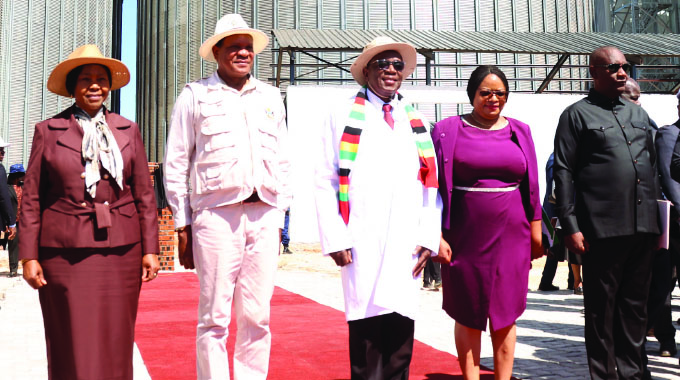
Patrick Chitumba, Midlands Bureau Chief
ZIMBABWE is on course to attaining the upper middle-income economy targets by 2030, spurred by numerous high-impact investments facilitated by the Second Republic, which have transformed the country from years of stagnation.
Since the birth of the Second Republic in 2017, Zimbabwe has witnessed a massive roll out of development programmes, with major milestones in sectors such as mining, agriculture, construction, tourism, education and innovation, among others.
The construction of dams to climate-proof the economy through enhanced irrigation has yielded positive outcomes on the food security front, in particular.
With a target to construct over 1 200 dams, which are expected to create fish farming opportunities nationwide by 2025, the interventions are transforming households from subsistence to commercial agriculture, enhancing food security and productivity.

This aligns with the National Development Strategy ideals and Vision 2030, which outline the country’s development priorities.
Government’s commitment to agricultural transformation was demonstrated by the Transitional Stabilisation Programme (TSP), which laid the groundwork for sector growth and stabilisation from 2017 to 2020.
Through these initiatives, the Second Republic aims to achieve an upper-middle-income economy by 2030, with agriculture playing a vital role in driving economic growth and development.
To confirm this Government thrust, President Mnangagwa yesterday commissioned the first-ever state-of-the art Artificial Intelligence-powered Grain Marketing Board (GMB) Silos in Kwekwe where he lauded the positive strides achieved in the agriculture sector.
“Undoubtedly, the numerous investments made under the Second Republic have put Zimbabwe firmly on course to becoming a food secure, empowered and prosperous upper-middle-income economy,” he said.
“This particular infrastructure we are unveiling today is timely, more-so that the negative impacts of climate change have heighted the need for robust and holistic food security initiatives, as well as sustainable food supply and nutrition.”
Cognisant of this fact, the President said the Second Republic, in 2020, launched the Agriculture, Food Systems and Rural Transformation Strategy meant to guarantee food and nutrition security.
President Mnangagwa said the improvement of livelihoods and contribution to overall economic development is at the core of this strategy.
“Over the years, we have witnessed increased production and productivity in cereals, horticulture, oil-seed crops as well as other industrial crops, along with improved national livestock numbers,” he said.
President Mnangagwa highlighted the high impact of measures implemented by the Second Republic to improve resilience such as the Sustainable Intensive Conservation Scheme (Pfumvudza/Intwasa) Programme, among others, which he credited for restoring food security at household level.
“In the midst of the worst drought in 43 years, experienced last year, my Government was able, to distribute food to all vulnerable communities, in both rural and urban areas. “Cumulatively, over 328 000 tonnes were distributed to the Department of Social Welfare by the Government and close to four million learners, under the Schools Feeding Programme were supported,” said President Mnangagwa.
“I congratulate the Grain Marketing Board Management and Staff for the role it played for the achievements scored under these Programmes.”
Notwithstanding the notable success milestones, he said climate change continues to pose significant threats to the agriculture sector, such as reduced crop yields, dangers of drought and flooding and the spread of new pests and diseases.
President Mnangagwa said disruptions in supply chains for vital through-put to agro-industries, as well as negative impact on the quality of livelihoods and overall economic development, remain looming fears associated with climate change.
“It’s upon this broader background that my Government made the deliberate decision to increase the Strategic Grain Reserve from 750 000 tonnes to 1,5 million tonnes. This particular infrastructure we are unveiling today is timely, more-so that the negative impacts of climate change have heighten the need for robust and holistic food security initiatives as well as sustainable food supply and nutrition,” he said.