Online Reporter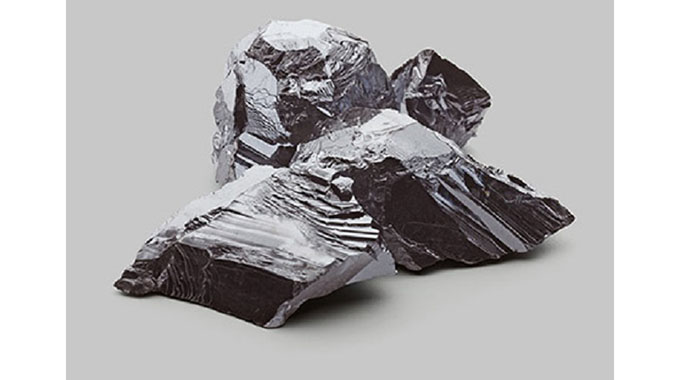
Tawanda Musarurwa
Checkpoint Desk
ZIMBABWE’S lithium concentrate sales so far in 2026 total 816 774.35 tonnes, worth roughly US$1.247 billion, against 663 833.13 tonnes worth about US$243 million over the same period last year — a 23 percent rise in volume, but a 413 percent surge in value.
In an interview, Minerals Marketing Corporation of Zimbabwe (MMCZ) general manager Dr Nomusa Jane Moyo said: “Zimbabwe is benefiting from the recovery in lithium prices, as reflected in MMCZ’s 2026 sales performance.
“The substantial growth in value indicates that improved international lithium prices are being captured in current sales and are not merely the result of volumes carried over from the lower-priced market conditions of 2025.”
A near-fivefold jump in value could reflect cheap 2025 tonnage clearing at 2026 prices rather than a genuine recovery, but 23 percent volume growth cannot explain 413 percent value growth alone — the gap is almost entirely price.
Global spodumene benchmarks have climbed back above US$2 000 a tonne after collapsing through 2025.
The African Energy Chamber’s State of African Energy 2026 report projects Zimbabwe’s lithium output reaching roughly 160 000 tonnes LCE by 2030, ahead of second-placed Mali’s projected 95 000 tonnes.
In 2025, spodumene volumes rose 11 percent — from 1.014 million to 1.128 million tonnes — while revenue stayed almost flat at US$513.8 million, pushing revenue per tonne down roughly 10 percent, from about US$507 to US$456.
Dr Moyo rejected the suggestion that volumes were exported “regardless of prevailing prices,” citing Statutory Instrument 5 of 2023, which gave the Government control over export quotas producer by producer, letting miners “generate and mobilise capital for investment in local processing facilities while supporting the transition towards beneficiation”.
The policy has since hardened. In February 2026, the Ministry of Mines and Mining Development briefly suspended all lithium concentrate exports over leakages and malpractice, a warning shot ahead of the current quota regime and the 10 percent export tax now levied on concentrate shipments through to the January 2027 ban.
Dr Moyo declined to disclose contract terms, but said MMCZ benchmarks sales against “reputable international price reporting agencies, including SMM and Benchmark”.
MMCZ has also worked with the National University of Science and Technology to improve ore characterisation and capture by-products — tantalum, caesium, niobium and rubidium — that occur alongside lithium.
Zimbabwe’s ban on raw lithium concentrate exports is due in January 2027; however, spodumene shipments have kept rising through the run-up. Zhejiang Huayou Cobalt’s US$400 million Prospect Lithium plant at Goromonzi and Sinomine’s US$500 million Bikita facility — among the few fully operational sulphate plants — anchor roughly US$900 million in Chinese-backed processing investment.
Dr Moyo was firm that the deadline will not move, despite industry calls to extend it to mid-2027.
“The prevailing Government position is that the January 2027 deadline remains in force. The Minister has been clear and consistent that it stands,” she said, citing tolling — producers without conversion plants processing ore through operators that do, such as Prospect Lithium — as the mechanism for closing the capacity gap.
Zimbabwe began shipping lithium sulphate in April, and June data shows it already at 3.89 percent of total mineral export value, alongside PGM matte (33.93 percent), spodumene concentrates (26.57 percent) and PGM concentrates (13.73 percent).
“Lithium sulphate is emerging as a new value-added export mineral commodity,” Dr Moyo said, calling it “an important step towards establishing Zimbabwe as a regional hub for battery mineral processing”.
Indonesia’s nickel ore export ban (2014, reinstated 2020) is a close precedent. It drew massive smelter investment but also a supply shock, a WTO dispute that Indonesia lost to the EU, and a coal-reliant processing sector.
An independent mining economist said the lithium sulphate shift matters more than the headline 413 percent increase:
“The US$1.2 billion sales figure is impressive, but it remains an export-revenue number. What Zimbabwe needs to demonstrate is how much additional value is being created inside the country per tonne of lithium processed.”
What is leaking, and what is being kept
MMCZ’s “maiden Mineral Resource Accounting and Surveillance Market Update” disclosed 18 suspected smuggling cases between January and 20 August 2026, involving 2 654.88 tonnes — against 816 774 tonnes of formal lithium volume, a detected-leakage rate of roughly 0.3 percent.
Lithium, chrome and silica dominated the register, alongside a 1 500-tonne chrome stockpile embargoed in Darwendale.
“The nature of offences included movement without valid documentation, misuse or falsification of export papers, cargo misdeclaration and attempted movement of unbeneficiated mineral ore,” Dr Moyo said.
At Forbes Border Post on 27 July, inspectors intercepted a 33-tonne consignment of lithium spodumene ore on photocopied papers, worth roughly US$66,000; a separate case there drew a company guilty plea and a US$600 fine — under 1 percent of cargo value — with fines, forfeitures and impoundments recorded but no custodial sentences or executive prosecutions.
Most cases were caught at border points, which Dr Moyo credited to MMCZ’s newly permanent inspectorate presence there, working with the CID’s Minerals, Flora and Fauna Unit, police intelligence, the tax authority and the anti-corruption commission.
MMCZ cannot say how much of 2025’s US$513.8 million stayed in Zimbabwe: its own take is a narrow 0.875 percent commission on export invoice value, and royalties and taxes sit with authorities that it does not consolidate.
Zimbabwe levies a 7 percent royalty on raw lithium ore and concentrate — a rate that Prospect Lithium has proposed graduating down to 5 percent for sulphate and 3 percent for battery-grade chemical salts.
Applied to 2025’s US$513.8 million, that implies roughly US$36 million in Government revenue — a rough estimate, not an MMCZ-confirmed figure.
A separate 10 percent beneficiation tax on concentrate exports, in force since February 2026, is a second revenue stream that the headline figures miss.
MMCZ expects platinum group metals, lithium products, ferrochrome, steel and coke to drive export growth in the second half of 2026.